📖 Read more: Open RAN: The Revolution in Mobile Networks
🚀 The Third Revolution in Telecom Networks
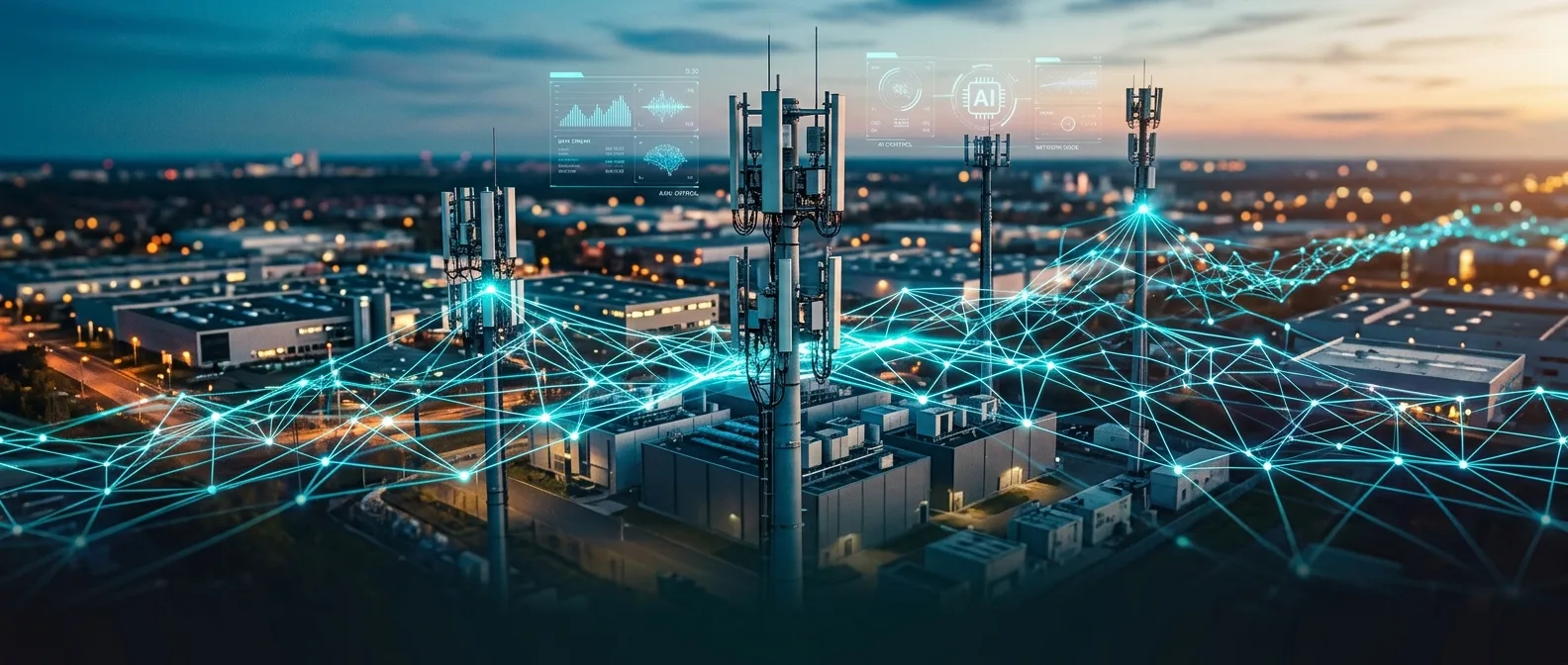
Networks that just move data are dead. MWC 2026 showcased networks that analyze and manage themselves autonomously. Huawei's Agentic Core operates like the brain of an autonomous network, with a triple-engine architecture where each component handles different responsibilities. Instead of waiting for commands from network administrators, these networks spot problems on their own. They predict traffic patterns. They redistribute resources in real-time. There are already 70 million 5G-A users worldwide — and this is just the beginning.What "Agentic" Actually Means
The word "agentic" comes from "agent" — a smart representative that can make decisions independently. In telecom networks, this translates to AI agents managing calls, optimizing user experience, and automating home broadband without human intervention. Think of it as having an intelligent network manager that anticipates your needs before you express them. When your AI-powered robot needs 100 Mbps bandwidth with sub-20ms latency, the network doesn't need pre-programmed rules. It understands the requirement and allocates resources dynamically.📡 U6 GHz: The Bridge to 6G Networks
If 5G-A is the evolved version of 5G, Huawei's U6 GHz products are the bridge to 6G. The U6 GHz spectrum band (6-7 GHz) delivers something current networks struggle with: high capacity combined with low latency. Why does this matter? Mobile AI applications create completely different traffic patterns. Instead of mostly downloading data (streaming, social media), we're uploading more and more data to the cloud for processing by AI models.The Uplink Problem
Consider what happens when you use an AI assistant. You send audio, images, or text for analysis. This increases uplink traffic — something most networks weren't originally designed for. Image or text generation apps can instantly hit 25 Mbps on upload. Huawei's U6 GHz products use innovative technologies to create a high-capacity, low-latency backbone designed specifically for mobile AI applications. The spectrum allocation creates dedicated lanes for AI traffic that won't interfere with traditional data flows.🧠 The Three Layers of Intelligence
Huawei's AI-Centric Network operates on three levels — and each has its own role:Service Layer
Multi-agent platforms for calls, experience monetization, and home broadband automation
Network Layer
L4 Autonomous Driving Networks with single-scenario automation evolving to end-to-end autonomy
NE Layer
Algorithm optimization for RANs, intelligent service recognition, and unified service intent
From Rules to Intent-Driven Networks
Traditional networks operate with predetermined rules. If an AI-powered robot needs specific bandwidth and latency requirements, the network must be programmed in advance for that exact scenario. Huawei's network intelligence engine changes this logic. Instead of rules, the network "understands" requirements and dynamically allocates resources. It's like having a smart administrator who predicts your needs before you voice them. The shift from rule-based to intent-driven networking means operators can define what they want to achieve rather than how to achieve it. The network figures out the implementation details.💼 SuperPoDs: A New Choice for the Intelligent World
For the first time outside China, Huawei showcased their SuperPoD clusters at MWC 2026. This isn't just a technical detail — it's a strategic move. SuperPoDs use UnifiedBus technology for interconnection and include: - **Atlas 950 SuperPoD** for AI computing - **TaiShan 950 SuperPoD** for general-purpose computing - **Atlas 850E SuperPoD** and TaiShan 500/200 serversThe phrase "another choice" isn't accidental. In a world where geopolitics affects technology choices, Huawei is positioning SuperPoDs as an alternative to existing hyperscalers."We're offering the world another choice for stable computing power"
— Huawei MWC 2026
What Makes Them Different?
Trillion-parameter AI models and agentic AI in production systems need more powerful computing and lower latency. SuperPoDs are designed for exactly this challenge, with system-level architecture that optimizes performance at the cluster level. The key differentiator is the integration between computing and networking. While traditional cloud providers bolt networking onto compute infrastructure, SuperPoDs are designed from the ground up for AI workloads that demand tight coupling between processing and connectivity.🎯 From Connectivity to Intelligence Provider
Huawei's strategy transforms telecom providers from "connectivity providers" to "intelligence enableers." The Service Intelligence framework (AISF) targets three key areas: 1. **Evolution from Interactive Entry Point** to comprehensive personal digital assistant 2. **Transformation of Communication Experiences** into immersive, boundary-breaking interactions 3. **Commercialization of Computing-Network Integration** for sustainable computing power⚡ Physical AI: The Next Wave
The NE Intelligence engine is preparing for what Huawei calls "Physical AI" — embodied robots and autonomous driving platforms that need network connectivity. Think autonomous vehicles communicating with each other and infrastructure in real-time. Or factory robots coordinating through the network. These systems need: - **Digital identity management** for each AI agent - **Agent registration and discovery** to find other agents - **Agent-to-agent session management** for secure communicationThe Scale Challenge
If AI agents become mainstream in smartphones and connected devices, the number of networked entities will increase tenfold. Networks must prepare for this "explosion" of connectivity. Current network architectures assume human users with predictable usage patterns. AI agents operate differently — they can generate massive traffic bursts, require guaranteed latency, and need to communicate with multiple other agents simultaneously.🔮 7×24 Intelligent Connectivity: What It Means
Huawei talks about "7×24 inclusive intelligent connectivity" — but what does this mean beyond marketing speak? Essentially, they envision networks that: - Never "sleep" — operate intelligently 24/7 - Automatically adapt to user needs - Predict problems before they occur - Optimize performance without human intervention This is the vision. Reality will be more complex. The challenge is maintaining this level of intelligence while scaling to billions of devices and trillions of AI agents. Current networks already struggle with peak traffic loads during major events. Adding autonomous decision-making at scale introduces new failure modes.🎯 Frequently Asked Questions
How does Agentic Core differ from current 5G networks?
Agentic Core operates with AI agents that make autonomous decisions, instead of following predetermined rules. It can predict problems, optimize resources in real-time, and manage complex AI applications without manual configuration.
When will we see these technologies deployed commercially?
Implementation depends on individual carriers. Huawei already has 130 networks globally with ADN L4 solutions, but full transition to AI-Centric Networks will take years. Expect pilot programs first, followed by gradual rollouts in major markets.
Will service costs increase with these developments?
Initially yes, but Huawei argues that autonomous networks will reduce operational costs long-term. Improved efficiency and new revenue streams from AI services could offset the infrastructure investments.
Huawei's MWC 2026 presentation positioned the company as a trend creator rather than follower. The question is whether carriers will invest in the AI-Centric Networks vision or wait for proven value in practice. In a world where AI changes everything, there might not be time to wait.