The world's most famous cryptographic puzzle just fell. Kryptos K4 — the final section that stumped codebreakers for 35 years — cracked not by CIA analysts or computer algorithms, but by two journalists who weren't even looking for it. The answer was hiding in plain sight at the Smithsonian all along.
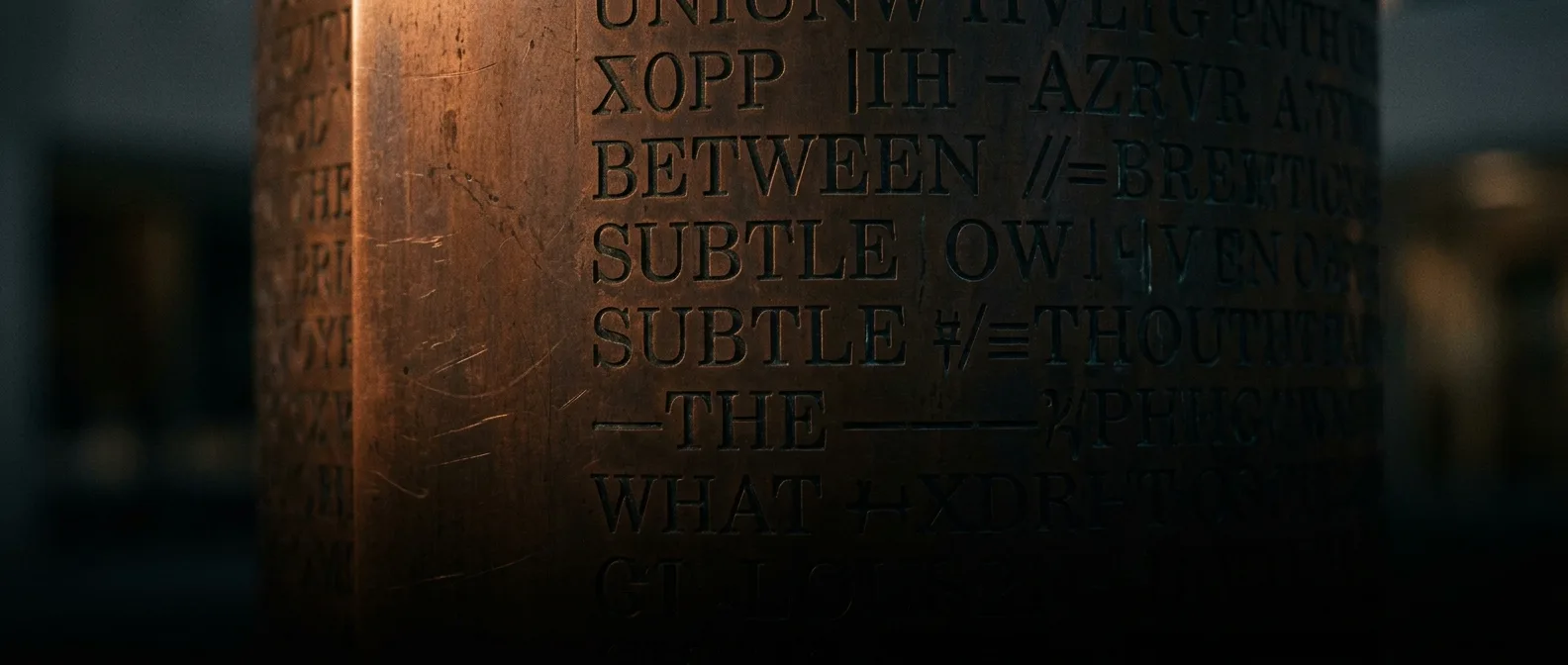
Kryptos isn't just another sculpture. Standing 12 feet tall and stretching 20 feet across the CIA courtyard in Langley, Virginia, this copper and petrified wood monument has tormented cryptographers since 1990. Artist Jim Sanborn designed it with one goal: trap anyone brave enough to decode its secrets. He succeeded beyond his wildest nightmares.
📖 Read more: Voynich Code: The Book Nobody Can Read
🔍 The Accidental Discovery That Changed Everything
By 2024, Sanborn had reached his breaking point. At 79, exhausted by decades of failed attempts and endless emails, he decided to auction off the K4 solution. Estimates ranged between $300,000 and $500,000.
Enter Jarett Kobek and Richard Byrne. These two journalists had zero intention of playing cryptographer — they simply read the auction announcement and noticed something odd. Sanborn's "encoding diagrams" were sitting in Smithsonian archives.
"I no longer had the physical, mental, or financial ability to maintain the 97-character K4 piece and continue my other work."
Jim Sanborn, Kryptos creator
Byrne photographed the papers. Kobek later realized that some sheets, stuck together, contained K4's original plaintext. Among them: the phrases "BERLIN CLOCK" and "EAST NORTHEAST" — clues Sanborn had released years earlier.
🎭 The Trap That Was Set From Day One
Sanborn created Kryptos in collaboration with Edward Scheidt, former head of the CIA's Cryptographic Center. The two men met secretly 35 years ago to devise the codes. The name "Kryptos" comes from the ancient Greek word meaning "hidden."
The first three codes (K1, K2, K3) fell in the 1990s. CIA analysts and amateur enthusiasts cracked them using traditional methods. K1 hid a message about "the difference between light and shadow." K2 referenced magnetic fields and secret locations. K3 quoted Howard Carter's description of discovering King Tut's tomb in 1922.
Why K4 Stayed Unbroken
The fourth section — just 97 characters starting with "OBKR" — proved impenetrable. Thousands of cryptographers attacked it. Intelligence professionals. Computer scientists. Obsessed amateurs who burned through sleepless nights running algorithms.
The catch: A valid solution requires more than decrypted text. The solver must demonstrate their method — something the two journalists don't possess.
⚖️ Legal Battle and Copyright Claims
The discovery triggered chaos. RR Auction, handling the sale, threatened Kobek and Byrne with legal action if they published the text. The company claimed interference and copyright violation.
Both journalists told the New York Times they have no plans to publish the solution. But the damage to the auction was severe — who pays half a million dollars for something two people already know?
"We've had many people in the past claim they solved it. But if they can't show the method, we just dismiss them from the room."
Elonka Dunin, Kryptos researcher
📖 Read more: Nicholas Winton: Saved 669 Children in Secret
🗂️ The Smithsonian's Role and Archive Sealing
When Sanborn received the email with the correct answer on September 3, 2024, he confirmed its authenticity. He explained that he'd accidentally included the papers in his Smithsonian archives while gathering documents during his cancer treatment years earlier.
Immediately after the discovery, Sanborn requested the Smithsonian seal the archives for 50 years. The institution complied. Access won't be possible until the mid-2070s.
Is There a Fifth Code?
RR Auction hinted at something even more mysterious: a fifth code, the rumored "K5." According to the company, only the auction winner would have access to Sanborn's complete explanation of the relationship between codes and the sculpture's overall meaning.
🌍 The Cryptographic Community Reacts
Reactions split the cryptographic world. Some, like Elonka Dunin — coordinator of one of the largest Kryptos enthusiast groups — felt relief that the mystery might finally be solved. Others described the discovery method as an "ugly ending" to a story that deserved better.
Community
Thousands of amateur cryptographers worldwide
Duration
35 years of continuous attempts and research
Complexity
Required method knowledge, not just text
2026 finds the community divided. Sanborn, now 81, seems relieved he won't receive more speculative emails. He'd started charging $50 for each solution response — a measure showing how exhausting the game had become.
🎨 More Than Artwork
Kryptos transcends conventional sculpture boundaries. It's architecture, mathematics, art, and philosophy rolled into one. Its ability to hold thousands of people's attention for decades makes it unique in art history.
"Every artwork tries to hold your attention as long as possible. If it's a piece that holds your attention for 10 minutes, that's pretty good. Sanborn now has a work that held people's attention for 35 years."
Elonka Dunin, researcher
The sculpture's location — at the CIA's heart — isn't coincidental. It's an enigmatic message to an organization specializing in secrets. And if a fifth code truly exists, the mystery will continue for future generations.
The Paradox of Accidental Discovery
The Kobek-Byrne story shows how unpredictable human curiosity can be. They weren't cryptographers. They hadn't burned midnight oil with mathematical algorithms. They simply read an announcement carefully and followed a thread hundreds of experts had ignored.
What makes the discovery more intriguing is that the solution hid in public archives. The Smithsonian isn't a secret facility — it's arguably the world's most famous museum. The answer was there, waiting for someone to look in the right place.
Whatever the story's final outcome — whether the solution gets published or remains secret — Kryptos has already achieved its goal. For an entire generation, it became synonymous with persistence, curiosity, and the relentless search for answers. And that, perhaps, is the greatest secret it holds.