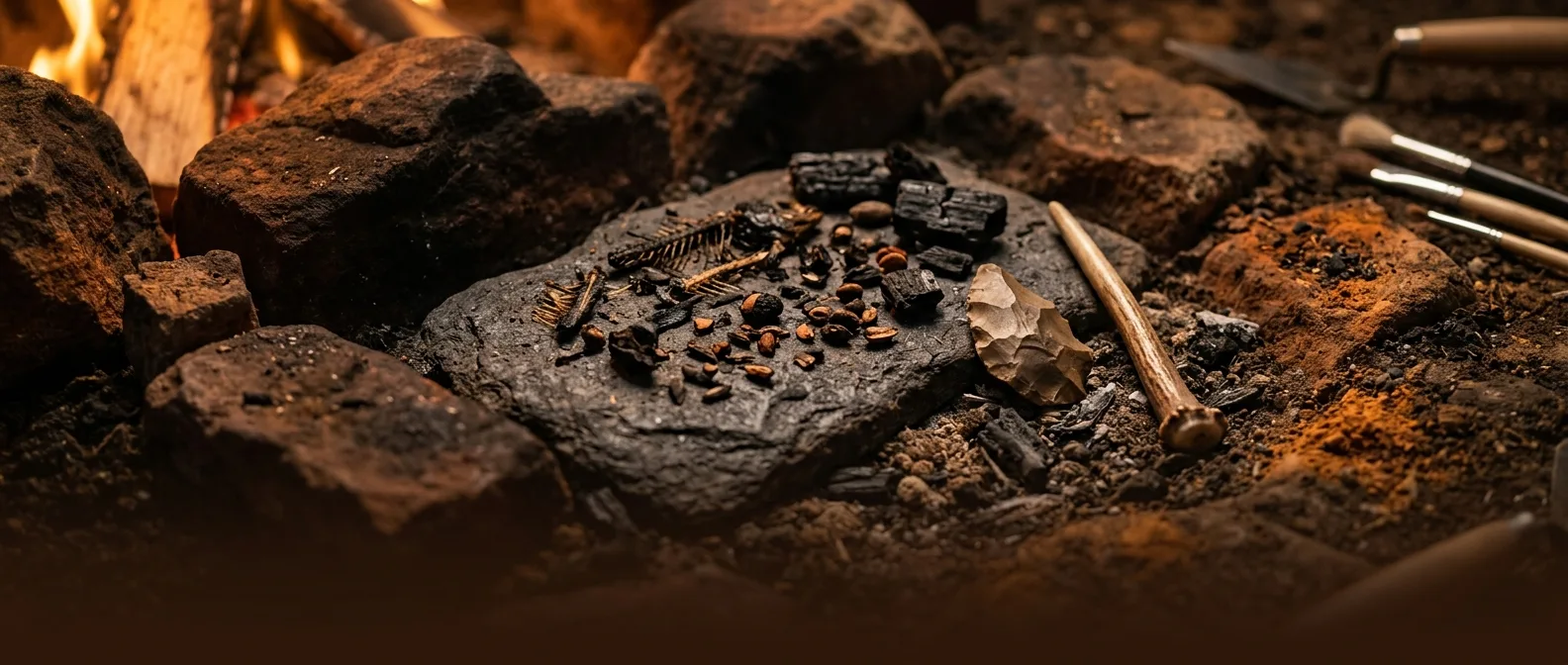
Analysis of ancient pottery from 61 archaeological sites across the Baltic revealed something stunning: each hunter-gatherer group had distinct culinary preferences. Even when food availability was identical. You'd expect uniformity. Instead, researchers found a prehistoric food scene as diverse as modern regional cuisines.
The 2020 study, published in Royal Society Open Science, examined over 500 ceramic vessels. Researchers identified residues from marine fish, seals, beavers, wild boar, bears, deer, hazelnuts, and plants. What impressed wasn't the variety — it was how differently each community used these ingredients.
📖 Read more: 43,000-Year-Old Neanderthal Fingerprint Found in Spain
🍯 Europe's First Spice Revolution
Think spices arrived with trade routes? Think again. In Denmark and Germany, Dr. Hayley Saul from the University of York discovered traces of garlic mustard (Alliaria petiolata) in 6,000-year-old vessels. The 2013 discovery overturned assumptions about prehistoric cooking.
Garlic mustard has minimal nutritional value. So why use it? Only one explanation: taste. "This is the earliest evidence of spice use in the western Baltic," Saul explained. These Stone Age chefs crushed the seeds to release their pungent aroma — a technique we still use in 2026.
Phytoliths (microscopic plant silica traces) provide the unshakeable "fingerprint" of ancient cooking. Most were found inside vessels, proving these were deliberate culinary choices, not accidental contamination.
🏺 Pottery That Tells Stories
Ceramic vessels were revolutionary for nomadic hunter-gatherers. Seems counterintuitive: why carry heavy pots when constantly moving? The answer lies in their sophisticated cooking methods.
Scientists used molecular and isotopic techniques to analyze residues. They found fats from meat and fish. Even dairy products — completely unexpected. Hunter-gatherers didn't domesticate animals, so how did milk fats end up in their cooking pots?
Cultural Fusion in Practice
The explanation points to a revised picture of hunter-farmer relationships. "The presence of dairy fats was an unexpected example of culinary 'cultural fusion,'" notes Dr. Harry Robson. Were hunter-gatherers trading — or stealing — dairy products from early farmers?
This "clash of worlds" shows the transition from hunting to agriculture wasn't abrupt. There was a period of interaction where different lifestyles met at the dinner table.
🌿 Beyond Mere Survival
The conventional picture shows hunter-gatherers struggling daily for survival. Reality was more complex. "We often fail to recognize how inventive and creative they were," Saul explains. They knew their environment perfectly and understood how to exploit it optimally.
📖 Read more: Dashrath Manjhi: Carved a Mountain Alone for 22 Years
🔬 Culinary Identity Without Borders
The most fascinating finding isn't food variety but cultural differentiation. Two communities with access to identical resources had completely different culinary traditions. "Culinary practices weren't influenced by environmental constraints but were embedded in long-term traditions," notes Dr. Blandine Courel from the British Museum.
The Significance of Difference
This changes how we view prehistory. It wasn't simply "find food and survive." It was about identity. Each group had culinary choices that distinguished them from others. Similar to how every region today has traditional dishes.
These prehistoric chefs weren't limited to one spice. While only garlic mustard was found, this doesn't mean others didn't exist. Plant remains preserve much worse than bones. How many other "secrets" does the soil still hide?
🧬 Technology Meets Archaeology
Modern science gave archaeologists new eyes. Molecular analysis of ceramics achieved something that seemed impossible: "reading" recipes from millennia past. "Chemical analysis of food residues transformed how we study early agricultural societies," explains Professor Oliver Craig from York.
Now the same techniques reveal hunter-gatherer complexity. They prove these groups also had sophisticated and culturally distinct cuisines. Not just the "civilized" farmers.
"What we consider modern today — complexity — existed long before agriculture appeared. We just didn't know it."
From the 2020 Baltic research
🏹 From Baltic to Global
The Baltic region isn't an isolated phenomenon. In Israel, 23,000-year-old coriander was found — much older than European examples. But there it's harder to connect findings with specific cooking practices.
Northern European hunter-gatherers left clear evidence in their ceramics. The vessels functioned like "recipe books" — preserving the aromas and flavors of dishes they'd created.
The Global Picture
Similar discoveries worldwide show culinary evolution was a global phenomenon. It wasn't just influenced by resource availability but by cultural choices. Each community developed its own "signature" in food.
Complex Recipes
Meat-fish-plant combinations with spices for flavor enhancement
Cultural Exchanges
Trading or "borrowing" dairy products from neighboring farmers
Regional Identities
Each area developed its own culinary traditions
🎯 Frequently Asked Questions
How did they preserve food without refrigeration?
Hunter-gatherers used natural methods like smoking, salting, and drying. Ceramic vessels helped store and transport processed foods.
Why did nomads carry heavy pottery?
Despite seeming paradoxical, ceramics offered huge advantages. They enabled cooking in liquid environments, food preservation, and creating complex flavors impossible with other methods.
How common was food trading between different groups?
The presence of dairy fats in hunter vessels suggests some form of exchange with early farming communities. Whether it was trade, gifts, or "borrowing" remains unknown, but interaction definitely occurred.
Europe's prehistoric hunter-gatherers weren't simple survivors eating whatever they found. They were gastronomes who developed complex cuisines, appreciated flavor, and created cultural identities through food. Next time you make a complex dish, remember the tradition started thousands of years ago — by people who had only stones for tools but unlimited imagination for taste.