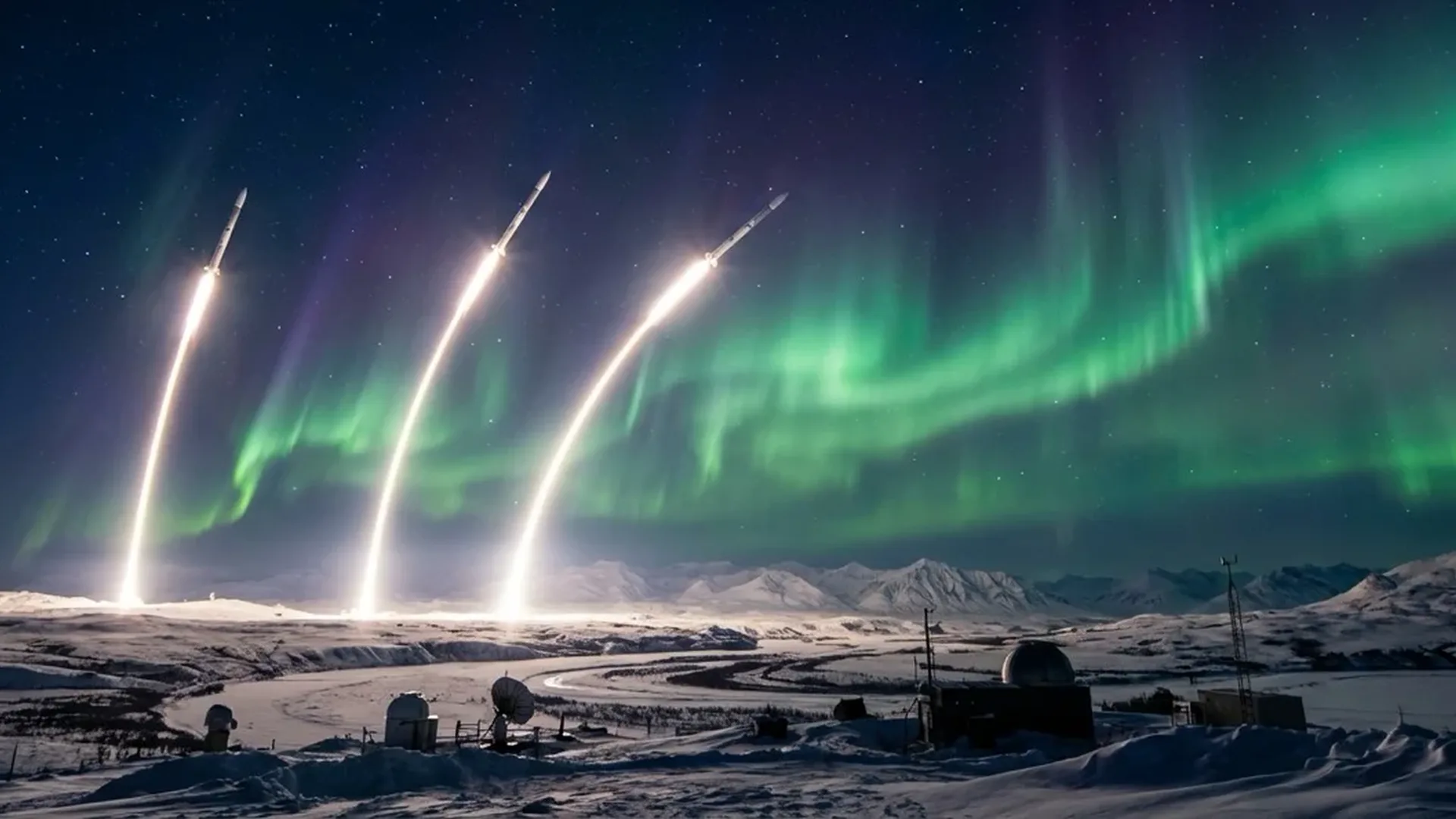
On the night of February 9–10, 2026, three rockets shot into the shimmering green curtains of the Northern Lights above Poker Flat Research Range in Fairbanks, Alaska. They were on a mission: to take the most detailed measurements ever made inside the aurora's electrical environment — and to investigate one of the aurora's most enigmatic features, the "black aurora."
📖 Read more: S4 Solar Storm Hits Earth: The Strongest in 20+ Years
The results, NASA scientists say, are already transforming our understanding of how the sun's energy connects to Earth's atmosphere.
Two Missions, Three Rockets
Mission 1: Black and Diffuse Auroral Science Surveyor (BDASS). On February 9 at 3:29 a.m. AKST, a single rocket launched to approximately 360 km altitude. Its principal investigator: Dr. Marilia Samara of NASA's Goddard Space Flight Center. The mission targets black auroras — dark patches within the glowing aurora that may represent regions where electrical currents are reversed.
Mission 2: GNEISS (Geospace and Nighttime Ionospheric Emission Sensitivity Survey). The following night, two rockets launched 30 seconds apart, each reaching approximately 320 km. Principal investigator: Prof. Kristina Lynch of Dartmouth College.
A 3D CT Scan of the Aurora
GNEISS is the more technically ambitious of the two missions. Each rocket deployed 4 sub-payloads during flight, creating an array of sensors spread across a volume of space. The rockets also emitted radio signals as they passed through the ionospheric plasma, which were received by ground stations below.
By triangulating data from multiple sensors simultaneously, GNEISS created a three-dimensional map of the aurora's electrical environment — equivalent to performing a CT scan through the aurora rather than viewing it from just one angle.
"We've never had this kind of 3D picture before," Lynch said. "We're sampling the aurora's electrical structure from multiple points at the same time."
📖 Read more: Northern Lights in Greece: 2026 Solar Maximum Explained
The Mystery of Black Aurora
The BDASS mission focuses on a phenomenon that has puzzled scientists for decades: within the bright green and violet curtains of the aurora, there are dark patches where no light appears. These “black auroras” aren't simply gaps in the aurora — they appear to represent regions where the normal downward flow of electrons is reversed, with currents flowing upward instead.
Dr. Samara's mission aims to directly measure whether these dark patches correspond to upward electron flows — and if so, what drives them. The answers could revise our understanding of how energy circulates through Earth's near-space environment.
Rocket Science During a Geomagnetic Storm
Both launches occurred during a period of heightened solar activity — a geomagnetic storm that made the aurora unusually bright and active over Alaska. This provided rare conditions for the instruments: stronger currents, more dynamic plasma, and a more complex electrical environment to measure.
NASA's EZIE (Electrojet Zeeman Imaging Explorer) satellite, launched in March 2025, measures auroral currents from orbit and provides complementary context for interpreting the rocket data.
Why It Matters
Aurora science is not purely aesthetic. The electrical currents in the auroral zones are among the most powerful natural phenomena on Earth's surface, capable of disrupting power grids, satellite communications, and GPS systems during major storms. Understanding how these currents form, strengthen, and reverse is essential for improving space weather forecasting — and protecting the infrastructure of modern civilization.