Every civilization that has ever looked at the night sky has wondered: how will it all end? Modern cosmology offers not one but five distinct scientific scenarios for the ultimate fate of the universe, each rooted in real physics and current observational data. The answer depends heavily on one mysterious entity: dark energy, which drives the accelerating expansion of the universe and whose nature remains one of physics' deepest unsolved problems.
Scale of Time: The timescales involved are almost incomprehensible. The universe is ~13.8 billion years old. The scenarios below unfold over 10¹⁴ to 10¹⁰⁰ years — timescales that dwarf the current age of the universe by factors of millions to trillions.
Theory 1: Heat Death / Big Freeze
The most scientifically favored scenario. As the universe continues expanding, it cools. Stars exhaust their fuel over the next ~10¹⁴ years (stellar epoch ends). Black holes slowly evaporate via Hawking Radiation over ~10¹⁰⁰ years. Eventually, the universe reaches thermodynamic equilibrium — maximum entropy, minimum free energy. No more work can be extracted. No structures, no gradients, no life. Just cold, dispersed particles — frozen forever in the Heat Death of the cosmos.
Theory 2: Big Rip
If dark energy is a form of “phantom energy” with an equation-of-state parameter $w < -1$, the expansion of the universe accelerates faster and faster until it tears apart everything: galaxy clusters (~200 million years before the end), galaxies, solar systems, planets, molecules, and finally atomic nuclei themselves. Caldwell, Kamionkowski and Weinberg (2003) calculated this could occur in about 22 billion years. Current data doesn't rule it out, but doesn't favor it either.
Theory 3: Big Crunch
The reversal of the Big Bang. If dark energy weakens or reverses, gravity could eventually halt and reverse the expansion. The universe would recollapse into a singularity of infinite density — the mirror image of the Big Bang. This scenario is now considered unlikely given current measurements of accelerating expansion, but it cannot be definitively ruled out if dark energy evolves over cosmic time.
Theory 4: Big Bounce
An extension of the Big Crunch: rather than ending at a singularity, the collapsing universe “bounces” and triggers a new Big Bang. This cyclic cosmology, championed by Paul Steinhardt and Neil Turok (and Roger Penrose's Conformal Cyclic Cosmology), posits an eternal succession of universes. Each cycle resets conditions while possibly imprinting signals on the CMB — Penrose claimed to have found such signals (though contested).
Theory 5: Vacuum Decay
Perhaps the most unsettling scenario. Quantum field theory suggests our universe may exist in a metastable false vacuum rather than the true lowest-energy state. A quantum tunneling event anywhere in the universe could trigger a bubble of true vacuum expanding at the speed of light, instantly rewriting the laws of physics within it. Everything inside would be destroyed, with no warning and no hope of escape — the light from the expanding bubble front arrives simultaneously with the destruction. The LHC Higgs mass measurements suggest our vacuum is either stable or only marginally metastable.
«The universe is under no obligation to make sense to you.»
— Neil deGrasse Tyson- Caldwell, Kamionkowski & Weinberg – PRL 2003: Phantom Energy and Cosmic Doomsday
- Penrose, R. – Cycles of Time: An Extraordinary New View of the Universe (2010)
- Steinhardt & Turok – Science 2002: A Cyclic Universe
- Degner et al. – Physical Review D 2022: Vacuum stability bounds from LHC Higgs data
Related Articles
Hawking Radiation: Do Black Holes Evaporate?
Central to the Heat Death timeline: black holes slowly disappear.
Gravitational Waves: How LIGO Detects Them
Ripples in spacetime — a window into extreme cosmic events.
Betelgeuse: A Stellar Death in Progress
A glimpse of how individual stars end their lives.
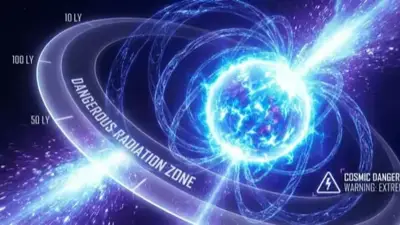
Magnetars: The Most Dangerous Objects
Extreme physics that hints at how matter behaves at universe's edge.
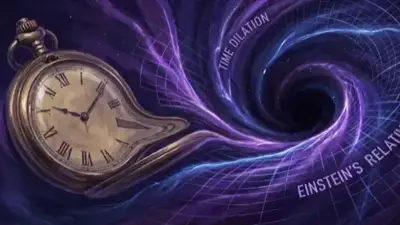
Time Slows Near Massive Objects
General relativity shapes how the universe's end will unfold.
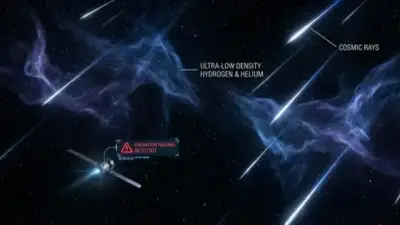
Interstellar Space: Empty but Not Void
The vast space between stars that will outlast everything.