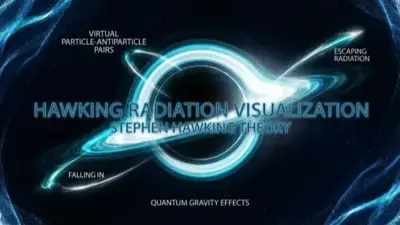
In 1974, Stephen Hawking published one of the most surprising results in theoretical physics: black holes are not entirely black. They emit a faint thermal radiation, now called Hawking Radiation, and slowly lose mass over time. This discovery bridged three pillars of physics — general relativity, quantum mechanics, and thermodynamics — in a way that had profound implications and remains a source of deep theoretical puzzles to this day.
The Core Idea: Near a black hole's event horizon, quantum mechanics predicts that «virtual particle pairs» constantly pop into existence. When one falls in and one escapes, the escaping particle carries energy away — at the expense of the black hole's mass.
Virtual Particles at the Event Horizon
Quantum field theory tells us that empty space is not truly empty: it seethes with virtual particle-antiparticle pairs that spontaneously appear and annihilate. Near the event horizon of a black hole, Hawking showed that tidal gravitational effects can separate these pairs before they recombine. The particle that falls inward has negative energy (from the black hole's perspective), reducing the hole's mass. The outgoing particle escapes as real radiation — Hawking Radiation.
The Temperature Formula
The temperature of Hawking Radiation is given by: TH = (ℏc³) / (8πGMkB). This is incredibly cold for stellar-mass black holes. A black hole of 10 solar masses has TH ≈ 6 × 10⁻⁹ Kelvin — far colder than the cosmic microwave background (~2.7 K). Such black holes are currently absorbing radiation faster than they emit it. Only microscopic black holes would be hot enough to detect.
The Information Paradox
Hawking's result triggered one of physics' biggest controversies: the black hole information paradox. If a black hole evaporates completely, what happens to the information about everything that fell in? Quantum mechanics demands information is never destroyed. General relativity (in Hawking's original calculation) suggests it is. This tension — between the two pillars of modern physics — drove decades of theoretical work.
«God not only plays dice, but also sometimes throws them where they cannot be seen.»
— Stephen Hawking, on quantum uncertainty and black holesThe Page Time and Recent Progress
In 2019, Ahmed Almheiri, Netta Engelhardt, Donald Marolf, Henry Maxfield and independently Geoffrey Penington showed that after a characteristic timescale called the «Page Time», information does start leaking back out in the Hawking radiation, encoded in quantum correlations. This was achieved using replica wormholes and quantum extremal surfaces from the AdS/CFT correspondence. The finding strongly suggests unitarity is preserved — a major triumph — though a fully satisfying picture remains elusive.
- Hawking, S.W. – Nature 1974: Black hole explosions?
- Hawking, S.W. – Communications in Mathematical Physics 1975: Particle creation by black holes
- Penington, G. – JHEP 2020: Entanglement wedge reconstruction and the information paradox
- Almheiri et al. – Physical Review Letters 2019: The Page Curve of Hawking Radiation from Semiclassical Geometry
Related Articles
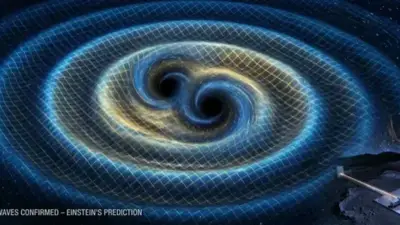
Gravitational Waves: How LIGO Detects Them
Another way general relativity shapes our universe.
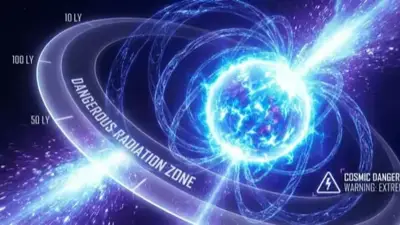
Magnetars: The Most Extreme Objects
Near a magnetar, spacetime itself is warped like near a black hole.

How Will the Universe Die?
Black hole evaporation is central to the Heat Death scenario.
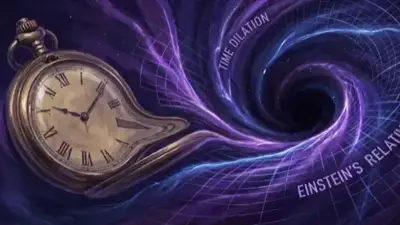
Time Slows Near Massive Objects
The same general relativity that predicts time dilation also predicts Hawking Radiation.
Betelgeuse: The Coming Supernova
Supernovae may create the black holes that Hawking describes.
Neutron Stars: Zombie Stars
The dense remnants that can collapse further into black holes.