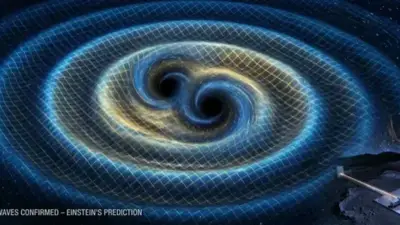
On September 14, 2015 at 09:50:45 UTC, two detectors of the LIGO observatory simultaneously recorded a fleeting signal lasting less than 0.2 seconds. This was the first direct detection of gravitational waves — a century after Einstein predicted them in his General Theory of Relativity and long after most physicists thought they might never be detected. The event, designated GW150914, came from two black holes — 29 and 36 solar masses — merging 1.3 billion light-years away.
The Strain: LIGO detected a change in arm length of about 1/1000th the diameter of a proton — a strain of h ≈ 10-21. The 4-km arms shrank and stretched by less than a proton's width to reveal one of the most energetic events in the observable universe.
What Are Gravitational Waves?
In Einstein's General Relativity (1915), mass curves spacetime. Accelerating masses — especially very massive, compact objects in extreme motion — ripple that curvature outward at the speed of light. These ripples are gravitational waves: transverse waves that alternately stretch and compress distances in the plane perpendicular to their travel direction (the two polarizations are called plus + and cross ×). Energy is carried away from the source, causing orbital decay and eventual merger.
How LIGO Works
LIGO is a Michelson interferometer with two 4-km arms arranged at right angles. A laser beam is split and sent down each arm, reflecting off mirrors (test masses) suspended as pendulums. If a gravitational wave passes, it differentially changes the arm lengths. When the beams recombine, any path difference causes destructive interference to differ slightly from perfect cancellation — a detectable signal in the photodetector. The system must isolate the mirrors from virtually all external vibrations to reach sensitivity of 10-21.
GW170817: The First Multimessenger Event
On August 17, 2017, LIGO and Virgo detected GW170817 — the merger of two neutron stars. Unlike black hole mergers (which produce no light), this event generated a kilonova: a bright optical transient from heavy element synthesis (gold, platinum, strontium) and a short gamma-ray burst observed 1.7 seconds later. Over 70 observatories worldwide measured it. This launched the era of multimessenger astronomy: combining gravitational waves with electromagnetic signals for a more complete picture of cosmic events.
«With this discovery, we humans are embarking on a marvelous new quest: the quest to explore the warped side of the universe.»
— Kip Thorne, Nobel Prize lecture, 2017Future: LISA and Next Generation
Ground-based detectors are limited by seismic noise at low frequencies. The Laser Interferometer Space Antenna (LISA), a joint ESA/NASA mission planned for launch around 2037, will consist of three spacecraft forming a triangle with 2.5 million km arms in space. LISA will detect supermassive black hole mergers across the observable universe, extreme mass ratio inspirals (EMRIs), and possibly signals from the early universe. Next-generation ground detectors (Einstein Telescope in Europe, Cosmic Explorer in the US) will push sensitivity by a factor of 10, enabling detections to the edge of the observable universe.
- Abbott et al. (LIGO Scientific Collaboration) – PRL 116, 2016: Observation of GW150914
- Abbott et al. – PRL 119, 2017: GW170817 Multimessenger Observations
- Thorne, K. – Nobel Prize Lecture 2017: Nobel Prize Archive
- ESA – LISA Mission Overview
Related Articles
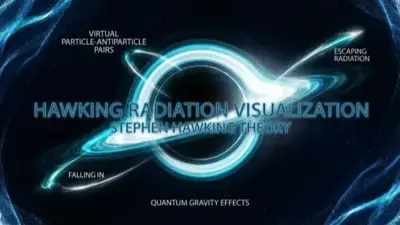
Hawking Radiation: Do Black Holes Evaporate?
The same black holes LIGO detects are slowly evaporating via Hawking Radiation.
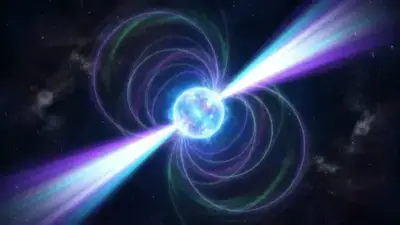
Neutron Stars: Zombie Stars
GW170817 was a neutron star merger — the most spectacular GW event yet.
Betelgeuse: The Coming Supernova
When Betelgeuse explodes, LIGO may detect the gravitational wave burst.
Magnetars: The Most Extreme Objects
Magnetar starquakes may emit gravitational wave bursts detectable by LIGO.
Time Slows Near Massive Objects
Both gravitational waves and time dilation arise from general relativity.
How Will the Universe Die?
Final gravitational wave events will mark the last mergers before the Heat Death.