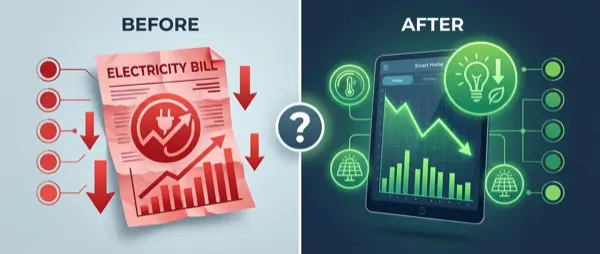
How much electricity does a smart home consume? It's a question many ask before building their smart home. The answer depends on the number of devices, protocol type (WiFi vs Zigbee), and usage patterns. In this article we present detailed consumption and cost calculations so you know exactly what to expect.
Consumption by Device Type
| Device | Standby (W) | Active (W) | 24/7 kWh/year |
|---|---|---|---|
| Smart Hub (Home Assistant) | 2-5W | 3-8W | 26-44 kWh |
| WiFi Smart Plug | 0.5-1.5W | 0.5-1.5W | 4-13 kWh |
| Zigbee Smart Plug | 0.3-0.5W | 0.3-0.5W | 3-4 kWh |
| Smart Bulb (WiFi) | 0.3-1W | 8-12W | 3-9 kWh (standby) |
| Smart Bulb (Zigbee) | 0.1W | 8-12W | ~1 kWh (standby) |
| IP Camera (PoE) | 5-12W | 5-15W | 44-130 kWh |
| IP Camera (WiFi) | 3-8W | 3-10W | 26-88 kWh |
| Google Nest Mini | 1.5-2W | 5-10W | 13-18 kWh |
| Echo Dot | 1.5-2W | 5-12W | 13-18 kWh |
| Smart Thermostat | 1-3W | 1-3W | 9-26 kWh |
| Robot Vacuum (charging) | 3-5W | 30-70W | 26-44 kWh |
| NVR (4 channels) | 10-20W | 10-20W | 88-175 kWh |
Cost Calculations
Electricity prices in Europe (February 2026) range around €0.12-0.30/kWh depending on the country and provider. Let's look at three usage scenarios:
Scenario 1: Small Smart Home (5 devices)
- 1x Smart Hub (Home Assistant Green): ~35 kWh/year
- 3x Zigbee bulbs (standby): ~3 kWh/year
- 1x Google Nest Mini: ~15 kWh/year
Total: ~53 kWh/year = €6-16/year
Scenario 2: Medium Smart Home (15 devices)
- 1x Hub: ~35 kWh
- 8x Zigbee bulbs: ~8 kWh
- 2x WiFi cameras: ~120 kWh
- 2x Smart plugs: ~8 kWh
- 1x Thermostat: ~18 kWh
- 1x Robot vacuum: ~35 kWh
Total: ~224 kWh/year = €27-67/year
Scenario 3: Large Smart Home (30+ devices)
- 1x Hub + NVR: ~200 kWh
- 15x Zigbee bulbs + plugs: ~20 kWh
- 4x PoE cameras: ~400 kWh
- 3x Voice assistants: ~50 kWh
- Smart thermostat + sensors: ~30 kWh
- Robot vacuum: ~35 kWh
Total: ~735 kWh/year = €88-220/year
Always-On: How Much Does It Cost
The biggest “culprit” of consumption isn't active use — it's always-on standby. Every smart device connected to power 24/7 (even when it's not “working”) consumes electricity. Many people overlook this hidden cost, but over the course of a year it adds up significantly. The calculation formula is simple:
Annual kWh = Watts x 8.76 (meaning Watts x 24 hours x 365 days / 1000)
Example: a WiFi camera at 8W = 8 x 8.76 = 70 kWh/year = €8.40-21. Five such cameras = €42-105 in electricity alone. An NVR adds another €12-35. That's why choosing energy-efficient devices from the start makes a real difference long-term — the savings compound year after year.
WiFi vs Zigbee: The Consumption Difference
WiFi devices consume 2-5x more power in standby compared to Zigbee/Z-Wave. The reason is that the WiFi radio requires significantly more power to maintain a constant connection to your router. Zigbee and Thread devices use mesh networking with lower-power radios, making them inherently more efficient for battery-powered and always-on sensors.
| Protocol | Standby (W) | 10 devices kWh/year |
|---|---|---|
| WiFi | 0.5-1.5W | 44-130 kWh |
| Zigbee | 0.1-0.5W | 9-44 kWh |
| Z-Wave | 0.1-0.3W | 9-26 kWh |
| Thread/Matter | 0.1-0.5W | 9-44 kWh |
If you have 15-20 devices, switching from WiFi to Zigbee can save you €15-50/year in standby power alone.
How to Reduce Consumption
- Zigbee/Z-Wave instead of WiFi: Less standby consumption per device
- Automations: Automatically turn off lights and devices when not needed — a motion sensor saves 30-50% of lighting energy
- Energy monitoring: Smart plugs with consumption measurement show which devices consume the most
- Camera recording modes: Switch to motion-only recording instead of 24/7, reducing camera consumption by 30-50%
- Efficient hub: A Raspberry Pi 4 (3-5W) or Home Assistant Green (3W) uses far less than an old mini PC (15-30W)
- Timers: Devices you don't use at night (e.g., smart displays) can auto-off, eliminating 8 hours of daily standby
Savings Through Smart Home
Important: a smart home doesn't just consume electricity — it can save you far more. Essentially, the small power consumption of smart devices is an “investment” that pays back many times over:
- Smart thermostat: Saves 15-25% on heating/cooling = €100-300/year
- Smart lighting: Auto-off = 20-40% lighting savings
- Smart plugs: Eliminating vampire power (standby TV, PC etc.) = €20-50/year
- Energy monitoring: Identifying power-hungry devices = €50-100/year savings
With proper use, a smart home can save €200-500/year — many times more than the €30-220 that the smart devices themselves consume in electricity.
Conclusion
Smart home electricity consumption is much smaller than most people think. A small system with 5 devices costs just €6-16/year in power, while even a large setup with 4 PoE cameras, an NVR, and 15+ smart devices costs around €90-220/year. At the same time, savings from heating automations, smart lighting schedules, and standby elimination easily offset — and exceed — this cost. A properly configured smart home pays for its own operation within the first year of use, making it not just a convenience upgrade but a genuine investment in energy efficiency.