smart garage garage automation smart home IoT MyQ LiftMaster garage door opener home security retrofit kits smart sensors
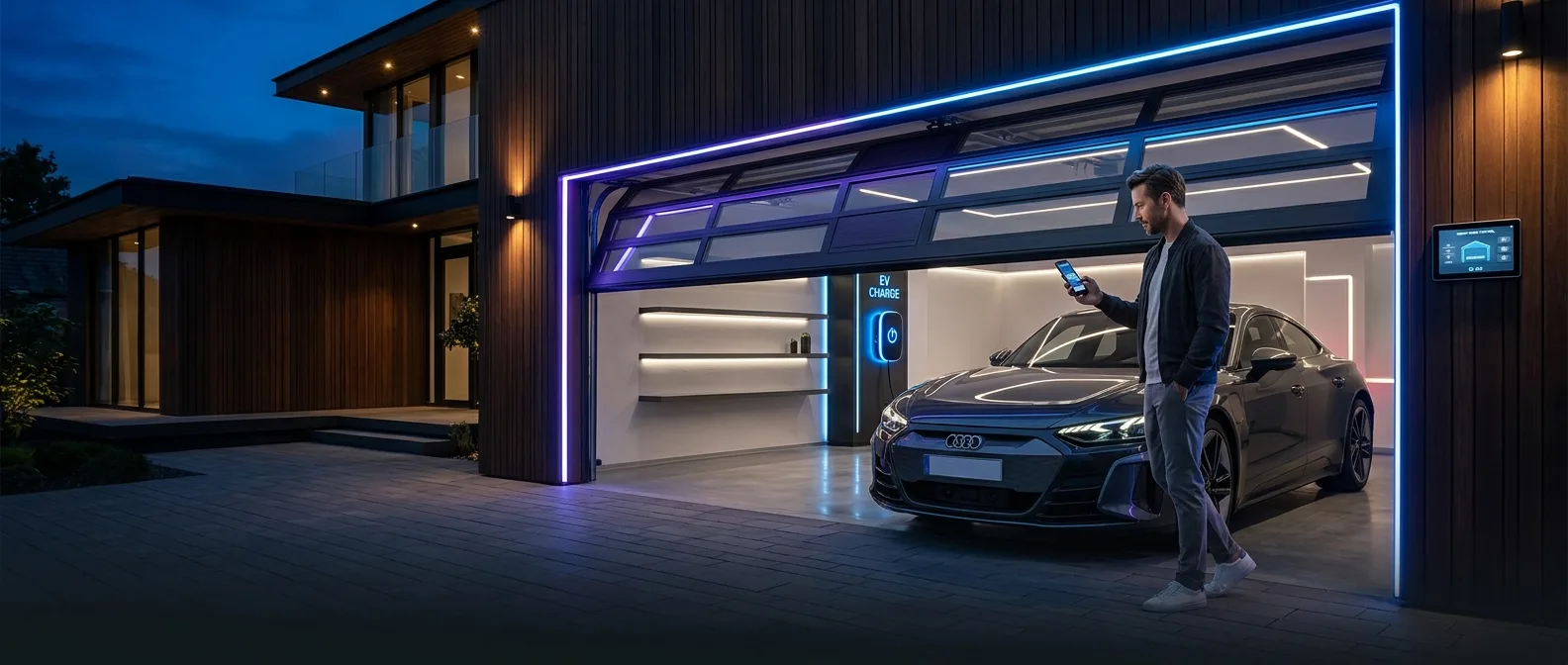
Your garage door opens and closes 1,500 times per year. That's 1,500 opportunities for something to go wrong — or go brilliantly right with the proper smart garage door setup. Forget fumbling for remotes in your car's console or wondering if you remembered to close the door after leaving for vacation.
Today's garage automation systems turn your garage into a connected command center. You get real-time status updates, remote control from anywhere on Earth, and security features that would make a bank vault jealous. The best part? Most systems retrofit onto existing garage door openers without rewiring your entire house.
What You Need for Smart Garage Automation
Every IoT garage system starts with a smart controller that bridges your existing garage door opener to your Wi-Fi network. This hub communicates with your smartphone app and executes commands whether you're in your driveway or across the country. The controller becomes powerful when it connects to position sensors, security cameras, and automated lighting.
Major players like LiftMaster, Chamberlain, and their MyQ ecosystem dominate the market for good reason. These platforms offer plug-and-play installation that takes under an hour, plus mobile apps that actually work reliably. You'll also want position sensors to track door status, motion detectors for security, and a solid Wi-Fi signal that reaches your garage.
Essential Hardware Checklist
- Smart garage door controller with Wi-Fi connectivity
- Door position and motion sensors
- Security camera with night vision capability
- Reliable Wi-Fi coverage in garage space
- Smartphone or tablet for system management
7 Proven Garage Upgrade Methods
1. Install a Smart Controller Hub
Start here. A smart controller transforms your dumb garage door opener into a connected device without replacing the entire mechanism. MyQ systems from Chamberlain lead the pack because they work with most garage door openers manufactured after 1993. Installation involves connecting two wires and downloading an app.
Once connected, you control your garage door from anywhere. The app shows real-time door status and sends push notifications when the door opens or closes. This beats calling your teenager to check if they remembered to close the garage after grabbing their bike. The system also logs every door operation, creating a security audit trail.
2. Program Smart Automations
Raw remote control is just the beginning. Smart automations turn your garage automation system into a predictive assistant. Set the door to close automatically after 10 minutes if left open. Program it to open when your phone's GPS detects you're pulling into the driveway. Create schedules that align with your daily routine.
Temporary access codes solve the visitor problem elegantly. Generate time-limited codes for delivery drivers, housekeepers, or contractors. The codes expire automatically, so you never worry about unauthorized access after the job ends. Some systems even send photos when temporary codes get used.
3. Connect Voice Assistants
Modern smart garage door systems integrate seamlessly with Google Assistant, Alexa, and Siri. Voice control shines when your hands are full of groceries or you're rushing out the door. Just say "Hey Google, open the garage" and the door responds instantly.
Security protocols typically allow voice opening but not voice closing. This prevents accidental closures that could damage property or trap someone inside the garage. You'll still need the app or physical button to close the door, which strikes the right balance between convenience and safety.
4. Add Security Monitoring Systems
Security cameras transform your garage from a blind spot into a monitored zone. Modern IoT garage cameras offer 1080p resolution, night vision, and motion-triggered recording. You can watch live feeds from your phone and receive instant alerts when movement gets detected.
Motion sensors complement cameras by triggering lights and sending notifications. This creates a layered security approach that deters break-ins and alerts you to unexpected activity. Some systems integrate with existing home security setups, creating a unified monitoring network.
5. Upgrade Lighting and Climate Control
Garage automation extends beyond the door itself. Smart LED lights activate automatically when the door opens or motion gets detected. This improves safety during nighttime arrivals and creates a welcoming environment. LED bulbs last longer and consume less energy than traditional options.
Temperature and humidity sensors protect stored items from extreme conditions. These sensors send alerts when conditions exceed safe ranges, helping you protect seasonal decorations, tools, and other garage-stored valuables. Some systems can trigger ventilation fans or space heaters to maintain optimal conditions.
6. Monitor Vehicle Status
Advanced systems track your vehicle's condition while parked in the garage. Specialized sensors monitor tire pressure, fuel levels, and battery status. Electric vehicle owners find this particularly useful since EVs require consistent charging schedules. The system can remind you to plug in your EV or alert you to maintenance needs.
7. Integrate with Home Security Systems
The final upgrade connects your garage automation to your home's security system. When the garage door closes, the system can automatically arm your security system. When it opens, the system disarms. This creates seamless security management without manual intervention.
Investment Costs and Benefits
A basic smart garage door controller costs between $150-500, depending on features and brand compatibility. Entry-level Chamberlain MyQ systems start around $150 and work with most existing openers. Premium systems with cameras, multiple sensors, and advanced automation capabilities can reach $500 or more.
Security benefits alone make the cost worthwhile. Garage break-ins account for 9% of home burglaries, according to FBI statistics. Smart systems deter criminals and provide evidence if incidents occur. Energy savings from proper door sealing and automated lighting add up over time.
Selection and Installation Tips
Check compatibility before buying any system. Most modern garage door openers support smart upgrades, but units older than 1993 may need replacement. MyQ compatibility extends to most major opener brands including Craftsman, Genie, and Linear.
Professional installation costs $100-200 but ensures proper setup and warranty coverage. DIY installation works for basic systems if you're comfortable with simple electrical connections. Complex setups with multiple cameras and sensors benefit from professional installation to ensure optimal placement and network connectivity.