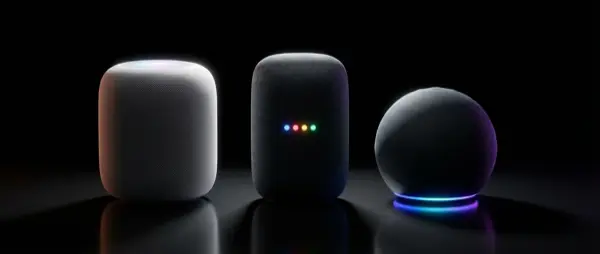
Three Giants, One Choice
Apple HomeKit, Google Home, and Amazon Alexa are the three biggest smart home ecosystems in the world. Each offers a different philosophy: Apple focuses on privacy and design, Google on artificial intelligence and search, and Amazon on compatibility and commerce.
Which one suits your needs? Here is a detailed look at each platform across the criteria that truly matter in February 2026.
General Comparison
| Feature | Apple HomeKit | Google Home | Amazon Alexa |
|---|---|---|---|
| App | Home (iOS/Mac) | Google Home (iOS/Android) | Alexa (iOS/Android) |
| Voice Assistant | Siri | Google Assistant | Alexa |
| Voice Quality | Average | Excellent | Very Good |
| Compatible Devices | ~800+ | 50,000+ | 100,000+ |
| Matter Support | Full | Full | Full |
| Privacy | Best-in-class | Average | Average |
| Automations | Basic | Routines | Routines + Skills |
| Hub Required | HomePod/Apple TV | Nest Hub (optional) | Echo (optional) |
| Entry Cost | From 100 EUR | From 30 EUR | From 30 EUR |
Apple HomeKit: The Privacy King
HomeKit is the most secure smart home platform available today. Every device must pass Apple certification before it can be used, data is encrypted end-to-end, and Siri processes many queries locally on-device without sending them to the cloud.
Advantages
- Top-tier privacy with end-to-end encryption for all data transfers
- Seamless integration with iPhone, iPad, Mac, and Apple Watch devices
- HomeKit Secure Video stores footage in iCloud without Apple having access
- Adaptive Lighting adjusts colour temperature automatically throughout the day
- Activity zones on cameras for targeted motion alerts and notifications
Disadvantages
- Far fewer compatible devices compared to the competition (~800 vs 100,000)
- Siri lags behind Google Assistant in natural language understanding
- Requires Apple TV or HomePod as hub for remote access and automations
- Automations limited to basic scenarios with simple triggers only
- Higher entry cost with HomePod Mini starting at around 110 EUR
Google Home: The Smartest Assistant
Google Home stands out thanks to Google Assistant, which is the most intelligent voice assistant available today. It understands complex questions, supports follow-up queries without repeating context, and works across many languages including Greek.
Advantages
- Best natural language understanding with excellent multilingual support
- Deep integration with Google Calendar, YouTube, Maps, and Gmail
- Nest Hub with screen serves as an ideal visual smart home dashboard
- Low entry cost at just 30 EUR for a Nest Mini speaker
- Routines are intuitive and very easy to create through the app
Disadvantages
- Cloud-dependent so nothing works without an active internet connection
- Average privacy since voice data is processed and stored on cloud servers
- Automations are simple and limited to one trigger followed by actions
- Fewer third-party skills and integrations compared to Alexa ecosystem
Amazon Alexa: The Compatibility King
Alexa supports the most smart home devices in the world with over 100,000 products from thousands of brands. Alexa Skills are mini-apps that add capabilities you will not find elsewhere. With Alexa Plus 2026, Amazon added AI personalisation and proactive suggestions based on your usage patterns.
Advantages
- Over 100,000 compatible devices making it the largest ecosystem by far
- Skills marketplace with thousands of third-party extensions available
- Echo Show with screen for video calls, security cameras, and streaming
- More advanced Routines supporting conditions, wait timers, and variables
- Drop-in feature enables instant intercom between Echo devices in your home
- Alexa Guard detects sounds like smoke alarms and breaking glass
Disadvantages
- Limited language support since the platform is primarily English-centric
- Average privacy with voice data stored and processed in the cloud
- Many Skills are low quality or poorly maintained by their developers
- Heavy dependency on the broader Amazon ecosystem for full features
Matter: The Unifying Protocol
Since 2024, the Matter protocol has fundamentally changed the smart home landscape. A Matter device works simultaneously across HomeKit, Google Home AND Alexa without any additional configuration. This means you are no longer locked into a single ecosystem when purchasing devices.
In February 2026, most new devices including bulbs, plugs, locks, and thermostats support Matter natively. This significantly reduces the importance of platform compatibility as a selection criterion and gives you the freedom to switch voice assistants at any time without replacing your hardware.
Entry Cost in Europe
| Device | Price | Platform |
|---|---|---|
| Google Nest Mini | 30 EUR | Google Home |
| Amazon Echo Dot 5 | 35 EUR | Alexa |
| Amazon Echo Show 5 | 80 EUR | Alexa |
| Google Nest Hub 2 | 80 EUR | Google Home |
| Apple HomePod Mini | 110 EUR | HomeKit |
| Apple HomePod 2 | 350 EUR | HomeKit |
| Apple TV 4K | 170 EUR | HomeKit |
How to Choose
- Want AI and multilingual support: Google Home offers excellent natural language processing across many languages
- Want privacy and Apple ecosystem: HomeKit is ideal if you already own iPhone, iPad, and Mac
- Want maximum compatibility and Skills: Alexa gives you over 100,000 devices and a massive third-party ecosystem
- Want everything: Choose Matter devices that work on all three platforms simultaneously
For most users, Google Home remains the most well-rounded choice thanks to superior AI and multilingual support. If privacy is your top priority and you are already in the Apple ecosystem, HomeKit is excellent. Alexa is the best option if you want the widest device compatibility and the most advanced Routines with conditions. With Matter unifying the smart home ecosystem in 2026, the best strategy is to pick your preferred voice assistant and buy Matter-certified devices that keep all your options open for the future.