📖 Read more: Viagra & Shingles Vaccine Cut Alzheimer's Risk by 17%
What Are Ultra-Processed Foods
Nearly every food that reaches our plate has undergone some form of processing. The distinction, however, between simply processed and ultra-processed is critical. According to the NOVA classification system — widely used in scientific literature — ultra-processed foods (UPFs) are industrial products that have undergone intensive processing and contain additives, emulsifiers, colorings, artificial flavors, and ingredients that no home cook would have in their kitchen.
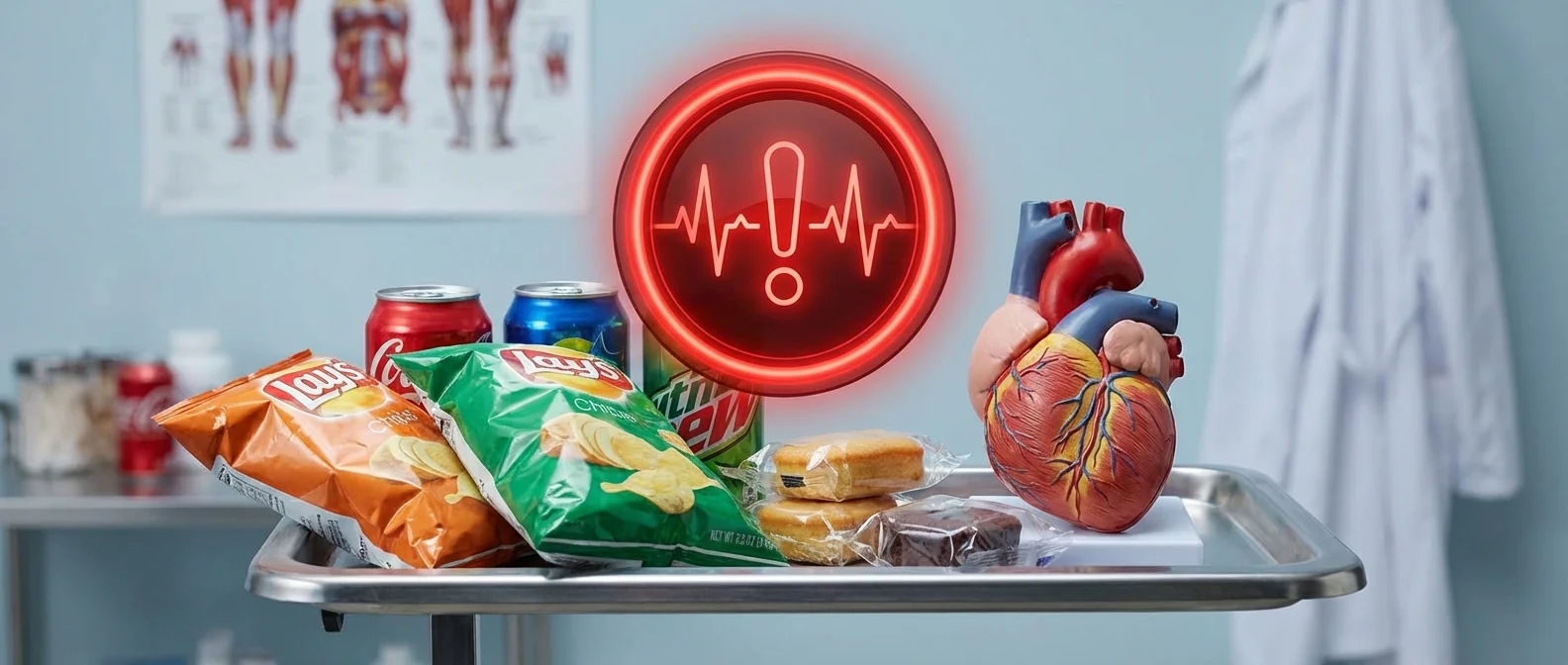
Examples of these foods include soft drinks, packaged snacks, breakfast cereals, hot dogs, chicken nuggets, powdered soups, frozen microwave meals, and many packaged sweets. Their production involves processes such as extrusion, hydrogenation, chemical modification of starches, and the addition of substances the human body has historically never encountered.
In the United States, ultra-processed foods account for nearly 60% of the calories consumed by adults — and about 70% in children. These numbers alone are enough to explain why scientists worldwide are increasingly focusing on their role in health.
The Study: 4,787 Adults Under the Microscope
Researchers from Florida Atlantic University analyzed data from the National Health and Nutrition Examination Survey (NHANES), collecting information from 4,787 adults aged 18 and over during the period 2021-2023. Each participant recorded their diet in detail, allowing the researchers to calculate exactly what percentage of their daily calories came from ultra-processed foods.
The results, published in The American Journal of Medicine in February 2026, were striking: adults in the highest UPF consumption group showed a 47% higher risk of cardiovascular disease compared to those in the lowest group. The analysis was adjusted for factors such as age, sex, ethnicity, smoking, and income, which strengthens the statistical reliability of the findings.
"The results have significant implications for both clinical practice and public policy. Addressing UPFs is not just about individual choices — it's about creating environments where the healthy choice is also the easy choice."
— Charles H. Hennekens, M.D., Florida Atlantic University
📖 Read more: Πώς το Πλάσμα Μικροκυμάτων Επαναφέρει τον Γραφίτη σε Εύχρηστη Κατάσταση
How UPFs Damage the Heart
The damage doesn't come simply from excess sugar or fat — although these substances play their part. Scientists have identified multiple mechanisms through which ultra-processed foods gradually destroy the cardiovascular system.
First, the additives and emulsifiers contained in UPFs trigger a chronic inflammatory response in the body. High-sensitivity C-reactive protein (hsCRP) — an inflammation marker considered a strong predictor of cardiovascular disease — was found to be significantly elevated in individuals with high UPF consumption.
Second, ultra-processed foods are low in dietary fiber, causing them to be rapidly absorbed in the gastrointestinal system and triggering sharp blood sugar fluctuations. At the same time, they don't adequately nourish the gut microbiome — which plays a fundamental role in regulating inflammation and metabolism. Third, the lack of natural structure and texture makes UPFs easy and quick to consume without triggering satiety signals, leading to overconsumption of calories.
The Largest Review in History — 10 Million People
The Florida Atlantic University study is not the only one sounding the alarm. In March 2024, a massive umbrella review published in BMJ analyzed data from dozens of studies involving nearly 10 million participants, revealing that high UPF consumption is linked to 32 different adverse health outcomes.
Among these: increased risk of cardiovascular disease, type 2 diabetes, obesity, depression, anxiety, and even certain forms of cancer. Professor Pete Wilde from the Quadram Institute noted that the quality of evidence varies — something expected given the enormous variety of foods falling under the UPF category. Whole grain bread and a soft drink both belong to UPFs, but they obviously have very different effects on the body.
📊 The Troubling Numbers
- 47% higher risk of heart attack or stroke
- 60% of adult calories in the U.S. come from UPFs
- 70% in children
- 32 adverse health effects according to the largest review
- 1 in 5 deaths worldwide is attributed to poor diet
📖 Read more: Pumas Return to Patagonia: Penguins in Danger
Parallels with Tobacco
One of the researchers' most striking observations concerns the parallel between ultra-processed foods and tobacco. It took decades for the risks of smoking to become widely known, despite the first scientific evidence appearing as early as the mid-20th century. Researchers warn that the same slow recognition of risk could repeat itself with UPFs.
A key reason is the influence of large multinational food corporations, which dominate the market and invest enormous sums in marketing. At the same time, many population groups — especially those with low incomes — lack easy access to fresh, unprocessed foods, creating a vicious cycle of nutritional inequality.
📖 Read more: AI Identifies Which Dinosaur Left a Footprint
The Link to Colorectal Cancer
Beyond the heart, researchers point to a concerning connection: colorectal cancer is rising rapidly, particularly among younger adults in the U.S. Many of the risk factors for colorectal cancer overlap with those for cardiovascular disease — and diet is at the center of this comorbidity.
Dr. Allison Ferris, a professor at FAU, noted: "The increasing consumption of UPFs may be a contributing factor, along with other dietary and metabolic effects that impact a range of common and serious gastrointestinal diseases. Awareness is the first step toward prevention."
What We Can Do
Completely avoiding ultra-processed foods may seem impractical in modern life — and it probably isn't necessary. Dr. Jennifer Hankenson from Yale Medicine notes that small amounts probably don't cause harm, but emphasizes that no amount is considered “healthy” or “recommended,” especially for people with chronic conditions.
Researchers recommend practical steps: reading labels (watch for long ingredient lists with unfamiliar names), gradually replacing UPFs with whole foods, increasing consumption of fruits, vegetables, and legumes, and cooking at home whenever possible. The change doesn't need to happen overnight — even small reductions in UPF consumption can yield measurable benefits.
At the same time, at the policy level, the need for clearer labeling, restrictions on UPF advertising to children, and improved access to nutritious foods is becoming increasingly urgent. Science has spoken — the question now is how quickly society will follow.