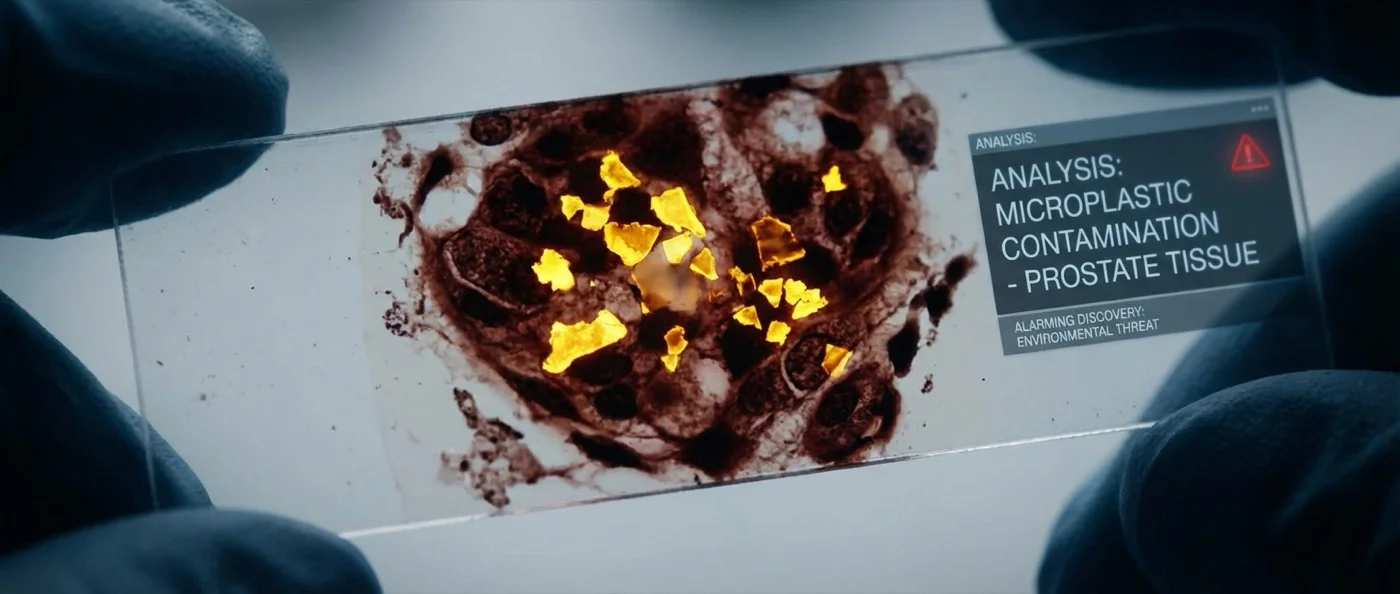
A new study from NYU Langone Health has found microplastic particles in 90% of prostate cancer tumor samples — and in concentrations 2.5 times higher inside tumors than in nearby healthy tissue. The findings, presented at the ASCO Genitourinary Cancers Symposium on February 26, 2026, represent the first study to directly measure microplastics inside prostate cancer tissue.
The research was led by Dr. Stacy Loeb, MD — professor of Urology and Population Health at NYU Grossman School of Medicine and senior urological oncologist at Perlmutter Cancer Center — with Dr. Vittorio Albergamo, PhD (assistant professor of Pediatrics) as senior author. The study was funded by the US Department of Defense.
📖 Read more: Microplastics Found in Antarctica's Only Native Insect
The Numbers: 90% and 2.5x
The research team analyzed tissue samples from 10 prostate cancer patients. In 90% of tumor samples, microplastic particles were detected. In the healthy tissue adjacent to tumors, 70% of samples contained microplastics — but at concentrations of approximately 16 micrograms per gram of tissue.
In the tumor tissue itself, the concentration was approximately 40 micrograms per gram — roughly 2.5 times higher. The researchers analyzed 12 common plastic polymer types, including polyethylene, polypropylene, and polystyrene.
Careful Science: Clean Room Protocol
Contamination of samples with environmental microplastics is a persistent challenge in this field. To address it, the NYU team implemented a strict clean-room protocol for sample collection and processing. They replaced standard plastic laboratory equipment with aluminum and cotton alternatives, and conducted all sample preparation in a controlled environment designed to minimize external plastic particles.
"We went to extraordinary lengths to rule out contamination," said Dr. Loeb. “The microplastics we found were inside the tissue itself.”
📖 Read more: The World's Oldest Wooden Tools Were Found in Greece
The Inflammation Hypothesis
The researchers propose a plausible biological mechanism: microplastics, once they accumulate in tissue, may trigger chronic inflammation. Sustained inflammation is a well-established driver of DNA damage and, over time, cancer development. The 2.5x higher concentration in tumor tissue versus healthy tissue is consistent with this model — microplastics may accumulate preferentially in inflamed or metabolically active tissue, or their presence may itself promote malignant transformation.
However, the team is clear that causation has not been established. “This is an association study,” Dr. Loeb emphasized. "We found that microplastics are present and more concentrated in tumors, but we don't yet know if they contribute to cancer development or accumulate as a consequence of the tumor environment."
Why Prostate Cancer?
Prostate cancer is the most commonly diagnosed non-skin cancer in men in the United States. It is also one of the more environmentally sensitive cancers, with known links to diet, obesity, and chemical exposures. The prostate gland sits within a metabolically active region of the body and may be a site of preferential microplastic accumulation via the bloodstream.
The NYU team plans to expand the study to a larger patient cohort and investigate whether microplastic exposure levels correlate with cancer aggressiveness or treatment outcomes. The work adds to a growing body of evidence linking microplastic contamination — now found in human blood, lungs, placentas, and hearts — with potential health consequences that science is only beginning to understand.