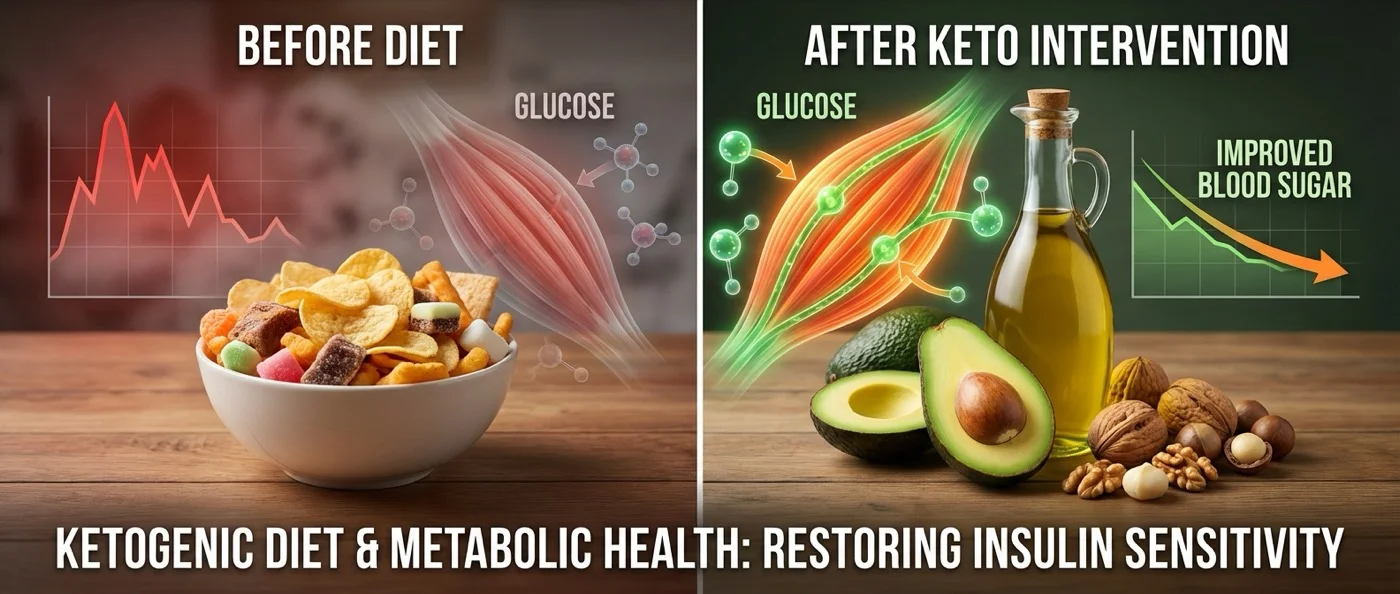
Type 2 diabetes is one of the greatest global health challenges, affecting over 500 million people worldwide. Exercise is a fundamental pillar of treatment, yet hyperglycemia often destroys the metabolic benefits that physical activity should deliver. New research data suggest that the ketogenic diet can restore those lost benefits — opening new pathways in diabetes management.
📖 Read more: Blood Test Detects Alzheimer's 4 Years Before Symptoms
🔬 The Study: Joslin Diabetes Center & Harvard
The research team at the Joslin Diabetes Center (affiliated with Harvard Medical School), led by Dr. Sarah J. Lessard, published a study examining how the ketogenic diet affects muscle response to exercise under hyperglycemic conditions. The study (Pattamaprapanont et al., 2025) used chronically hyperglycemic mice — a model that mirrors the metabolic conditions of type 2 diabetes patients.
Under normal conditions, aerobic exercise improves maximal oxygen uptake (VO₂peak), increases muscle capillary density, and enhances mitochondrial function. But in hyperglycemic mice, these adaptations were virtually nonexistent — chronic high glucose essentially canceled out the benefits of exercise.
💪 The Critical Findings
The ketogenic diet proved to be a game-changer. In just one week, the diet normalized blood glucose levels while simultaneously reactivating a series of metabolic mechanisms in the muscles:
Particularly significant was that the ketogenic diet restored angiogenic markers in muscle tissue — meaning the ability to create new blood vessels, crucial for muscle remodeling, returned to normal levels. Fatty acid oxidation in muscles doubled, indicating a metabolic shift toward more efficient energy utilization.
📖 Read more: One Stem Cell Produces 14M NK Cells Against Cancer
⚖️ Long-Term Risks: What the Other Side Shows
However, the ketogenic diet is not without risks. A recent study from the University of Utah (January 2026), published in Science Advances, examined the long-term effects of the ketogenic diet in mice over more than 9 months. The results were concerning:
⚠️ Risks of Long-Term Keto Diet
- Fatty liver disease: Despite weight control, mice developed severe fatty liver disease — particularly males
- Glucose regulation disruption: When carbohydrates were reintroduced, blood glucose skyrocketed to dangerous levels
- Reduced insulin secretion: Pancreatic cells malfunctioned due to chronic exposure to high lipids
- Elevated blood lipids: Hyperlipidemia was observed across all animals
"If you give these mice a little bit of carbs, their carb response is completely skewed," said Dr. Amandine Chaix, lead researcher.
Dr. Molly Gallop, the study's first author, emphasized: "I would urge anyone to talk to a health care provider if they're thinking about going on a ketogenic diet." However, the findings suggest that short-term application — as in the Joslin study — may offer benefits without the long-term risks.
📖 Read more: Exercise Beats Depression Better Than Medication
🧠 Beyond Diabetes: Keto & Brain Function
Impressive data also come from the Buck Institute for Research on Aging, where researchers discovered that the ketogenic diet significantly improves memory in aged mice. The study, published in Cell Reports Medicine (June 2024), revealed that the ketone β-hydroxybutyrate (BHB) activates a molecular pathway (protein kinase A) that enhances synaptic function.
— Dr. John Newman, Buck Institute & UCSF
This means the ketogenic diet may benefit multiple systems — from muscle metabolism to neural function. The team is now investigating whether the same results can be achieved by directly administering BHB, without requiring the full diet.
🔮 What This Means for Patients
The combined findings paint a complex but hopeful picture:
Short-term ketogenic dieting appears to restore the metabolic capacity of muscles to respond to exercise — something vital for type 2 diabetes patients who see no improvement despite physical activity. The normalization of glucose in just one week suggests rapid metabolic remodeling.
However, long-term application carries risks — fatty liver disease, glucose dysregulation upon carbohydrate reintroduction, and pancreatic dysfunction. The solution may lie in cyclical protocols: short keto periods (1-4 weeks) alternating with normal nutrition.
The possibility of administering ketone bodies (BHB) as a supplement — without the strict diet — is perhaps the most promising avenue. If confirmed in humans, it could transform type 2 diabetes management by restoring the benefits of exercise without the risks of an extreme diet.
Important note: All studies were conducted in mice. Results do not automatically translate to humans, and the ketogenic diet should always be implemented under medical supervision, especially in diabetes patients.