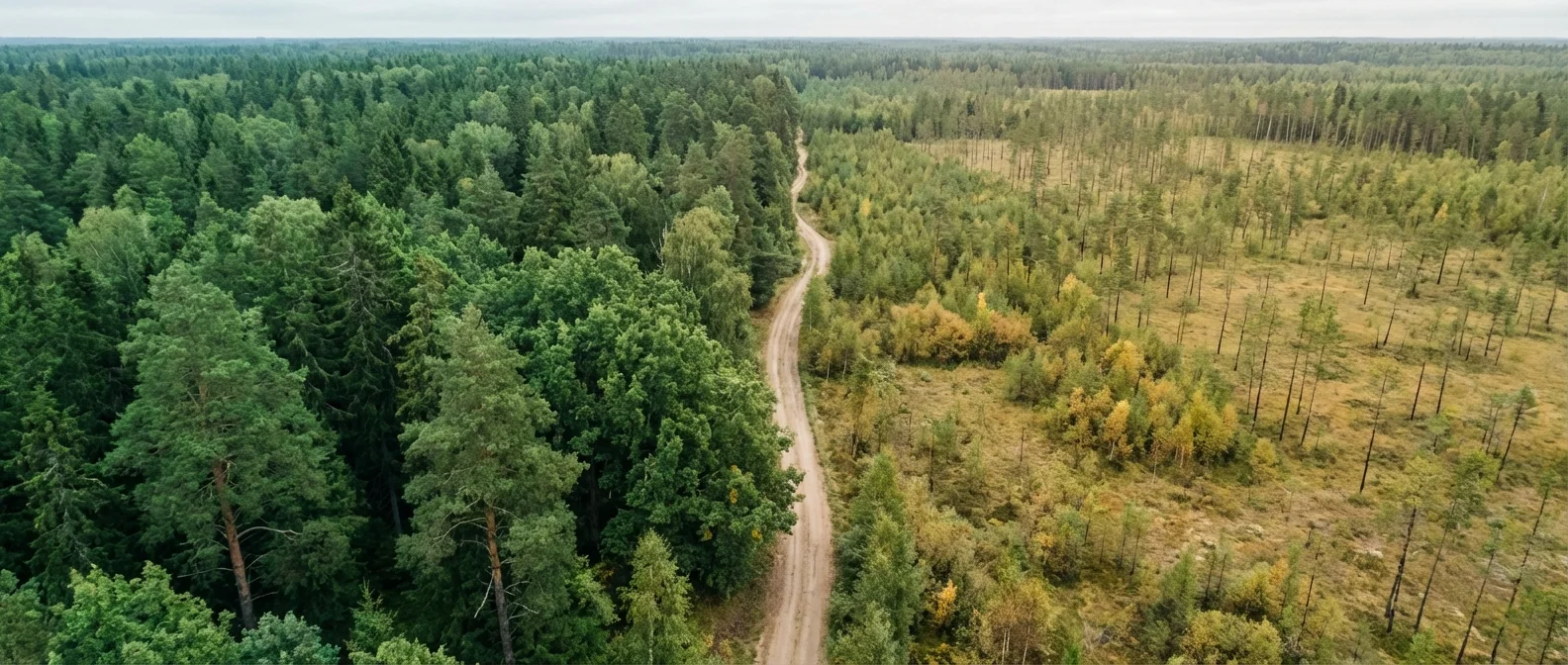
Earth's forests are changing — but not in the way we imagine. They aren't simply disappearing. They're transforming. The slow, resilient trees that have supported entire ecosystems for centuries are being replaced by fast-growing, fragile species — and this quiet shift threatens biodiversity, carbon sequestration, and the stability of entire forested regions. A new study in Nature Plants analyzes over 31,000 tree species to provide the most comprehensive picture of this crisis.
📖 Read more: Scientists Finally Created Silicon Aromatic Ring After 50 Years
🌲 The Great Replacement
The study, led by Wen-Yong Guo from East China Normal University in Shanghai and Jens-Christian Svenning, director of the Center for Ecological Dynamics in a Novel Biosphere (ECONOVO) at Aarhus University in Denmark, reveals a global pattern: slow-growing, specialized tree species — those with thick leaves, dense wood, and long lifespans — are disappearing. In their place, nature's “sprinters” are spreading: fast-growing trees with light leaves and low wood density, such as acacias, eucalyptus, poplars, and pines.
"Slow-growing species form the backbone of forest ecosystems," Svenning explains. “They contribute to stability, carbon sequestration, and resilience to change.” Their disappearance doesn't simply leave gaps — it fundamentally changes how the entire forest functions.
📖 Read more: Forests Glow in UV and Deer Can See It
🔢 The Numbers
Of the more than 31,000 tree species analyzed, the study found that 41% of naturalized alien species (i.e., non-native species growing in the wild) possess traits of fast growth and small leaves. They are ideal for disturbed environments but rarely fill the ecological roles left behind by native species.
"Although these species establish and grow quickly, they are more vulnerable to drought, storms, pests, and climate shocks," says Svenning. "This makes forests less stable and less effective at long-term carbon sequestration."
🌍 Which Regions Are Most at Risk
Tropical and subtropical regions are hit the hardest. That's where most slow-growing species with naturally small geographic ranges are concentrated — making them particularly vulnerable. "We're talking about exceptionally unique species, especially concentrated in tropical regions where biodiversity is high and ecosystems are closely interconnected," Svenning explains. "When specialized native species disappear, they leave gaps that alien species rarely fill."
Guo adds: "Many slow-growing trees with naturally small distribution ranges live here. Because they are confined to very specific areas, they are particularly vulnerable and risk disappearing entirely if their habitats are destroyed or taken over by fast-growing species."
In the colder northern hemisphere, the dominant trend is the invasion of fast-growing naturalized species — trees introduced for forestry or commercial purposes that are now spreading uncontrollably.
📖 Read more: Historic Coral Bleaching Record: Over 50% Damaged
🏭 Why This Is Happening
The causes are no mystery. "Human-induced climate change, deforestation for infrastructure, intensive forestry, logging, and the global trade of tree species all play a role," says Guo. "Fast-growing trees are often actively promoted because they produce timber or biomass quickly. But ecologically, they are often fragile and more prone to disease."
What the Researchers Recommend
"When establishing new forests, much greater emphasis should be placed on slow-growing and rare tree species," says Svenning. “This would make forests more diverse and more resilient.” The solution isn't simply planting trees — it's planting the right trees.
🔬 The Big Picture
The study paints a worrying picture of homogenization. The planet's forests are becoming increasingly “uniform” — fewer unique species, more common, fast-growing, and fragile trees everywhere. This means less resilience to future climate crises, reduced CO₂ sequestration capacity, and the loss of ecosystem services on which billions of people depend.
The publication in Nature Plants is a wake-up call: reforestation without ecological thinking can make things worse rather than better. Forests don't simply need more trees — they need the right trees, in the right place, with enough time to grow.