
Robot waiters are no longer science fiction — they're a reality in over 60 countries worldwide. From China and Japan to the US and Europe, thousands of restaurants have already adopted this technology. But is the investment truly worth it? What are the pros, the cons, and the real cost?
📖 Read more: Hotel Robots: The Silent Revolution in Room Service
In this article, we break down the 6 most popular robot waiter models dominating the market in 2026, compare prices and capabilities, and help you decide if it's the right move for your business.
💡 Did you know? In 2025, the global food service robotics market surpassed $1.2 billion, with projections reaching $4.5 billion by 2030. Greece already has over 50 restaurants with robot waiters.
📊 The Robot Waiter Market in Numbers
Before we dive into the models, let's look at some impressive statistics that show why robot waiters are becoming so popular in the food service industry.
The surge in demand came after the COVID-19 pandemic, when restaurants sought ways to minimize contact and cope with staff shortages. Today, robot waiters aren't just a novelty — they're a solution to real business problems.
🤖 The 6 Most Popular Robot Waiter Models
Let's take a detailed look at the models that have conquered the market. Each one has its own unique features, advantages, and ideal use cases.
📖 Read more: Robot Pool Cleaners: Autonomous Water Cleaning in 2026
BellaBot
by Pudu RoboticsBellaBot is the most popular robot waiter in the world, and it's no accident. With its signature cat-like design and expressive screen that displays changing emotions, it creates a unique experience for customers — especially families with children.
Pudu Robotics, a Chinese company based in Shenzhen, has sold over 80,000 units worldwide. The robot features 4 tray levels, can carry up to 40 kg of payload, and has a battery life of 8–10 hours.
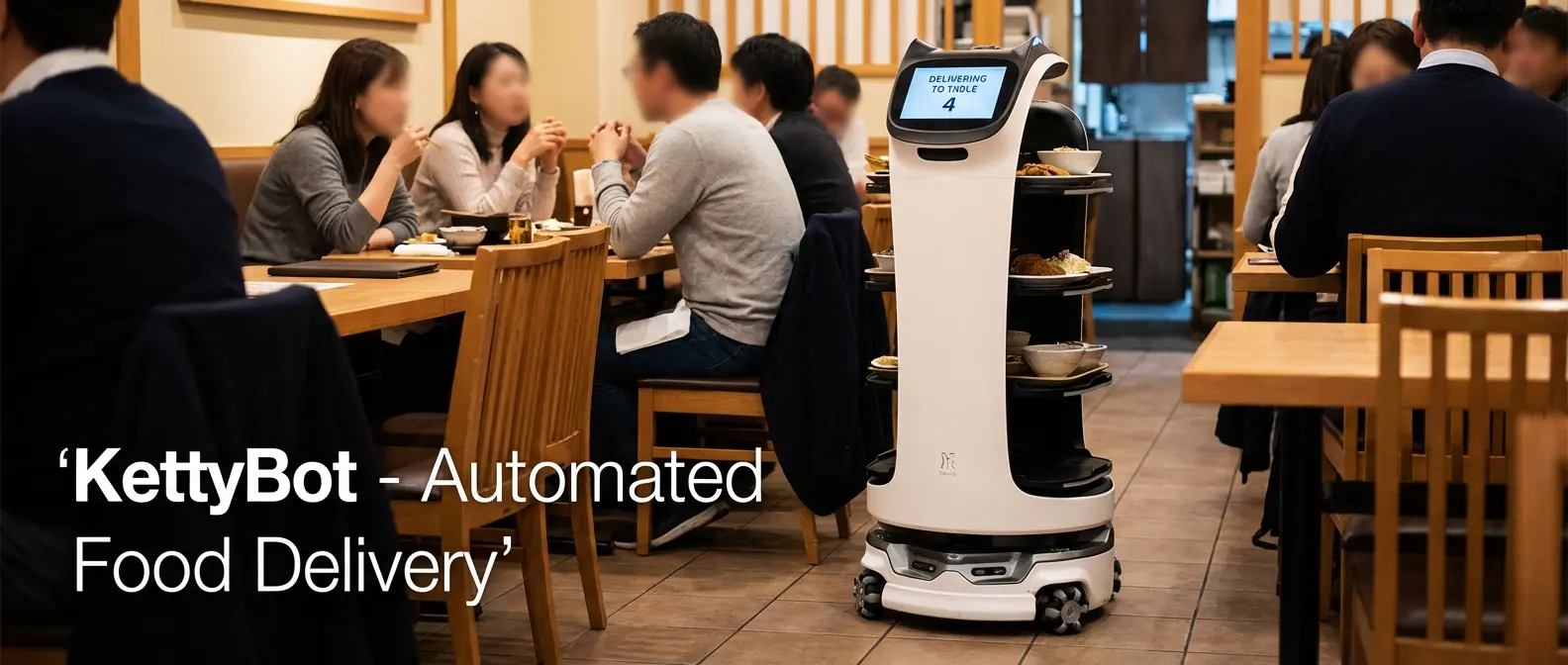
KettyBot
by Pudu RoboticsKettyBot is Pudu's “serious” model — designed for professional use without BellaBot's cute elements. It features a larger 18.5″ advertising display and a heavy-duty 3-level tray system.
Ideal for fine dining restaurants, hotels, and professional venues that want automation without the playful character. It can carry up to 30 kg per level.
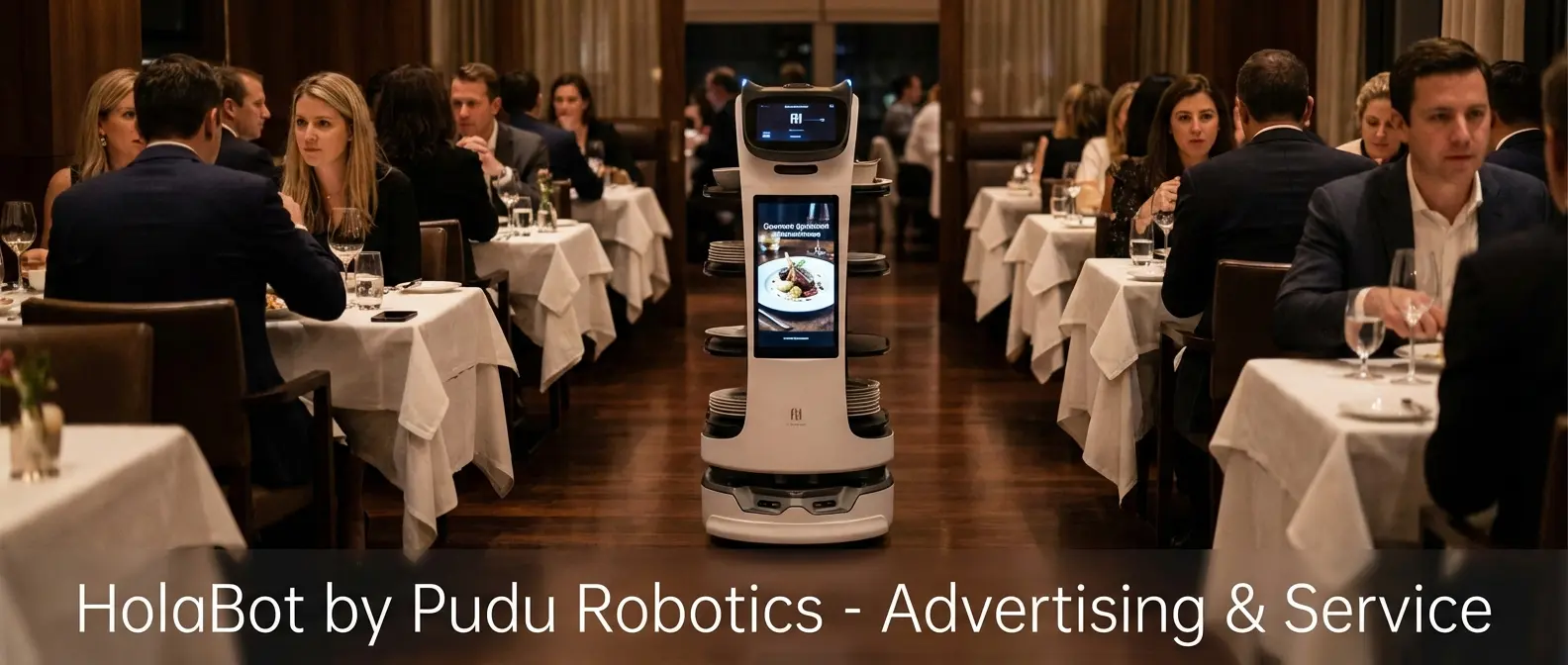
HolaBot
by Pudu RoboticsHolaBot combines two functions: serving and advertising. It features a large screen for displaying menus, promotions, or advertising content, while simultaneously delivering orders.
Ideal for cafés, fast food chains, and shopping malls that want to use the robot as a marketing tool as well. The screen supports video, animations, and interactive content.
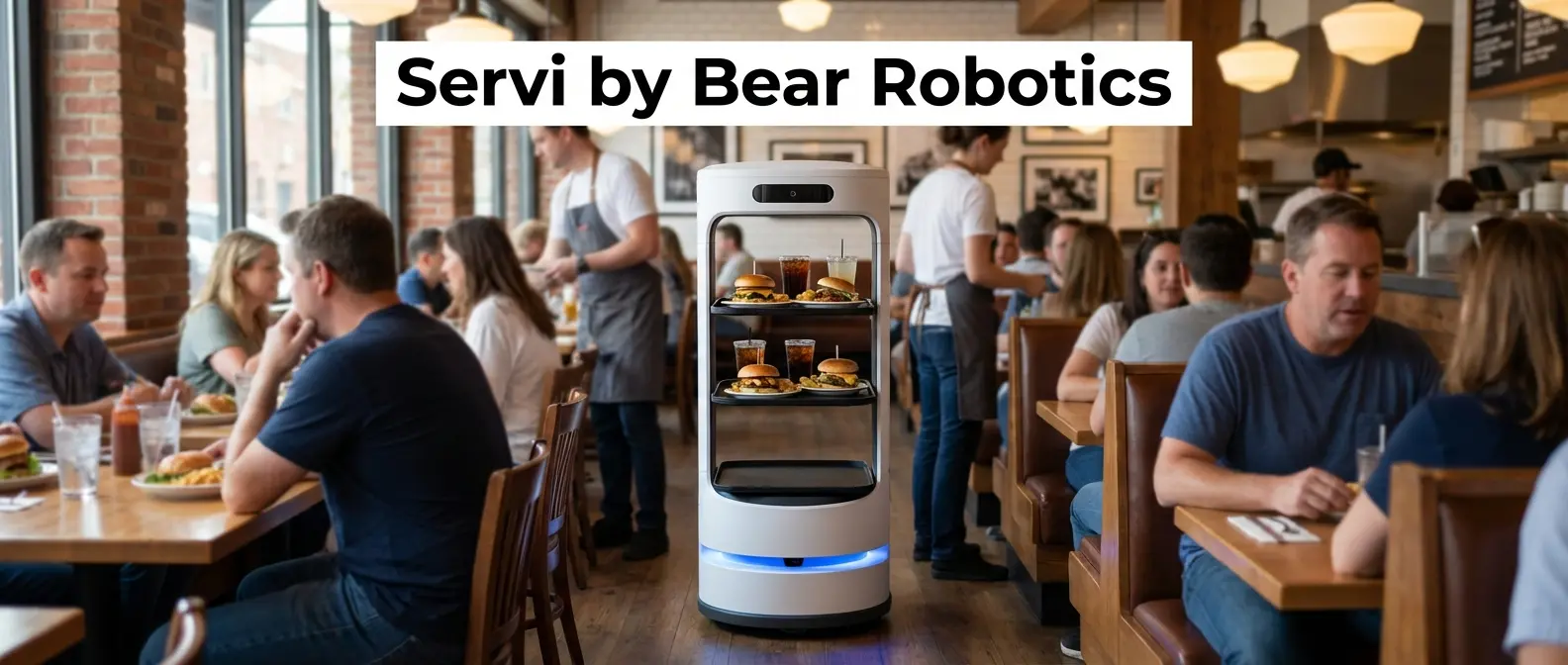
Servi
by Bear Robotics (USA)Servi is the most popular robot waiter in the US, headquartered in California. Bear Robotics was founded by former Google engineers and has raised $81 million in funding.
The design is simple and functional, without unnecessary frills. It focuses on reliability and ease of use, with a system that learns the floor layout within just a few hours. It's used by chains like Chili's, Denny's, and many family restaurants.
📖 Read more: Robots & Jobs: Which Careers Will Disappear by 2030?
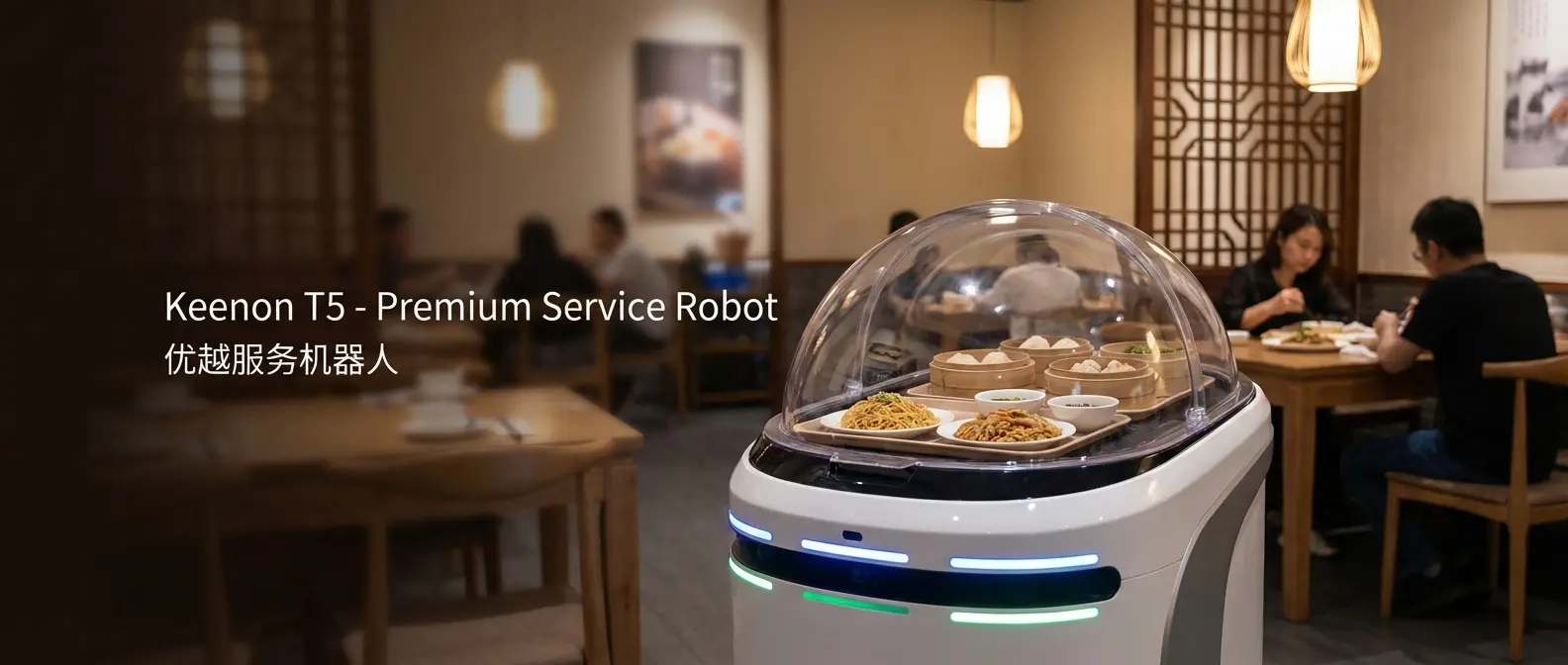
Keenon T5 & Amy
by Keenon Robotics & QBIT RoboticsKeenon T5 is the premium Chinese model with a protective dome for dishes — ideal for restaurants that serve hot or delicate plates. The dome maintains temperature and protects against dust or accidents.
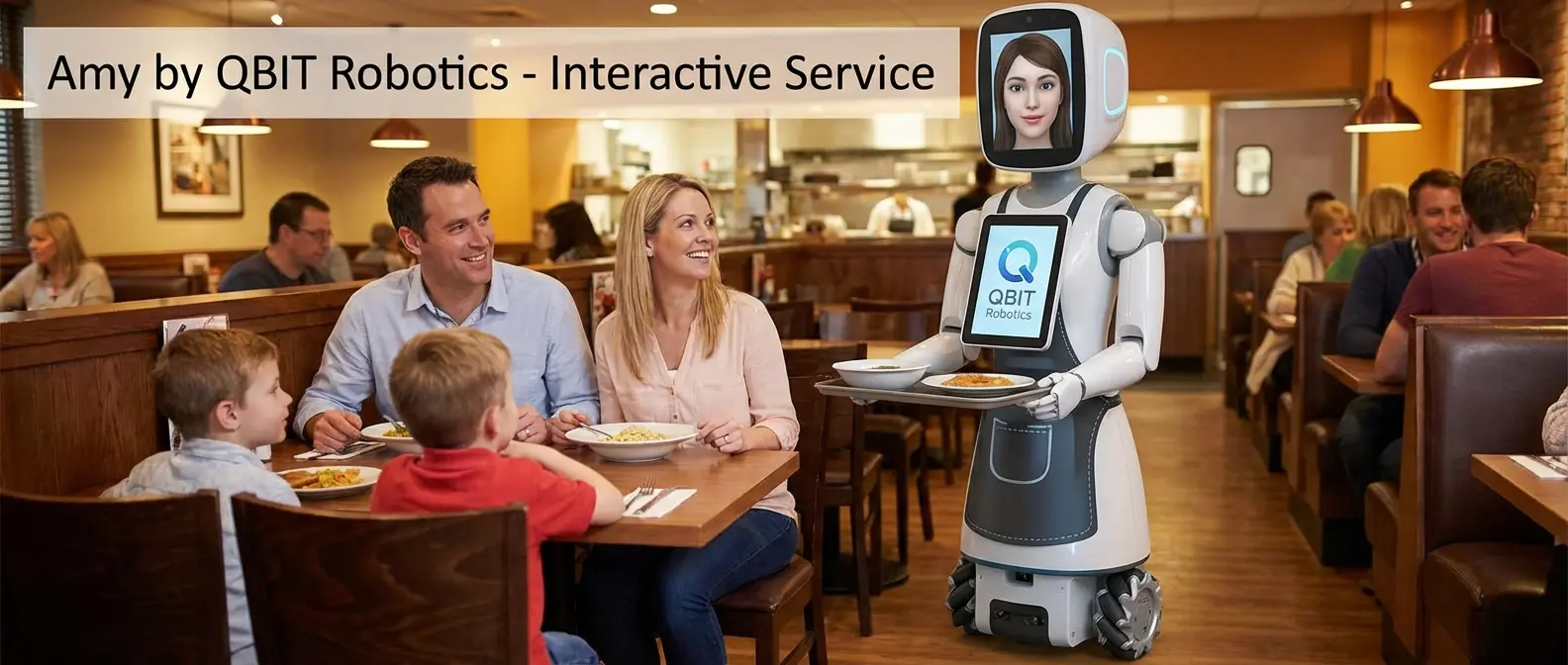
Amy by QBIT Robotics stands out with its humanoid design — it has a friendly “face” with an interactive screen that allows basic communication with customers. Ideal for venues that want a more “human” robotic experience.
📋 Model Comparison
To help you choose, here's a detailed comparison of the key specifications:
| Model | Price (€) | Capacity | Battery Life | Ideal For |
|---|---|---|---|---|
| BellaBot | €15,000–18,000 | 40 kg / 4 levels | 8–10 hours | Family, casual dining |
| KettyBot | €18,000–22,000 | 90 kg / 3 levels | 10–12 hours | Fine dining, hotels |
| HolaBot | €16,000–20,000 | 60 kg / 4 levels | 8–10 hours | Cafés, fast food |
| Servi | €20,000–25,000 | 30 kg / 3 levels | 12 hours | US chains, reliability |
| Keenon T5 | €17,000–21,000 | 40 kg / dome | 8–10 hours | Hot dishes, premium |
| Amy QBIT | €22,000–28,000 | 30 kg / 2 levels | 6–8 hours | Reception, interactivity |
✅ Pros vs ❌ Cons
Before deciding whether to invest in a robot waiter, it's important to understand both the benefits and the limitations of this technology.
📖 Read more: ROS 2: The Robot Operating System Explained
✅ Pros
- 20–30% reduction in staff costs — One robot replaces 1–2 server assistants
- Consistent service — Never gets tired, never has a bad day
- Marketing effect — Customers photograph and share on social media
- Hygiene — Less human contact with food
- 24/7 availability — Works holidays, nights, and weekends
- Increased customer satisfaction — Especially families with children
❌ Cons
- High upfront cost — €15,000–28,000 per unit
- Limited flexibility — Cannot handle complaints or special requests
- Space requirements — Needs flat floors and sufficient clearance
- Technical issues — Software bugs, need for updates
- Staff resistance — Fear of job loss
- Doesn't fully replace a waiter — Still requires human supervision
💰 Cost Analysis & ROI
The big question: Is it financially worth it? Let's break down the numbers for a typical restaurant with 60–80 seats.
| Cost Category | Upfront | Monthly | Annual |
|---|---|---|---|
| Robot purchase (BellaBot) | €16,000 | - | €16,000 (one-time) |
| Installation & mapping | €500–1,000 | - | €750 (one-time) |
| Maintenance & software updates | - | €100–150 | €1,500 |
| Electricity consumption | - | €20–30 | €300 |
| TOTAL Year 1 | - | €18,550 | |
| TOTAL Year 2+ | - | €1,800/year | |
🔄 Payback Calculation
A server assistant in Greece costs approximately €1,200–1,500/month (gross, including contributions). If the robot replaces 50% of an assistant's workload:
- Monthly savings: €600–750
- Annual savings: €7,200–9,000
- Investment payback: 18–24 months
📈 ROI Takeaway: In a high-traffic restaurant, the investment pays for itself in 12–18 months. After that, each year yields a net profit of €5,000–7,000.
🎯 Which Businesses Benefit the Most?
Robot waiters aren't for everyone. Here are the types of businesses that see the greatest return:
📖 Read more: Surgical Robots: AI in the Operating Room 2026
- High-traffic restaurants (80+ seats) — The robot handles more deliveries, resulting in greater ROI
- Buffet & self-service venues — Ideal for clearing empty dishes
- Family restaurants — Kids love robots, creating a memorable experience
- Asian cuisine (sushi, dim sum) — Already popular in Asia; customers expect it
- Tourist areas — Boosts social media exposure
- Large food courts in shopping malls — Long distances, significant time savings
🇬🇷 The Situation in Greece
In Greece, robot waiters first appeared in 2022, and today they can be found in over 50 restaurants — mainly in Athens, Thessaloniki, and popular tourist areas.
The main distributors in Greece primarily import Pudu Robotics products (BellaBot, KettyBot). Retail prices range from €15,000 to €25,000 depending on the model and additional features.
An interesting note: Many Greek restaurants opt for leasing rather than purchasing, with monthly costs of €400–600 that include maintenance and technical support.
🔮 The Future: What's Coming in 2026–2027
Technology is evolving rapidly. Upcoming models are expected to include:
- Robots with arms — Capable of placing dishes directly on the table
- AI for order-taking — Voice recognition and automated ordering
- POS system integration — Automatic kitchen notifications
- More affordable prices — A 20–30% price drop is expected by 2027
- Greek language & voice support — Full Greek language integration
🚀 Conclusion: Robot waiters are a smart investment for high-traffic restaurants looking to cut costs and create a unique dining experience. With ROI in 12–18 months and prices on the decline, 2026 is the ideal time to evaluate.