📖 Read more: NVIDIA Physical AI: How It Trains Every Robot on Earth
Introduction: A New Era for Artificial Intelligence
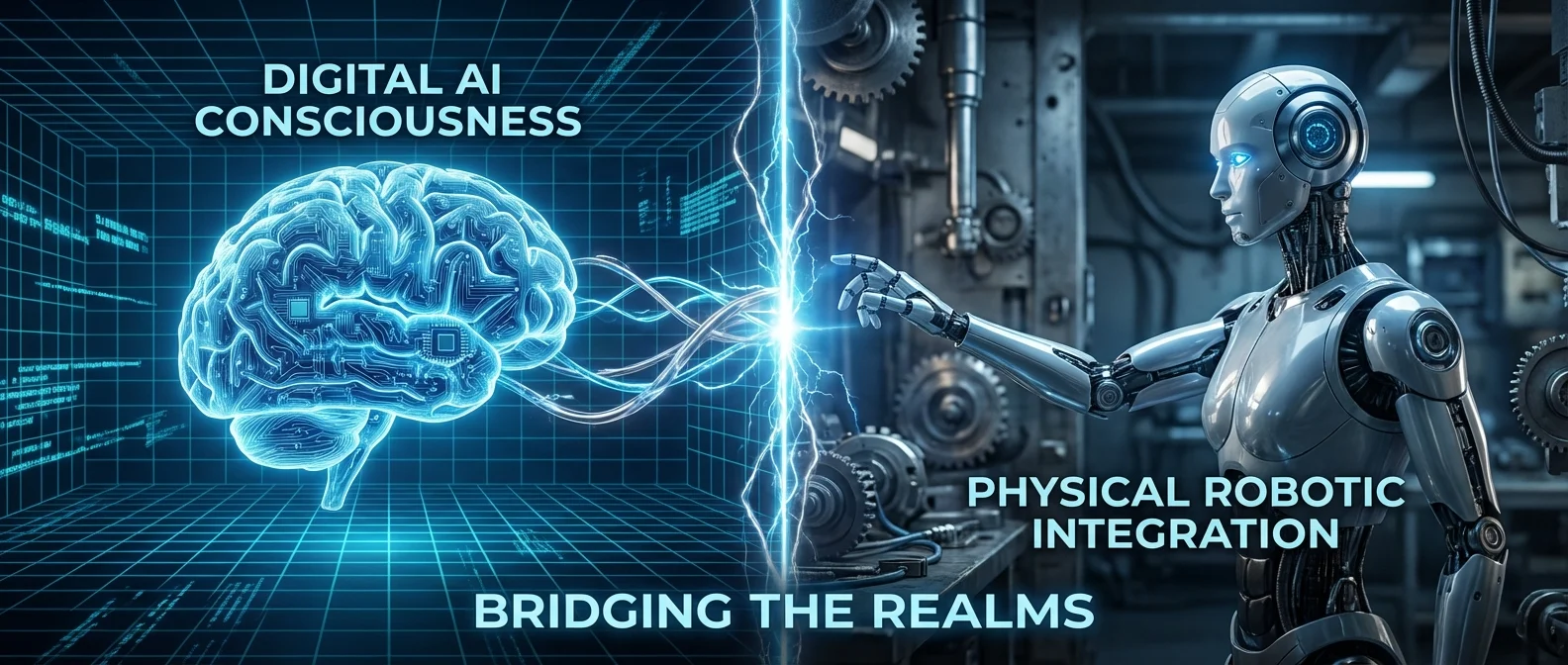
For decades, artificial intelligence operated behind screens and inside servers. Language models processed text, computer vision systems recognized images, and prediction algorithms crunched numbers — all inside servers, with zero contact with the physical world around us. In 2026, that changes. A new category of AI known as Physical AI is stepping out of data centers and beginning to understand, interact with, and act in the real, physical world.
Jensen Huang, CEO of NVIDIA — the first company to surpass $5 trillion in market capitalization — now speaks openly about a “Physical AI era” in which robots, autonomous vehicles, and industrial systems will develop a deep understanding of physics. This isn't some distant future — it's technology that's already being developed and deployed.
What Exactly Is Physical AI?
Physical AI represents a shift in how we design and train artificial intelligence. The term refers to AI systems that understand the laws of physics and can act effectively in the physical world — through robotic bodies, sensors, and motion mechanisms.
Unlike a chatbot or an image generation algorithm, Physical AI needs to “know” that objects fall due to gravity, that a glass shatters when it hits the floor, that friction affects movement, and that space has three dimensions. These insights, which humans take for granted as instinct, must be “learned” by machines through millions of simulations and interactions.
The core principle is simple: if we want robots that can walk, pick up objects, drive, or perform surgery, it's not enough to give them rules. We need to give them an understanding of the world.
How It Differs from “Traditional” AI
Traditional artificial intelligence operates primarily in digital environments. Large Language Models (LLMs) like GPT, Claude, and Gemini produce text, answer questions, and write code. Computer Vision models recognize faces, objects, and scenes in images. Generative AI models create images, music, and video. In every one of these cases, the AI operates entirely in the digital domain — it receives digital data and produces digital results.
Physical AI, by contrast, must deal with the chaotic, unpredictable, continuous physical world. The world isn't pixels on a screen — it's surfaces with friction, objects with weight, spaces full of obstacles, and weather conditions that change. A robot making coffee needs to understand the flow of liquid, the temperature of water, the pressure needed to press a button, and the geometry of a cup — all simultaneously.
Physical AI therefore requires different training methods, data, and model architectures than digital AI systems.
How It's Trained: The Sim-to-Real Revolution
One of the biggest hurdles in developing Physical AI has always been training. You can't let a robot worth tens of thousands of euros fall, crash, and break millions of times until it “learns” to walk. The solution is called Sim-to-Real: training in extremely realistic virtual simulations that mirror real-world physics, then transferring that knowledge to real hardware.
NVIDIA leads this field with a suite of platforms that form a complete Physical AI ecosystem. The Omniverse platform, first unveiled in 2020, is a virtual environment designed for engineers and researchers where they can build digital twins of entire factories, warehouses, or cities. Inside Omniverse, Isaac Sim — the robot simulation platform — allows robots to train inside worlds that faithfully follow the laws of physics.
In 2025, NVIDIA announced two more critical tools. Cosmos is a world foundation model — an AI model that generates synthetic training data representing physical scenarios. And Newton, a physics engine developed in collaboration with DeepMind and Disney Research, delivers even more realistic physics simulations for robot training.
GR00T N1: A Foundation Model for Humanoid Robots
One of the most impressive steps in Physical AI is Isaac GR00T N1, an open-source foundation model announced by NVIDIA at GTC 2025. GR00T N1 was designed specifically to accelerate humanoid robot development, giving them the ability to “understand” physical interactions and execute complex movements.
Companies like Neura Robotics, 1X Technologies, and Vention are already among the first to use the model. Jensen Huang declared that “the age of generalist robotics is here” — meaning robots will no longer be specialized for just one task but will be able to adapt to many different physical interactions.
This is radically different from the robots we know today. Industrial robots perform predetermined, repetitive motions. Physical AI robots can react to unpredictable situations, handle objects they've never seen before, and navigate spaces that haven't been mapped.
Real-World Applications
Physical AI isn't just about robotics — it applies to every field where artificial intelligence needs to interact with the physical world.
Autonomous Vehicles
Self-driving is perhaps the most well-known application of Physical AI. NVIDIA already provides the chips and platforms that power many of the world's most advanced autonomous systems. The NVIDIA Drive platform is used by Toyota, Mercedes-Benz, and dozens of other manufacturers. In December 2025, NVIDIA released Alpamayo-R1, an open-source vision-language-action model designed specifically for autonomous vehicles, pursuing greater transparency in how the AI “thinks” while driving.
Humanoid Robots
Humanoid robot companies are in full development mode. Figure AI, Tesla (Optimus), 1X Technologies (Neo), and Unitree are all building humanoid robots that rely on Physical AI to walk, grasp objects, and work alongside humans. Without Physical AI, these robots would be nothing more than expensive statues. With Physical AI, they become functional tools.
Manufacturing and Logistics
In warehouses and factories, Physical AI robots can identify and handle objects of varying shapes and sizes, navigate spaces with human traffic, and adapt to environmental changes. Amazon already uses thousands of robots in its warehouses, and the next generation will run entirely on Physical AI architectures.
Medical Robotics
In medicine, Physical AI enables surgical robots to understand the tissues they're manipulating, adjust pressure in real time, and respond to unexpected situations during procedures. This dramatically increases precision and reduces patient risk.
💡 Physical AI by the Numbers (2026)
$5+ trillion — NVIDIA's market cap, driven largely by AI and robotics.
92% — NVIDIA's share of the discrete desktop/laptop GPU market.
80%+ — Share of the GPU market for AI model training controlled by NVIDIA.
75%+ — TOP500 supercomputers worldwide run on NVIDIA chips.
Isaac GR00T N1 — First open-source foundation model for humanoid robots.
Why NVIDIA Dominates This Space
It's no coincidence that NVIDIA sits at the center of the Physical AI revolution. The company invested over a billion dollars developing CUDA — a software platform that transformed GPUs from graphics chips into massively parallel processing powerhouses. That decision, which initially seemed risky, proved to be the foundation on which the entire modern AI revolution was built.
Today, NVIDIA doesn't just make hardware. It offers a complete ecosystem: the chips (Blackwell, Vera Rubin), the simulation platforms (Omniverse, Isaac Sim), the foundation models (GR00T N1, Cosmos), the physics engines (Newton), and the development tools. This vertical integration means a robotics company can use exclusively NVIDIA tools for the entire pipeline — from design all the way to real-world deployment.
At GTC 2025, Huang projected that AI-driven infrastructure would bring NVIDIA data center revenue of $1 trillion by 2028 — a number that sounds enormous but reflects the transition of every industry toward Physical AI technologies.
Digital Twins: The Hidden Power of Physical AI
A critical element that makes Physical AI possible is digital twin technology. These are virtual replicas of real objects, machines, or entire environments that update in real time with data from sensors.
Imagine a digital twin of an entire factory: every machine, every conveyor belt, every robot represented digitally with full physical accuracy. In this virtual factory, robots can train 24/7 with no risk of damage, no material costs, and at speeds hundreds of times faster than real time. Once training is complete, the knowledge transfers to real robots — that's the essence of the Sim-to-Real pipeline.
NVIDIA's Omniverse platform is already used by companies across sectors ranging from automotive to logistics, robotics, and even gaming.
Challenges and Limitations
Despite impressive advances, Physical AI faces significant challenges. The first is the so-called reality gap — the difference between what a robot learns in simulation and what it encounters in the real world. Even the best simulations can't fully replicate the imperfections, noise, and complexity of reality.
Second, there's the issue of safety. A chatbot giving a wrong answer causes annoyance. A Physical AI robot making a wrong move can cause injury or damage. Certifying and regulating these systems will be a massive challenge in the coming years.
Third, the computational power required is enormous. Training a Physical AI model demands huge numbers of GPUs, massive amounts of energy, and extensive training time. This explains why NVIDIA — the manufacturer of those very GPUs — holds such a powerful position.
Why This Matters to All of Us in 2026
Many people wonder: “Why should I care about Physical AI?” The answer is that this technology will affect nearly every aspect of daily life within the next decade.
The robots that will clean our homes, serve us at restaurants, deliver packages, care for the elderly, plant trees, construct buildings, save lives in wildfires, and explore planets — all of them will run on Physical AI. This isn't a distant science fiction scenario. It's technology already being developed by the largest tech companies on the planet.
Understanding Physical AI is now as important as understanding the internet was in the late 1990s. We're at exactly that inflection point — and those who grasp the shift early will be better prepared for the world that's coming.
The Future of Physical AI
Looking ahead, Physical AI is expected to evolve on three main fronts. First, foundation models for robots will become as powerful as today's LLMs — only instead of generating text, they'll generate movements, navigation strategies, and physical interactions. Second, simulation will become so realistic that the Sim-to-Real transition will be nearly seamless. Third, general-purpose robots — robots that can learn almost anything — will begin appearing in homes, hospitals, schools, and offices.
Jensen Huang believes robotics will become the largest industry in the world — bigger even than the automotive industry. And at the heart of that industry will be Physical AI.
We're not in the future. We're at its beginning. And this beginning — with tools like Omniverse, Isaac GR00T N1, Cosmos, and Newton — marks an era where machines won't just “think” — they'll act in the physical world, right alongside us.