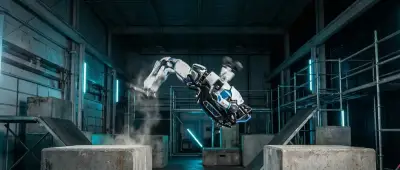
When Boston Dynamics first showcased Atlas doing parkour, the world was speechless. A 1.5-meter-tall robot running, jumping, doing backflips, and landing with the precision of a professional athlete — something that seemed impossible just a decade ago. Now, in early 2026, Atlas has evolved into something even more impressive, and the question is no longer “if” but “when” we'll see it working alongside us.
📖 Read more: Atlas vs Optimus: Which Humanoid Robot Wins?
💡 Atlas is the most advanced humanoid robot in the world, capable of performing moves that even professional parkour athletes would envy.
The Evolution of Atlas: From Lab to Factory
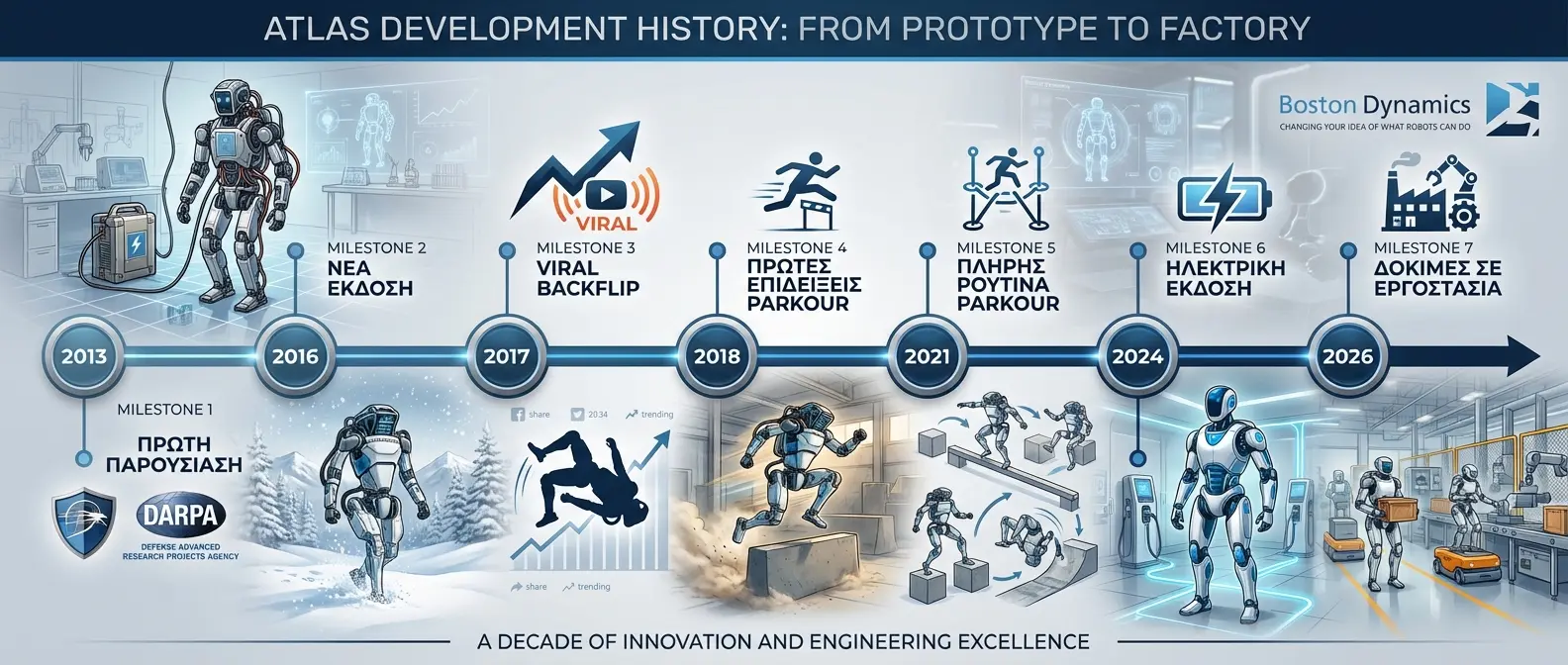
Atlas started as a DARPA research program in 2013, aimed at creating robots for rescue missions. Today, after more than 12 years of continuous development, it has become a cutting-edge machine with capabilities that exceed all expectations.
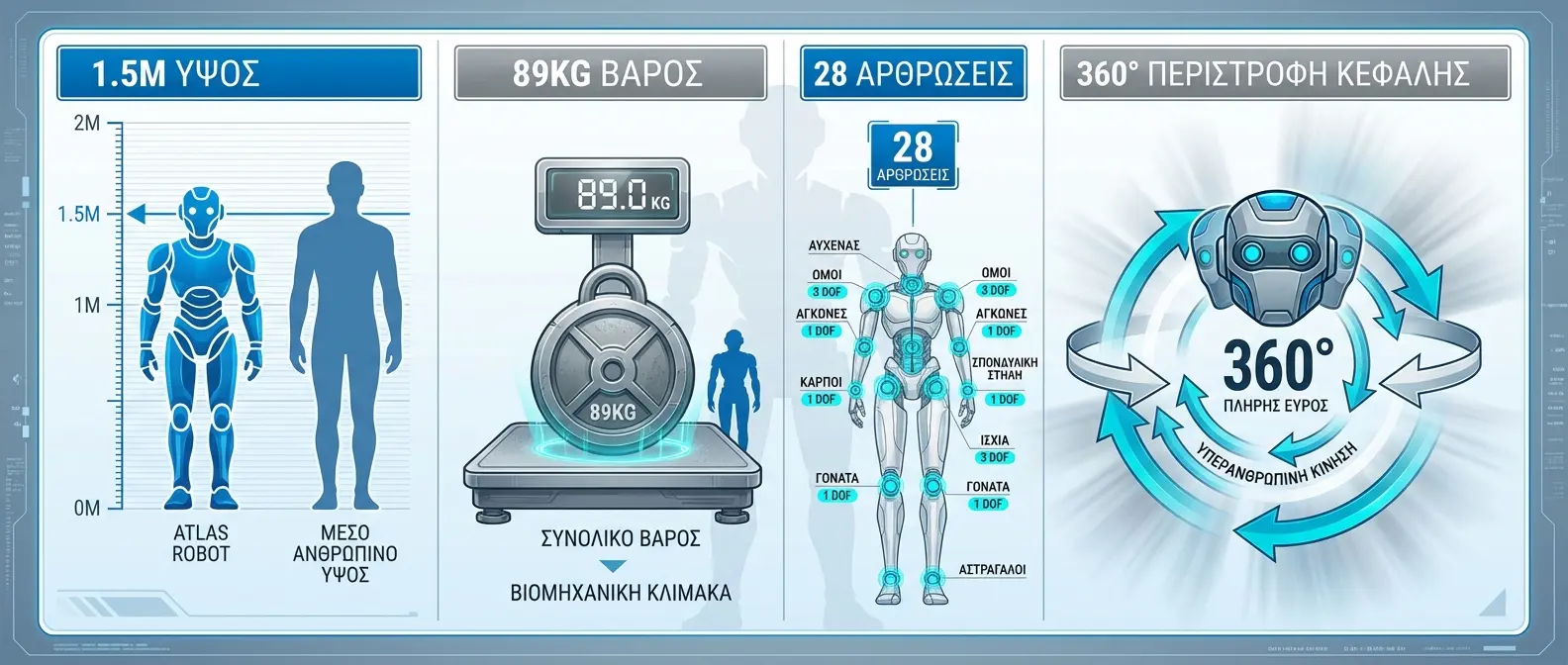
Technical Specifications
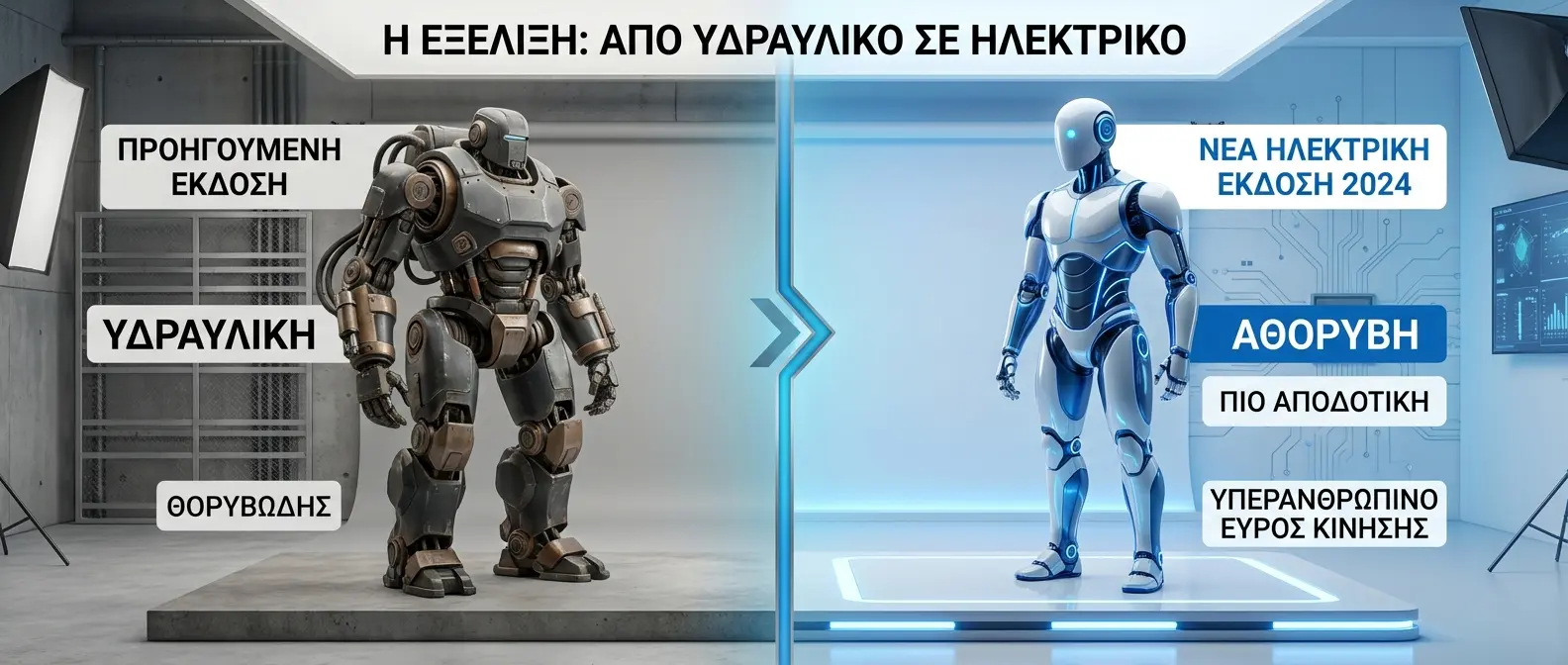
The new version of Atlas, unveiled in April 2024, is fully electric. Unlike the previous hydraulic version, the new platform is quieter, more energy-efficient, and — most impressively — has a range of motion that surpasses even the human body.
The New Demos That Left the World Speechless
The latest Atlas demos have gone viral, racking up millions of views. Watch the latest video showcasing the robot's incredible capabilities:
In this video, Atlas demonstrates:
- Backflips with perfect landings — Something few humans can pull off
- Parkour in complex environments — Jumps, climbs, and gap crossings
- Object manipulation while moving — Grabbing and throwing objects with precision
- Automatic fall recovery — Gets back up on its own from any position
The Technology Behind the Moves
How does an 89-kilogram robot move with such grace and precision? The answer lies in a combination of advanced technologies:
1. Model Predictive Control (MPC)
Atlas uses Model Predictive Control algorithms that predict the robot's future states and calculate optimal movements in real time. This means the robot “thinks” several steps ahead, much like a chess player.
2. Reinforcement Learning
Beyond traditional programming, Atlas is trained through reinforcement learning. It tries thousands of movements in simulation, learns from its mistakes, and continuously improves. This technique allows it to develop “instincts” that would be impossible to program manually.
3. Advanced Perception
The Atlas perception system includes:
- LiDAR sensors for 3D environmental mapping
- Stereoscopic cameras for depth estimation
- IMU (Inertial Measurement Unit) for precise position and motion awareness
- Force/Torque sensors at every joint
Atlas Evolution Timeline
First Atlas unveiling as part of the DARPA Robotics Challenge
New version — Lighter, more agile, first walking-on-snow demonstrations
The viral backflip video — Atlas becomes a global phenomenon
First parkour demonstrations — Jumps, climbs
Full parkour routine — Atlas moves like a professional athlete
New electric version — Complete redesign for commercial use
First real-world factory trials — The era of humanoid robots begins
When Will We See It in Factories?
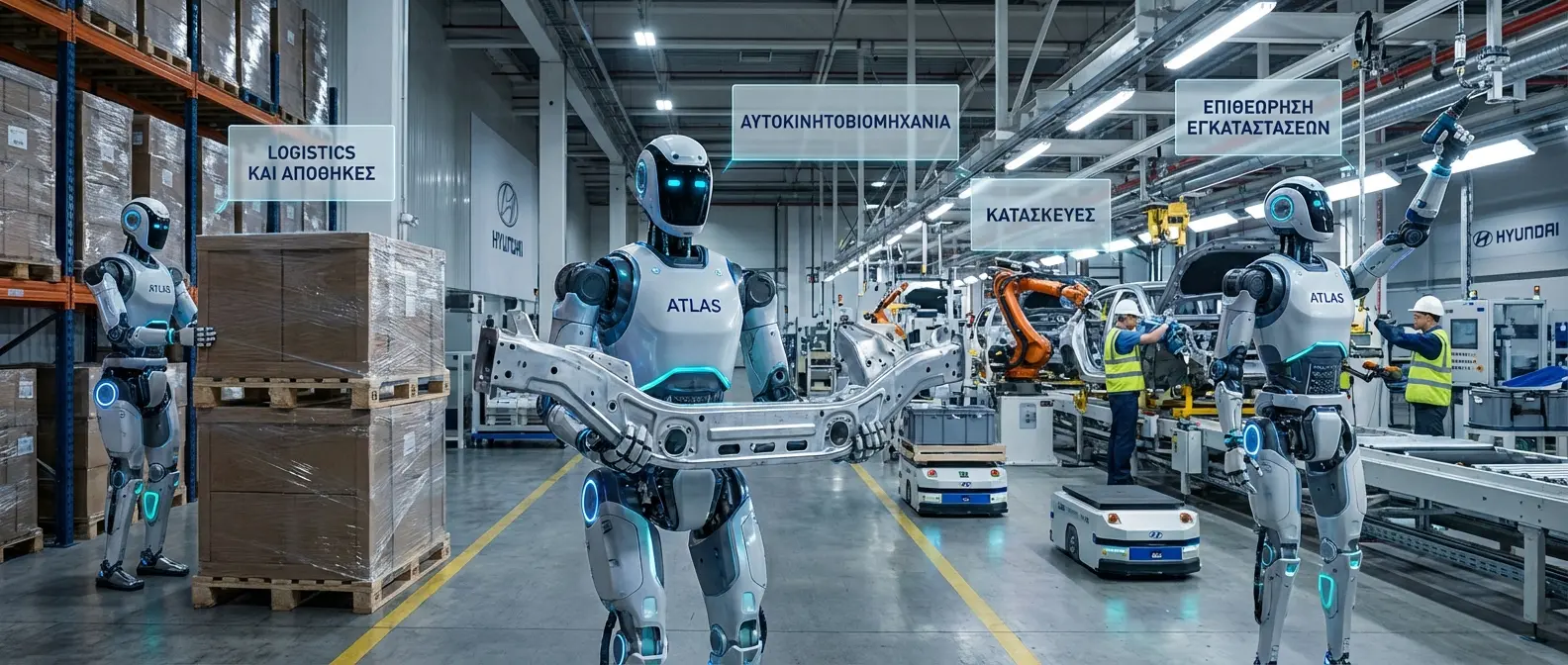
Hyundai, which acquired Boston Dynamics in 2021, has a clear plan: it wants to deploy Atlas on its production lines. And it's not alone — many industries are closely watching the developments.
The First Applications
According to Boston Dynamics, the first real-world applications of Atlas will include:
- Logistics and Warehouses — Moving heavy objects, stacking pallets
- Automotive Industry — Tasks on assembly lines
- Construction — Working in hard-to-reach areas, transporting materials
- Facility Inspection — Checking hazardous or inaccessible zones
📅 Forecast: Boston Dynamics is aiming for the first commercial Atlas installations in Hyundai factories by the end of 2026, with broader availability in 2027–2028.
The Competition: Figure, Tesla, and Others
Boston Dynamics is no longer alone in the humanoid robot market. Competitors like Figure (with the Figure 02), Tesla (with Optimus), and Agility Robotics (with Digit) are all vying for a piece of the pie.
However, Atlas retains a significant advantage: more than 10 years of research and development, thousands of hours of testing, and a team with unmatched experience in building robots that move naturally.
The Future of Robotics
Atlas represents something more than an impressive technological achievement. It's a first taste of a future where robots will work alongside us, taking on dangerous, repetitive, or physically demanding tasks.
Naturally, this raises questions: How will it affect the job market? What are the ethical implications? How do we ensure this technology will benefit society?
These questions will become increasingly pressing as robots like Atlas become more capable and more affordable. One thing is certain: the era of humanoid robots is no longer science fiction — it's here.
🚀 Conclusion: Boston Dynamics Atlas is the most advanced humanoid robot in the world, and soon we'll see it working in real-world environments. Watch this space — the most exciting developments are yet to come.