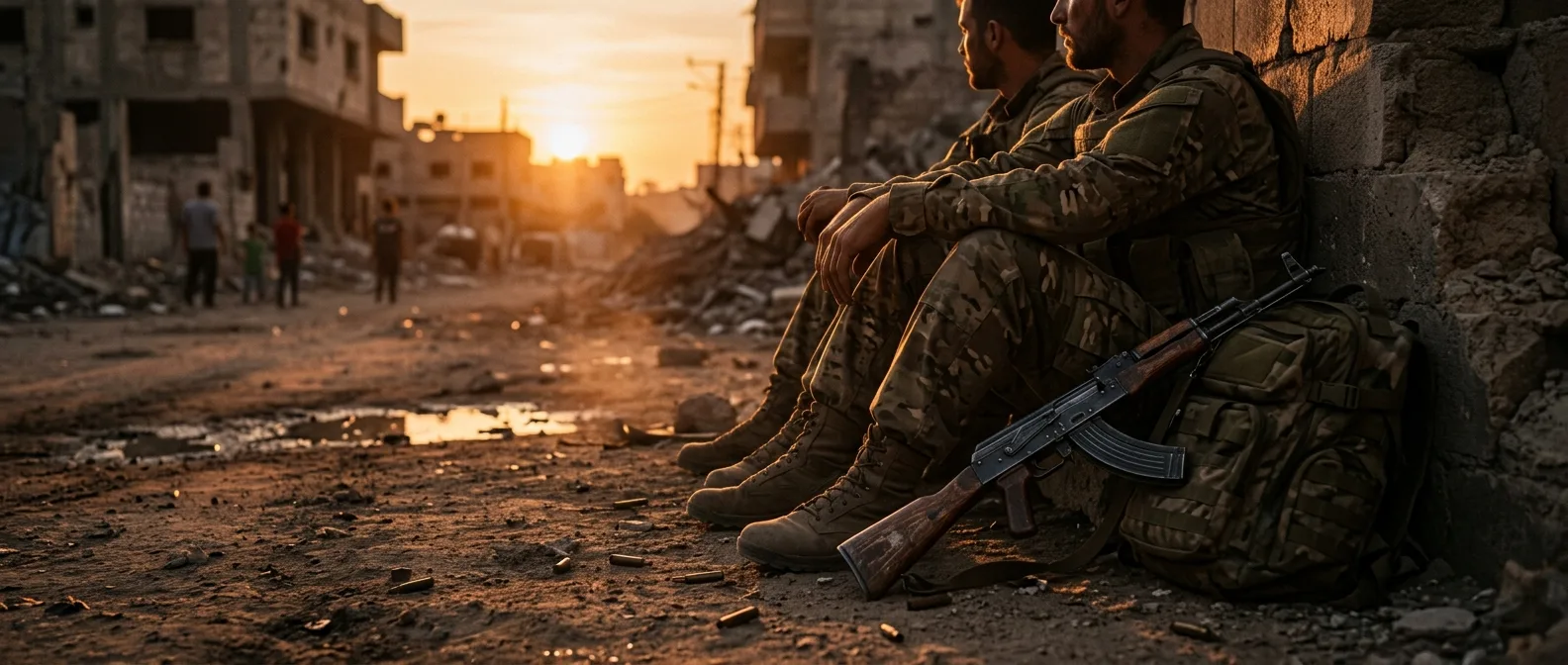
Six minutes with a psychological test. That's all it takes to predict whether someone will support a war — or condemn violence against civilians. The answer lies less in political beliefs than in personality structure.
📖 Read more: Boomerasking: Why Question Hijacking Kills Conversations
🧠 When Childhood Trauma Shapes War Psychology
The 2025 study "Authoritarianism and the Psychology of War" uncovered something disturbing: children who suffered emotional or physical abuse become more likely to support military conflicts as adults. This isn't coincidence. Thousands of British citizens participated in research examining how early experiences shape our views on violence. "People in my family said hurtful or insulting things to me." "They hit me so hard I had bruises or marks." These experiences — not poverty or lack of education — emerged as significant predictors of war support. The psychology here is brutal but simple. Someone who grew up learning that violence solves problems tends to see it as acceptable later.Hierarchies and Dominance: Who Wants Other Countries "Put in Their Place"
There's a personality type that worships hierarchies. "Social dominance orientation" measures how much someone considers it natural that some groups are superior to others. People with high scores agree with statements like: "Winning is more important than how you play the game" or "Sometimes war is necessary to put other countries in their place."1,000+ Study participants
5 Core personality traits measured
📖 Read more: BrainIAC AI Predicts 10 Brain Diseases from Single MRI Scan
⚡ The Psychology of Submission: Why Some People Worship Authority
More disturbing is the finding about "authoritarian submission." This personality type is characterized by excessive respect for power and aggression toward those who challenge official positions. "Our country would be great if we did what the authorities tell us." "Children should learn to obey authorities." These people don't support war because they believe it's right — they support it because authorities support it.The pattern is terrifying: submission upward, aggression sideways and downward."The more submissive people are to power, the harsher they become toward those who deviate from what authorities prefer"
Yendell & Herbert Study, 2025
The Conspiracy Theory Paradox
Surprise? Those who believe in conspiracy theories are less likely to support wars. Research shows their distrust of government and military narratives makes them skeptical of military interventions. This affects how politicians might approach 2026's conflicts. "Make America Great Again" supporters who often believe alternative explanations for events may be harder to convince about the necessity of new military interventions.📖 Read more: Love Bombing: The Dark Side of Excessive Love
🔬 When Sadism Meets War Psychology
The darkest aspect of the research concerns the relationship between "dark" personality elements and war support. Sadistic personality — the tendency to enjoy cruelty and others' pain — proved the strongest predictor of military conflict support.From the "Dark Triad" (psychopathy, narcissism, machiavellianism), only psychopathy significantly connected to combat support. Narcissism and machiavellianism — despite expectations — showed no statistically significant relationship.
This means war support doesn't come from selfishness or strategic manipulation, but from deeper inclinations toward aggression and dominance.Violence Against Civilians: The Difference That Matters
Research by Russian scientists Gulevich, Osin, and Chernov in 2022 revealed something critical: there's a difference between supporting military operations generally and approving violence against civilians specifically. Most people who support military operations don't necessarily support violence against civilians. Here, socio-psychological factors like national identification and trust in the political system play roles. But those who approve extreme measures — property theft, destruction of civilian infrastructure, even nuclear weapons use — are mainly individuals with high Dark Triad scores. The mechanism that allows this stance is "moral disengagement": the psychological process that makes harmful behaviors seem acceptable or necessary.📖 Read more: Narcissism: How to Deal with a Narcissist
📊 "Reverse Engineering" Personality from War Psychology Views
One of the most fascinating implications of this research is that we can now "reverse engineer" personality. If we know someone's stance toward war, we can guess aspects of their personality — even their childhood.War Support
Likely abuse history, high social dominance, authoritarian submission
War Opposition
Believes conspiracy theories, low authoritarian submission, high empathy