📖 Read more: Cyberbullying: The Psychological Impact of Online Harassment
The Scale of the Problem
📖 Read more: Attachment Theory: How Childhood Shapes Your Relationships
The Dangers
Privacy & Digital Footprint
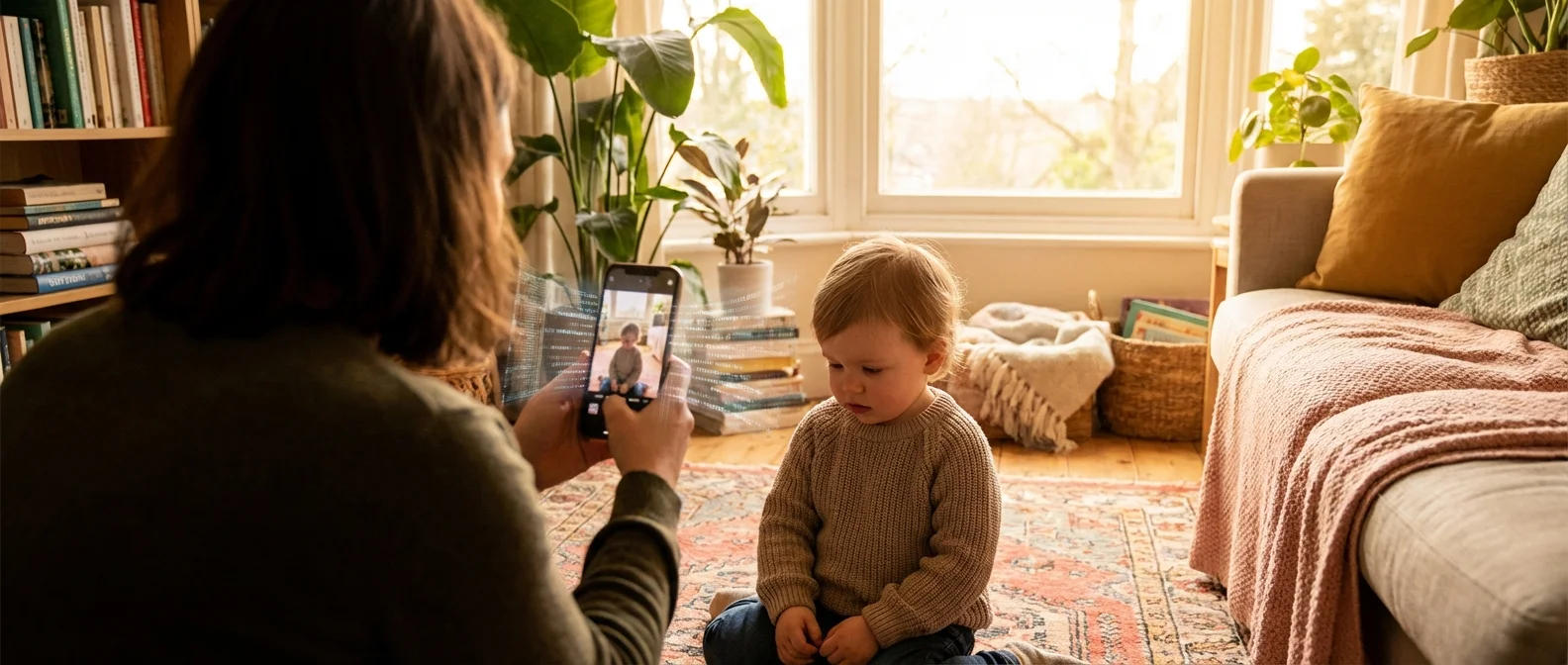
Every photo uploaded creates a permanent digital footprint without the child's consent (Steinberg, 2017). The child didn't choose to be public — the parents decided for them.
Safety
Photos of children with geographic data, school names, and routines can be exploited by malicious actors. Brosch (2016) warns of personal data misuse risks.
📖 Read more: Children's Screen Time: How Much Is Too Much?
Psychological Impact
When children grow up and discover their online presence, they may feel shame, anger, or a breach of trust toward their parents (Blum-Ross & Livingstone, 2017). The feeling that their privacy was violated runs deep.
📖 Read more: Loneliness in the Digital Age: Why We Feel More Alone
What Parents Can Do
Ask yourself: “If my child were 16, would they want to see this photo online?”
Avoid: bath photos, embarrassing moments, information about school/location/routines.
Minimize: share with a close circle, not publicly. Make your profile private.
📖 Read more: Empathy: The Most Important Skill of the 21st Century
Recognize: your child has a right to privacy, even from their parents.
The best gift you can give your child is the right to decide who they'll be online.
Scientific Sources
- Steinberg, S. B. (2017). Sharenting: Children's Privacy in the Age of Social Media. Emory Law Journal, 66, 839–884.
- Brosch, A. (2016). When the Child is Born into the Internet: Sharenting as a Growing Trend among Parents on Facebook. The New Educational Review, 43(1), 225–235. DOI: 10.15804/tner.2016.43.1.19
- Blum-Ross, A. & Livingstone, S. (2017). “Sharenting,” parent blogging, and the boundaries of the digital self. Popular Communication, 15(2), 110–125. DOI: 10.1080/15405702.2016.1223300