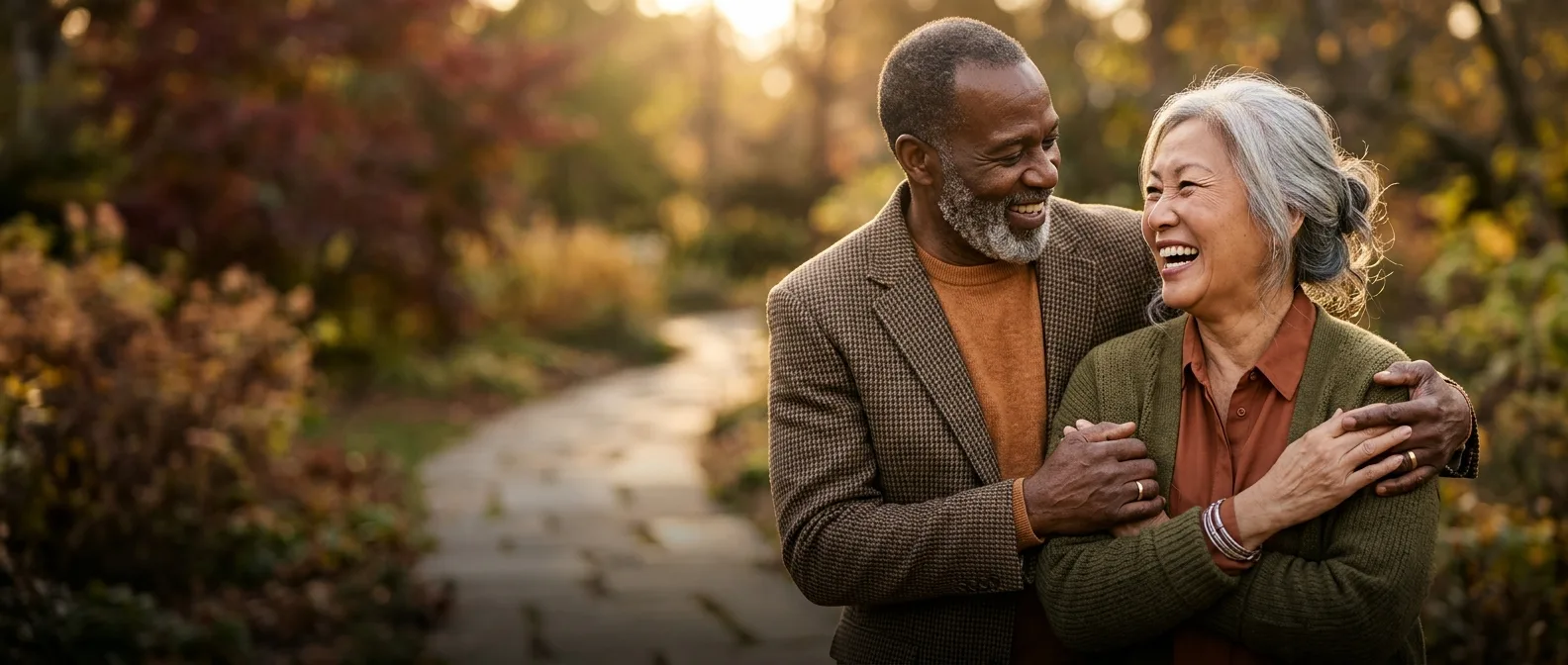
Society tells us love and sexuality belong to the young. Dead wrong. A University of New Hampshire study just proved that myth false.
Here's what 2026 brought us: 97% of adults over 60 consider sex essential to romantic relationships. Not "nice to have." Not "if it happens." Essential. Everything we thought we knew about aging and sexuality needs a rewrite.
Lauren Harris, an associate professor in UNH's human development department, published her research in the Journal of Sex Research, challenging common assumptions. Her team studied 100 single adults aged 60-83 who were actively using dating apps. Her findings reveal a different reality.
📖 Read more: Travel Friendships: Why They Vanish After You Return Home
📊 Numbers That Shame Our Stereotypes
"Many of the people I spoke with said that a relationship without sex felt more like friendship — and they already had plenty of friends," Harris explains. One participant put it bluntly: "If I was looking for a relationship without sex, I'd just spend time with my friends playing golf or fishing."
They're seeking romance and physical connection. Not just companionship.
🧠 Rewriting the Aging Playbook
For decades, society has locked onto one image: older adults garden, babysit grandkids, and take walks. Sexuality? A closed chapter. Harris's data contradicts this assumption.
"We simply have more single older adults today than we've ever had in the past"
Lauren Harris, UNH
She's right. People live longer. Divorce after 50 is rising. Widowhood comes later. Someone who used to be single for 5-10 years might now be single for 30 years. Thirty full years where society expects them to "settle" for an asexual existence.
The Big Lie About Physical Changes
Yes, bodies change. Yes, there are challenges — dryness, erectile dysfunction, reduced energy. But here's the problem with our assumptions: we think these changes automatically mean "game over."
Study participants saw it differently. Physical changes didn't discourage them. Instead, they talked about adaptation: medications, lubricants, hormone therapy, different definitions of intimacy. Creativity has no age limit.
📖 Read more: Attachment Theory: How Childhood Shapes Your Relationships
❤️ Beyond Stereotypes: What They Really Want
The most compelling part of Harris's research isn't the percentages — it's the quality of responses. People weren't just talking about "sexual needs." They talked about desire, connection, feeling wanted.
Psychological Benefits of Sexual Satisfaction in Later Life:
- Self-esteem: Feeling desired boosts emotional health
- Social connection: Intimacy protects against isolation
- Mental stimulation: Romantic activity keeps minds sharp
- Physical health: Sexual activity links to cardiovascular benefits
They're not seeking the exact same experience they had at 25. They want something authentic for their age — but equally meaningful.
Different Sex, Not Less Important
Participants acknowledged their sexual lives might look different than before. Less frequency, perhaps different expressions. But not less value. "The store isn't closed," as one participant joked.
What changes isn't desire — it's approach. More emphasis on tenderness, touch, emotional connection. Less performance pressure, more authenticity.
📖 Read more: Gaslighting: How to Recognize Manipulation
⚕️ Doctors Are Falling Behind
One of the biggest problems Harris's research highlights is the gap between reality and medical practice. Doctors often avoid discussing sexuality with older patients — either from their own discomfort or mistaken belief that "it doesn't matter anymore."
The result? Older adults get no information about sexually transmitted infections (which are rising in this age group), no guidance about medications affecting sexual function, no support for issues that concern them.
Health and Sexuality
Sexual activity correlates with reduced stress, better memory, and increased life expectancy in older adults
Medication Side Effects
Many drugs affect sexual function, but alternatives are rarely discussed with patients
🌐 The Digital Dating Revolution
Something interesting: all study participants used online dating platforms. This isn't coincidental — it's indicative of a generation refusing to be limited by traditional expectations.
What does this mean? The "elderly" of 2026 are tech-savvy, have agency, and won't wait for society to tell them when to "stop." Instead, they use every available tool to find what they're seeking.
Women Face More Challenges
Despite universal desire for sexuality, the research underscores a demographic problem: older women numerically outnumber available men. This creates practical limitations on sexual opportunities, regardless of desire.
It's a social issue that needs more attention — and fewer moral lectures about what older women "should" want.
📖 Read more: Jealousy in Relationships: Causes & How to Cope
🔬 What This Means for Younger Generations
Harris's research isn't just a snapshot of current conditions — it's a mirror for our own future. If you're in your 30s, 40s, or 50s, these people preview your next decades.
The message is clear: there's no expiration date on sexuality. There are only social expectations that can change.
"Health professionals and older adults need to agree that sex happens"
Lauren Harris, UNH
🎯 Frequently Asked Questions
Is sexual activity safe after 60?
With proper medical monitoring and precautions, sexual activity can be not only safe but beneficial for health. It's important to discuss openly with your doctor about any medications or conditions that might affect sexual function.
How do older adults handle physical changes?
According to the research, most older adults adapt creatively to changes. They use lubricants, medications, hormone therapy, or redefine intimacy to keep their sexual lives active and satisfying.
How often do older adults engage in sex?
While frequency might be lower than younger years, the research shows quality and significance don't diminish. Older adults tend to value tenderness and emotional connection more.
Ultimately, Harris's research reminds us of something fundamental: sexuality isn't a privilege of youth. It's a human need that continues evolving, adapting, and providing meaning throughout life. Maybe it's time we changed how we think about aging — and stopped expecting older adults to become asexual monks just because they hit 60. Human desire for connection and intimacy appears more resilient than we imagined.