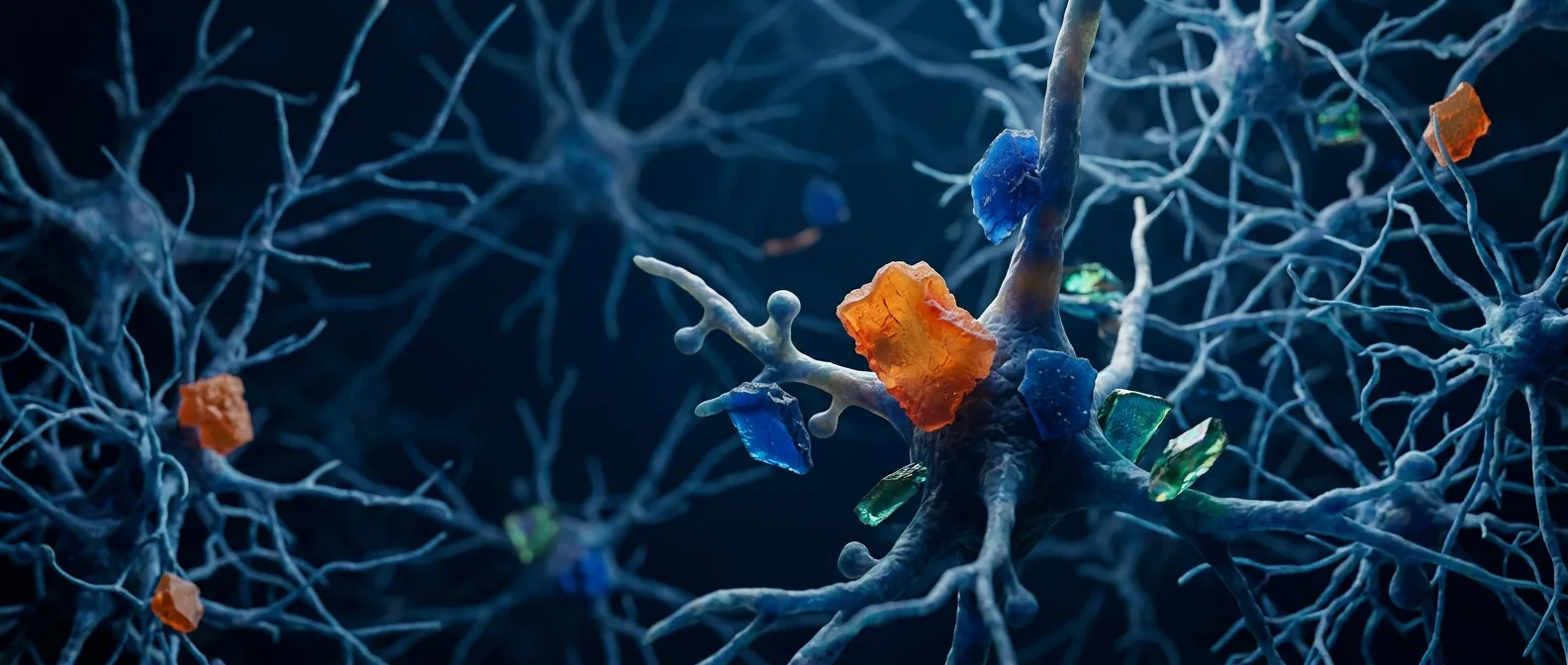
Six grams of microplastics sit in the average human brain right now. That's the weight of a plastic spoon, according to new research from the University of Technology Sydney. The question isn't whether they're there anymore — it's what they're doing. And the news isn't good for anyone who'd rather not think about Alzheimer's at age 50.
📖 Read more: Hidden Brain Circuit: How Big Mistakes Supercharge Learning
🔬 How Microplastics Invade Your Brain
We consume 250 grams of microplastics every year. Enough to fill a dinner plate. The source? Everywhere around us. From the salt on our salad to the dust on our couch. From tea bags to the plastic cutting board we use daily.
The problem isn't consumption. It's accumulation. The 2026 study in Molecular and Cellular Biochemistry shows something we didn't want to learn: microplastics cross the blood-brain barrier and stay there. They even make it leak.
What are microplastics? Particles smaller than 5 millimeters, mainly polyethylene, polypropylene, polystyrene and PET. Their size? From 0.1 to 2 micrometers — a microscopic fraction of a hair's width.
Why the Brain Can't Reject Them
Nature built the blood-brain barrier to keep out the dangerous stuff. But it didn't account for plastic nanoparticles. Microplastics are small enough to pass through, but large enough to stay. Once they settle in, the body treats them as foreign invaders.
⚡ 5 Ways Microplastics Damage Your Brain
The international research team led by Associate Professor Kamal Dua identified five damage mechanisms. They don't work alone — they collaborate in a destructive cycle.
1. Inflammatory Response Activation
Brain immune cells attack the microplastics. The result? Chronic inflammation that damages healthy neurons around them. Like having a permanent fire in your head that never goes out.
2. Oxidative Stress
Microplastics increase reactive oxygen species — unstable molecules that destroy cells. They simultaneously weaken the brain's natural antioxidant systems. Double attack.
3. Blood-Brain Barrier Collapse
The brain's protective barrier becomes "leaky." It allows entry of toxins and inflammatory molecules that would normally stay out. Like lowering the city walls in the middle of a siege.
4. Mitochondrial Function Disruption
Mitochondria — the cell's "batteries" — can no longer produce enough ATP. The brain's fuel runs out. Neurons weaken and eventually die.
5. Direct Neural Damage
Microplastics cause immediate physical damage to neurons. They disrupt their structure and interfere with signal transmission. The result? Cognitive disorders.
📖 Read more: Thalamus: The Brain Filter That Grows Wisdom With Age
🧬 The Alzheimer's and Parkinson's Connection
Research on genetically modified mice revealed something terrifying. Animals carrying the APOE4 gene — the strongest genetic risk factor for Alzheimer's — developed symptoms after microplastic exposure.
"I continue to be amazed, I just can't believe that exposure to these particles can lead to something like this"
— Jaime Ross, Professor of Neuroscience, University of Rhode Island
How They Affect Alzheimer's Disease
In Alzheimer's disease, microplastics promote the accumulation of beta-amyloid and tau proteins. These proteins form the characteristic "plaques" and "tangles" that destroy the brain. Microplastics act as a catalyst — they accelerate a process that would normally take years.
Interesting: symptoms in mice followed human patterns. Males showed more apathy, females had greater memory problems. Exactly like in humans.
Impact on Parkinson's Disease
In Parkinson's disease, the target is different but the result equally catastrophic. Microplastics encourage accumulation of α-synuclein protein and damage dopaminergic neurons. These neurons control movement — when they die, the tremor begins.
📊 The APOE4 Gene and the Brain's "Gateway"
We're not all equal when facing microplastics. The APOE4 gene appears to function as an "entry gate" for plastic particles. Those who carry it have 3.5 times higher chances of developing Alzheimer's.
Matthew Campen's hypothesis, Professor of Toxicology at the University of New Mexico, is disturbing: "What if APOE4 simply transports more plastic from mouth to brain?"
APOE4 Carriers
Those carrying the gene have greater risk of microplastic accumulation in the brain
Gender Differences
Men: more apathy
Women: memory problems
🎯 Frequently Asked Questions
Can I completely avoid microplastics?
No. They're everywhere — in air, water, food. But you can reduce exposure. Avoid plastic containers, natural fibers in clothing, fewer processed foods.
How fast do they accumulate in the brain?
Accumulation in brain tissue increased by 50% within eight years according to recent studies. It's not a slow process.
Is there treatment to remove them?
Not currently. The brain has no way to reject them once they're established. Prevention is the only tool we have in 2026.
The scientific community is still at the beginning of understanding this phenomenon. But one thing is certain: we can't pretend we don't see it. Microplastics are here, in our brains, and time for action is running out. The question isn't whether they'll affect public health — it's how fast and to what extent.