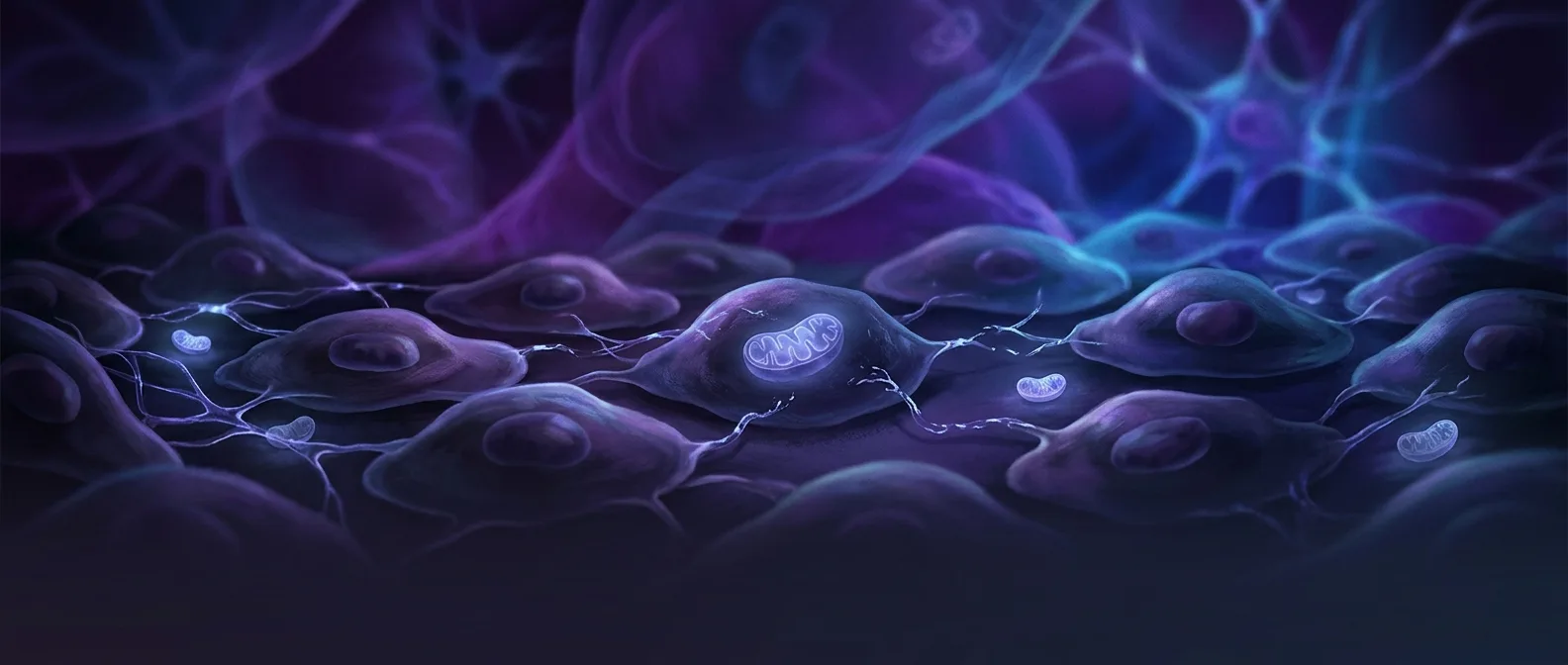
Six billion brain cells generate energy every day. What happens when their cellular power plants start malfunctioning? A University of Queensland and University of Minnesota study shows that depression might begin exactly there — with broken mitochondria in brain cells.
The 2026 discovery rewrites how we understand mitochondrial energy and its connection to mood. For the first time, scientists measured ATP levels — the cellular "energy currency" — in both brain tissue and blood of young adults with depression.
The results defied expectations. Instead of lower energy production, as researchers anticipated, cells from depressed participants showed higher ATP output at rest. But they couldn't ramp up energy production when stressed.
🔬 Mitochondria as the Key to Understanding Depression
The research focused on 18 participants aged 18-25 with diagnosed major depressive disorder (MDD). Using advanced neuroimaging and blood analysis, researchers observed a specific pattern in patients' mitochondria.
"This shows depression may have roots in fundamental changes to how brain and blood cells use energy," explains Assistant Professor Susannah Tye from the Queensland Brain Institute.
Dr. Roger Varela's team observed cells functioning like they had the "gas pedal floored" while in neutral — producing excessive energy without external demand. But when they needed to respond to increased demand, they failed spectacularly.
The Energy Overproduction Paradox
This phenomenon resembles an engine burning fuel at idle but unable to accelerate. Mitochondria in depressed patients appear to "burn out" early, losing their ability to adapt to the brain's changing needs.
The discovery explains why many depression patients experience severe fatigue, low motivation, and slower cognitive function. This isn't "laziness" or lack of willpower — it's literally a problem with the cells' "generators."
⚡ New Blood-Based Diagnostic Approach
The same energy pattern appears in both brain and blood cells. This opens the door for developing a simple blood test that could detect depression in early stages.
Professors Xiao Hong Zhu and Wei Chen from Minnesota developed an innovative technique that measures ATP production in real-time within living brain tissue. Think of it as a "live map" of energy flow in cells.
From Lab Analysis to Clinical Practice
A blood test for depression could change mental health diagnosis. Instead of relying exclusively on questionnaires and symptoms, doctors would have a measurable biomarker at their disposal.
How would this look in practice? A young person experiencing chronic fatigue could take a blood test showing whether their mitochondria are working overtime at rest — an indication of possible depression onset.
🧬 The Biological Dimension of Mental Health
This research fundamentally changes how we discuss depression. For someone like Maria, a 22-year-old student who can't get out of bed despite wanting to graduate, the study offers a different narrative.
Depression affects energy at the cellular level. It also proves that not all depressions are the same — each patient has different biology.
Dr. Roger Varela, Queensland Brain Institute
The research emphasizes that mood disorders involve real, measurable states of energy dysfunction — not weakness or lack of willpower. This could help reduce stigma around mental health.
Every Depression Has Its Own Biology
The Queensland team insists on a crucial message: not all depressions are identical. Two patients can share similar sadness but present completely different mitochondrial responses and ATP dynamics.
Other research also focuses on personalized biological profiles. Just as microbiome studies show different biological signatures between individuals, depression appears to have unique energy fingerprints.
📊 Toward Personalized Therapies
If changes in cellular energy management occur early in the disease, clinicians gain a new window for action. Detecting this pattern in blood could allow earlier interventions for high-risk individuals, especially young adults experiencing persistent fatigue.
Biomarkers
Developing blood tests that detect mitochondrial dysfunction
Targeted Therapies
Drugs that support mitochondrial function and ATP production
Future treatment protocols may combine traditional approaches with strategies targeting mitochondrial protection, improving cellular energy resilience, or adjusting activity levels to each patient's capacity.
The Problem with Antidepressants
Ironically, new studies show some antidepressants may harm mitochondria. Prozac and other SSRIs appear to deplete ATP and cause enzyme leakage from mitochondria, making them less effective at fueling cells with energy.
Long-term antidepressant use may even cause mitochondrial death. This explains why many patients taking antidepressants experience other side effects like drowsiness, concentration problems, and chronic fatigue.
🎯 What You Can Do Now
While this research remains in emerging stages, it offers practical insights for discussions with healthcare providers. Instead of framing fatigue as "laziness," we can explore it as a sign of stressed neural and systemic mitochondria.
Researchers like Martin Picard emphasize the importance of a compound called acetyl-L-carnitine (ALCAR). People with depression have lower ALCAR levels, and the lower they are, the more depressed they feel.
ALCAR does two important things: helps the brain synthesize serotonin (the mood-controlling chemical) and supports mitochondrial function for energy production.
Studies show ALCAR supplements may be as effective as Prozac in treating depression in elderly patients — without antidepressant side effects like drowsiness, erectile dysfunction, or decreased sexual desire.
Protecting Your Mitochondria
If you're taking antidepressants and they help, make sure you're giving extra support to your mitochondria. Research shows strategies like cold exposure, oxygen restriction (hypoxia training), and specific supplements can enhance mitochondrial function.
Understanding that your brain cells may be working overtime at rest changes how you negotiate pace, rest, and stress exposure. Always under professional supervision, though.
🔍 The Future of Psychiatric Diagnosis
The study points toward "metabolic psychiatry." Instead of focusing only on neurotransmitters or brain structure, we're starting to look at the fundamental "energy factories" of cells.
This approach could lead to:
- Earlier depression diagnosis before symptoms fully manifest
- Personalized therapies based on each patient's energy profile
- New drugs specifically targeting mitochondrial dysfunction
- Better understanding of why some patients respond to specific therapies and others don't
Of course, the research is still in early stages. Larger studies are needed to confirm these findings and develop practical applications. But the direction is encouraging.
From Symptoms to Causes
2026 shows a shift in how we think about mental health — from describing symptoms to understanding biological mechanisms. Depression isn't just "bad mood" or "negative thoughts," it's a complex condition affecting how our cells produce and use energy.
This understanding doesn't diminish the importance of psychological and social factors — stress, trauma, and environment continue to affect mitochondrial function and brain circuits. It simply adds another important dimension to the equation.
For millions living with depression, this could mean hope for more effective, targeted therapies that address the problem from the root — literally at the cellular level. And perhaps most importantly, it offers a new language for discussing depression — not as character weakness, but as a real, measurable biological condition that can be treated.