🧠 Cortisol Hijacks Your Brain's GPS: Why Stress Makes You Lost
Ever notice how you lose your sense of direction when you're anxious? A German study reveals that cortisol—the stress hormone—doesn't just make you jittery. It literally attacks the brain system that helps you navigate space, turning your internal map into a blurry mess.
Forty German volunteers participated in an experiment examining how stress affects cognitive function. The research, published March 12, 2026 in PLOS Biology, provides the first direct evidence that cortisol disrupts the exact brain structures responsible for spatial navigation.
What they discovered: When researchers gave participants synthetic cortisol, the "grid cells"—specialized neurons that function like an internal GPS—stopped working normally. The result? A dramatic breakdown in spatial navigation ability.
🔬 The Experiment That Cracked the Code
Dr. Osman Akan's research team at Ruhr University Bochum's Department of Cognitive Psychology designed a devilishly clever experiment. Each volunteer visited the lab twice—once taking 20 milligrams of cortisol, once taking a placebo pill. They had no idea which was which.
The heart of the experiment was a virtual environment called "the apple game." Volunteers, while lying inside an MRI scanner, had to navigate through a massive virtual meadow. The goal? Find trees containing red apples, then return to the starting point without any helpful landmarks.
Simple premise. Devastating results.
⚡ Grid Cells: Your Internal GPS Under Attack
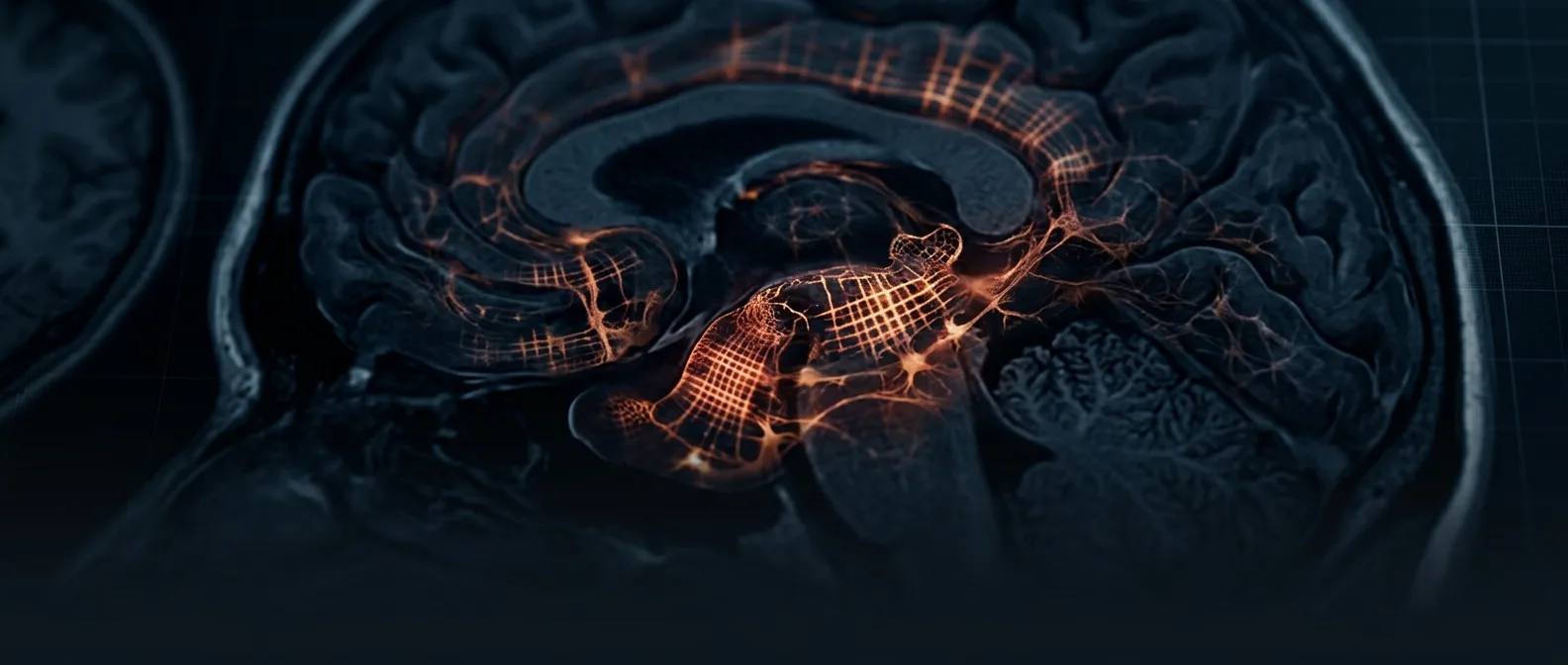
Grid cells are extraordinarily specialized neurons located in the entorhinal cortex, a brain region that acts as an interface between the hippocampus and the rest of the brain. These cells "fire" in a specific geometric pattern—they form a hexagonal grid in space.
Think of it as an invisible coordinate system your brain uses to know where you are at every moment. Each time you move, grid cells update this internal map. But when cortisol intervenes, this sophisticated system goes haywire.
"Under stress, the brain loses its ability to effectively use its internal navigation maps."
Dr. Osman Akan, Ruhr University Bochum
The Biological Explanation
The entorhinal cortex isn't randomly vulnerable to cortisol. This brain region hosts numerous glucocorticoid receptors—specialized "antennas" that recognize and respond to cortisol. When stress levels spike, these receptors flood with cortisol signals, interfering with normal neuron function.
The result? Grid cells start "firing" chaotically. Instead of their regular geometric pattern, their activity becomes random and disconnected.
🧬 The Shocking Results
When researchers analyzed the data, the differences were stark. Volunteers who had received cortisol made significantly more navigation errors—regardless of whether a beacon served as a reference point or not. Cortisol's impact was so powerful it determined performance more than the route's complexity.
But the most fascinating findings came from the brain images. Under placebo conditions, the entorhinal cortex showed normal grid cell activity. After cortisol, however, these patterns vanished almost completely—especially in environments without reference points.
Entorhinal Cortex
Significant reduction in grid cell activity under cortisol influence
Navigation
Dramatic deterioration in spatial orientation accuracy
Backup System
Increased activity in caudate nucleus as compensation mechanism
The Backup Navigation System
Something even more intriguing: the MRI scanners revealed that when the entorhinal cortex "went offline," the brain tried to compensate for the loss. The caudate nucleus—a region associated with learning and movement control—showed increased activity.
Unfortunately, this backup system isn't nearly as effective. It's like trying to navigate downtown in an unfamiliar city using a list of "turn right, go straight" directions instead of a map. It works, but it's much slower and error-prone.
📊 Real-World Consequences
These findings have practical implications. They explain why we lose our bearings when we're anxious—something with significant practical consequences. Consider situations where stress and navigation combine dangerously: driving in an unfamiliar area under pressure, evacuating a building during an emergency, or even simple daily routes when we're going through difficult periods.
The research suggests that stress doesn't just affect mood or concentration—it changes fundamental cognitive functions like spatial orientation. This could explain why certain people suddenly become "worse" with directions when they're going through stressful life periods.
"The results show that cortisol causes disruption in grid cell function, which may underlie the effects of stress on spatial navigation."
Study conclusions, PLOS Biology 2026
Chronic Stress and Long-Term Consequences
If this happens with a single dose of cortisol, what about chronic stress? Researchers note that chronic stress keeps cortisol levels continuously elevated, which could cause long-term destabilization of the entorhinal cortex. This isn't just a stress factor—it's a factor that could affect the very brain infrastructure we use for navigation.
🔗 The Alzheimer's Connection
The connection to Alzheimer's disease stands out among the findings. The entorhinal cortex—precisely the region cortisol affects—is one of the first brain areas destroyed by Alzheimer's. Meanwhile, chronic stress is a known risk factor for dementia.
What this new research reveals is a specific mechanism through which stress could destabilize this vulnerable region. It's no longer a vague correlation—it's a direct, measurable effect at the neuronal level.
The question: If stress can temporarily "erase" our grid cells, what happens with chronic cortisol exposure? Is recovery always complete?
New Research Directions
The German research team is already preparing the sequel. They want to investigate whether long-term cortisol increases produce similar disruptions and whether these contribute to age-related cognitive decline. They're also planning to examine if there are ways to protect or restore grid cell function.
Another crucial question is whether there are individual differences in cortisol sensitivity. Do some people show greater navigation difficulties under stress than others? And if so, what determines these differences?
🎯 Frequently Asked Questions
How quickly does the navigation system recover after stress?
In this specific study, cortisol's effects were temporary and based on a single dose. However, the research didn't examine the exact recovery time. Researchers warn that chronic stress, which keeps cortisol levels continuously elevated, could cause long-term changes.
Are women affected the same way?
The current study examined only male participants. This is a significant limitation, as hormonal differences between sexes could affect cortisol response. Future research needs to include women for a complete picture.
Can we protect ourselves from these effects?
While the research doesn't suggest specific protection methods, it implies that stress management could be crucial not just for "feeling better" but for protecting our brain systems. Techniques like meditation, exercise, and sleep management that reduce cortisol levels might have protective effects.
2026 looks to be a landmark year for understanding the stress-brain relationship. This German research opens doors for new therapeutic approaches and reminds us of something important: when we say stress "messes us up," it's not just a figure of speech. It's biological reality measured in neurons, synaptic connections, and grid cells that lose their rhythm. And if that doesn't make you think twice the next time you say "it's fine, I can handle the stress," what will?