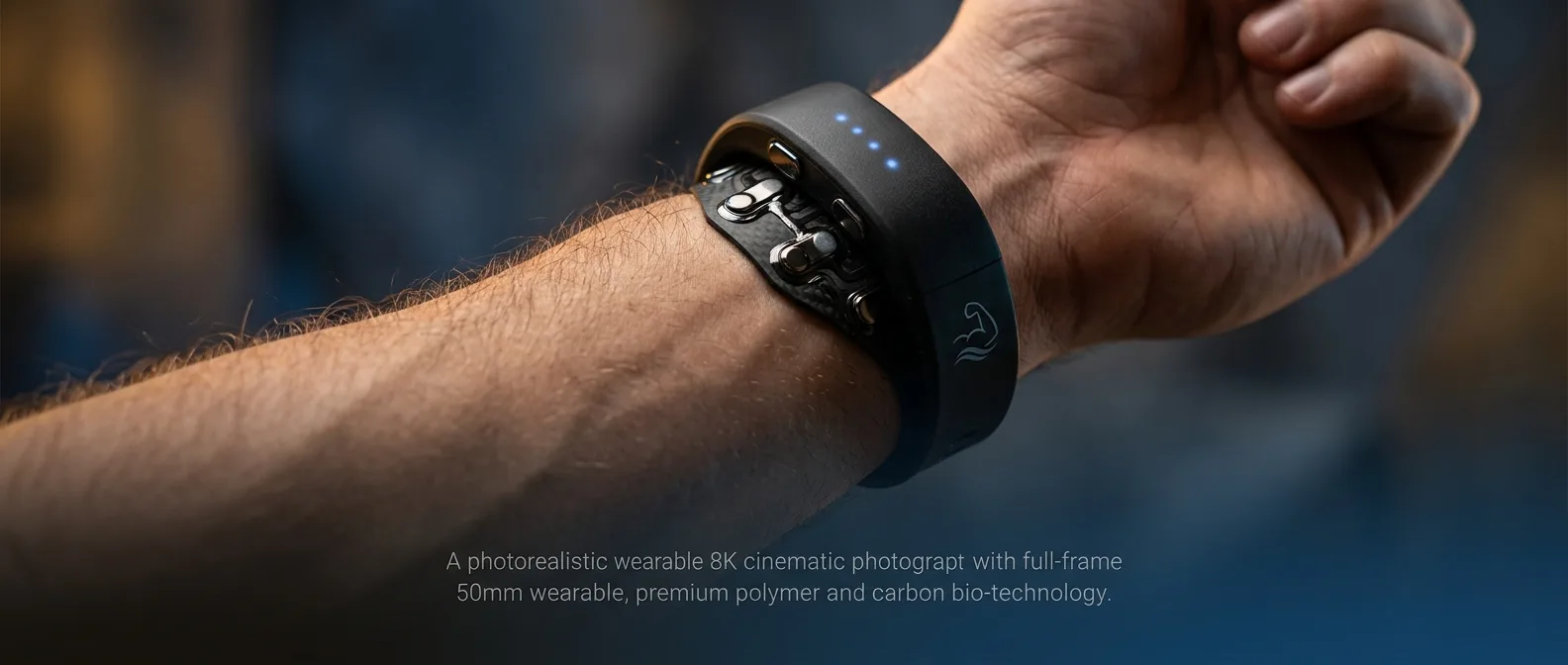
Your wrist just became a remote control. Meta's Neural Band — the EMG wristband that ships with the Meta Ray-Ban Display glasses — is breaking out of its AR bubble. At CES 2026, the tech giant showed how its muscle-reading bracelet can control cars, smart homes, and help people with mobility challenges navigate the world.
EMG technology isn't new to Meta, but we're finally seeing how it works beyond their AR/VR ecosystem. After years of research with nearly 200,000 participants, the Neural Band hit the market in 2025 as a companion to the Display glasses. Now Meta is exploring far more ambitious applications.
Remember when touchscreens changed how we interact with phones? EMG could do something similar for the next generation of devices.
📖 Read more: Steam Frame & LPDDR5X Shortage: Why Valve Is Rethinking Pricing
📖 Read more: Apple Glasses: What We Know About the AR Glasses
🚗 From AR Glasses to Your Car Dashboard
At CES 2026, Meta partnered with Garmin to demonstrate how the Neural Band can control automotive infotainment systems. Garmin, which works with major automakers, showcased a "Unified Cabin" concept where drivers navigate apps without touching any screens.
The demo was fairly basic — pinch and swipe gestures to navigate apps, even a 2048 game. But Garmin is thinking bigger: controlling windows, locks, even climate systems through simple wrist movements.
How it works: The Neural Band detects electrical signals your wrist muscles generate when you move your fingers — even if the movement is so subtle it's invisible to the naked eye. These signals translate into commands sent to connected devices.
🧬 EMG Technology in Practice
The Neural Band represents four years of research that began with Facebook's acquisition of CTRL-Labs in 2019. The company invested millions to turn science fiction into a consumer product — and it's starting to pay off.
Unlike brain implants like Elon Musk's Neuralink, EMG reads neural signals at your wrist. Not your brain. That means no surgery required — and, crucially, it can't "read your thoughts."
Limitations and Capabilities
The wristband can detect even the most subtle muscle movements — even before they become visually apparent. In the future, it could theoretically recognize typing "intent" simply from signals the brain sends to your fingers, without them moving.
We're nowhere near that level yet. In 2026, the Neural Band recognizes basic gestures — clicks, swipes, pinches. That represents substantial progress for a device that launched just twelve months ago.
🎯 Accessibility and Medical Applications
The Neural Band's ability to detect muscle signals opens new doors for people with mobility disabilities. Meta announced a partnership with the University of Utah to explore how EMG technology can assist people with ALS, muscular dystrophy, and other conditions.
The wristband is sensitive enough to detect muscle activity even in people who can't move their hands. This opens pathways for controlling smart speakers, thermostats, lights, and other home devices through simple muscle contractions.
TetraSki and Other Research Programs
The University of Utah will test the Neural Band in programs like TetraSki, which currently uses joysticks or mouth controllers to help people with quadriplegia ski. Imagine the freedom a wrist controller could provide that requires no hand or head movement.
📖 Read more: Meta Puffin Headset: 2026 Pocket-Powered VR Revolution
⚡ The Display Glasses Experience
The Meta Ray-Ban Display, launched in September 2025, is the first commercial application of the Neural Band. The glasses include a high-resolution color display that appears in your peripheral vision without blocking your view.
With simple wrist movements you can:
- Scroll through WhatsApp and Instagram messages
- Control music playback (swipe for track changes, twist for volume)
- Zoom into photos with pinch gestures
- Navigate walking directions on maps
- View live captions or translations
The experience feels almost magical when it works correctly. "Almost" because, like every first-generation technology, it has its quirks.
"This isn't like mind reading. When you decide to act, your brain sends signals to your hands and fingers. We decode those signals at the wrist — the actions you've already decided to take."
Meta Reality Labs
🔮 The Future of Muscle Controllers
Meta has three categories of AI glasses in mind: Camera AI glasses (the current Ray-Ban Meta), Display AI glasses (the new Display models), and AR glasses (like the Orion prototype they showed last year). The Neural Band will play a crucial role in all three categories.
But applications outside AR/VR could prove equally significant. If the technology works reliably in cars and smart homes, it could become the "universal remote control" we've been searching for decades.
Privacy and Security Concerns
A controller that continuously monitors your muscle activity raises privacy questions. Meta has created a "neuroethics program" to examine the security and privacy implications of neural interfaces.
The Neural Band collects more than muscle signals — biometric information, stress levels, even detailed differences in typing patterns. That's a lot of data for a company that already has... a history with privacy.
💰 Pricing and Availability
The Meta Ray-Ban Display launched in the US at $799, which includes the Neural Band. Meta plans expansion to Canada, France, Italy, and the UK in early 2026 — no announcement yet for other markets.
The wristband has 18-hour battery life, is waterproof (IPX7), and is made from Vectran — the same material used in Mars Rover crash pads. Strong as steel when stretched, but soft enough for comfortable daily wear.
Battery Life
18 hours use, 30 hours with glasses charging case
Durability
IPX7 waterproofing, Vectran construction material
Controls
Clicks, swipes, pinches, rotation gestures
🎯 Frequently Asked Questions
Can the Neural Band work without the glasses?
Currently, no. The Neural Band is designed to work exclusively with the Meta Ray-Ban Display. However, partnerships with Garmin and others show Meta is exploring standalone applications.
How accurate is gesture recognition?
Meta reports the system works "out of the box" for almost anyone, thanks to research with 200,000 participants. However, it takes some time to make the gestures feel natural.
When will it come to other markets?
There's no official announcement for markets beyond the initial rollout. Meta typically starts with larger markets before expanding globally.
The Neural Band won't transform everything overnight, but it demonstrates where device control could be heading. As the technology matures, muscle-signal control could replace buttons and touchscreens across devices. The question is whether consumers are ready to trust Meta with such personal data.