📖 Read more: Snap Spectacles: Snapchat's AR Glasses
🔬 How Google Learned from Past Failures
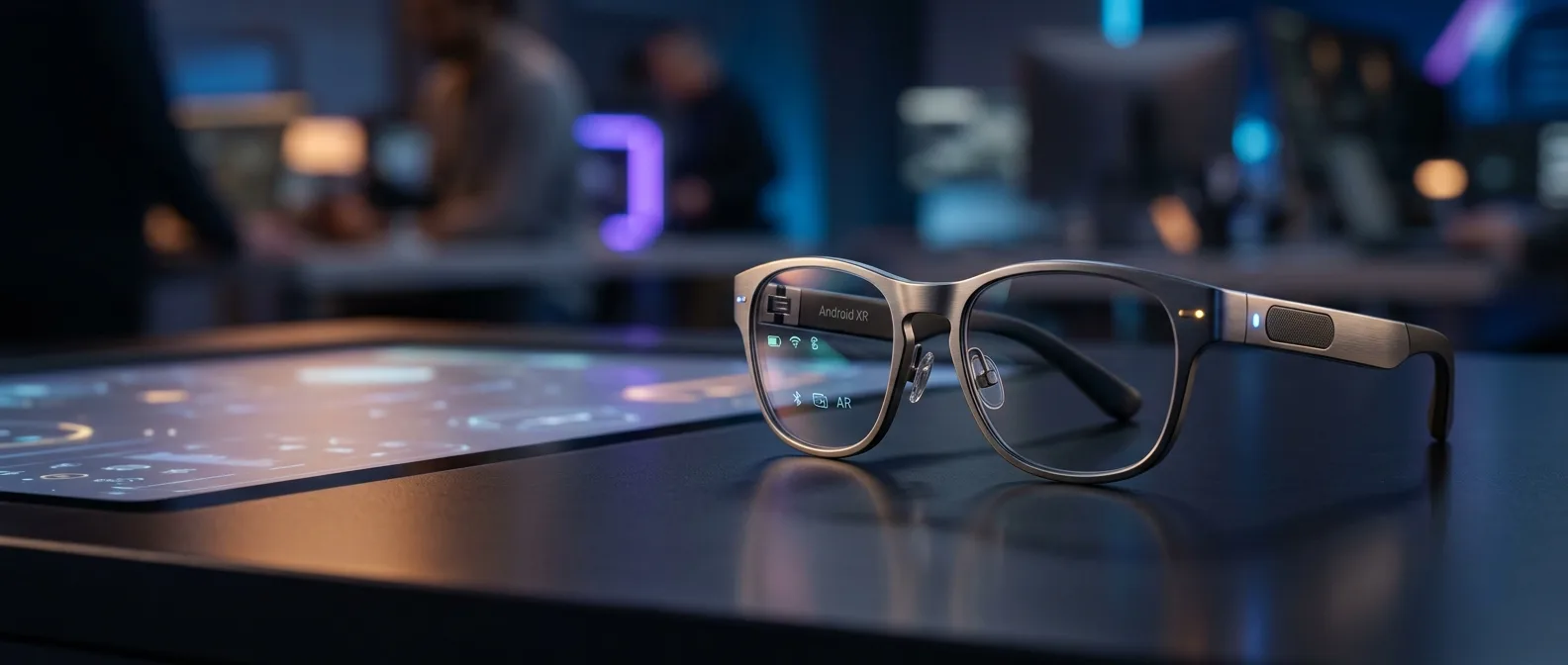
Thirteen years after Google Glass flopped, Google returns with a different playbook. Where it once tried to do everything alone, now it partners. Samsung, Qualcomm, Magic Leap, even luxury brands like Warby Parker and Kering Eyewear join the game. The difference shows in philosophy. Instead of a weird gadget that made you look like a cyborg, the new Android XR glasses want to mimic regular eyewear. Black frames, clear lenses, and the display on the right lens barely visible.Features That Change the Game
What makes Google different this time? Three keys: Gemini AI, natural experience, and built for daily use. Journalists who tested the prototypes at MWC describe an experience that changed their minds. Example: You look at an album cover, ask Gemini to recognize the album and play a song from it. Audio quality matches headphones, but without the feeling that something blocks your ears. Even better: Live translation with AI-generated voice. Someone speaks Spanish or Farsi, you see English text overlay and hear the translation in the speaker's voice. No phone out, no screen to check.📊 The Partnership Strategy That Will Define 2026
Google learned something crucial from failed Glass: you can't do hardware alone. That's why this year's partner list looks like an all-star team.Samsung Galaxy XR Glasses — The Flagship Model
Drew Blackard, Samsung's VP for Mobile Products, said it clearly: "It's coming soon. And I'll use those words purposely in the sense that it's not like a far-out concept. [It's] nearing the execution phase." Samsung, as Google's closest Android XR partner, will likely launch its glasses in Q1 2026. Samsung glasses will have cameras and integrated Gemini AI. The killer feature? Gemini can give visual information about what you see on screen — something Ray-Ban Meta Smart Glasses only do with audio.Warby Parker — Fashion Meets Function
Google committed to a $75 million investment in Warby Parker, with potential additional $75 million if the company hits specific targets. The strategy is clear: minimalist design that fits daily use. Warby Parker Android XR will offer the same lens variety the brand already sells, including prescription options. The first generation will skip complex in-lens display technologies though.What impressed me most was the Google Maps demo. I looked at a photo of Camp Nou stadium in Barcelona and asked Gemini to 'navigate here.' White text appeared in the center of the lens, showing me how far to go before turning right.
CNET journalist reviewing Android XR prototype
⚡ Luxury Players Changing the Rules
The Android XR ecosystem isn't just tech companies. Fashion houses like Kering Eyewear (making glasses for Gucci, Balenciaga, Alexander McQueen) and South Korean Gentle Monster bring something different: style.Magic Leap — The Return of Waveguide Optics
After years of struggle and a lifeline from Saudi Arabia Public Investment Fund, Magic Leap showed prototype Android XR glasses partnering with Google. They combine Magic Leap's advanced waveguide optics with Google's Raxium microLED light engine. The result? Promises bright, energy-efficient displays for real all-day AR use. If it works as promised, it'll be one of 2026's technical achievements.Visual Recognition
Object, building, and poster recognition through camera and Gemini AI
Live Translation
Real-time translation with AI-simulated speaker voice
AR Navigation
Navigation instructions with lens overlay and interactive maps
🎯 What to Expect at MWC 2026 Barcelona
Mobile World Congress 2026 will likely be the first major public showing of Android XR glasses. Google already set up a demo booth called "Android Avenue" where visitors test prototypes. What do we expect to see? First, Samsung Galaxy XR Glasses in final or near-final form. Second, carrier partnership announcements — likely Vodafone or T-Mobile for European distribution. Third, pricing details that will determine success.Pricing That Will Determine Success
One reason Google Glass failed was the roughly €1,200 price. New Android XR glasses need to cost somewhere between €300-600 to go mainstream — similar to Ray-Ban Meta (around €350). Samsung flagship models will likely be €500-700, while Warby Parker fashion-focused glasses might cost less, in the €250-400 range.The Software Ecosystem That Makes the Difference
Unlike Google Glass which relied on proprietary software, Android XR glasses run a unified platform. This means developers can build apps that work across all Android XR devices — from Samsung to Magic Leap. Google already integrated Gemini AI into the OS core, so every device will have access to voice commands, visual recognition, and real-time translation out of the box. What does this mean for us? We're not buying a gadget, but entering an ecosystem that evolves with software updates — like Android on smartphones.🎯 Frequently Asked Questions
When will Google Android XR glasses launch globally?
Google hasn't announced official dates, but Samsung Galaxy XR glasses are expected in Q1 2026, with likely global distribution following within the year.
Can I get prescription lenses for Android XR glasses?
Yes, companies like Warby Parker confirmed they'll offer prescription options. MWC prototypes used clip-on lenses, though the final version will have integrated solutions.
How much will Android XR smart glasses cost?
Expected prices range €250-700 depending on brand and features. Entry-level models (Warby Parker) will cost around €300-400, while flagship Samsung models likely €500-700.
Sources: