📖 Read more: Razer Viper V4 Pro: FrameSync Doubles Gaming Mouse Battery
🎮 From Index to Frame: Valve's New VR Philosophy
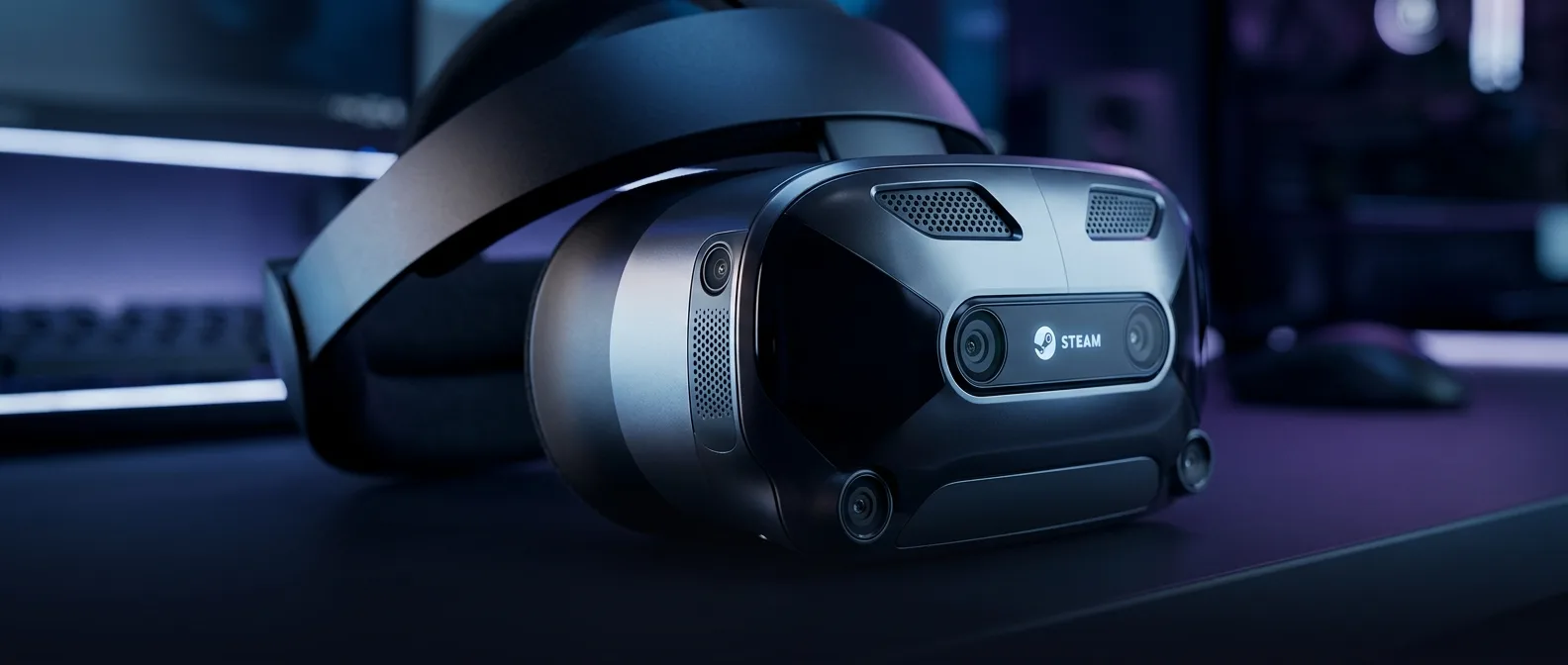
The Steam Frame isn't just an "Index 2." Valve made that crystal clear with the naming choice. We're looking at a completely different approach to VR gaming — a standalone headset with Snapdragon 8 Gen 3 processor running SteamOS. What does this mean in practice? You can play both VR and regular PC games directly from the headset. What makes the Frame special is its dual nature. It runs standalone for less demanding games, but simultaneously features a wireless adapter for streaming from your PC. Want to play Hades II or Ghost Town? You can do that straight from the headset. For more demanding VR games like Half-Life: Alyx? That's where streaming comes in. The ARM architecture choice isn't random. Valve uses a Snapdragon 8 Gen 3 — a chip with mobile phone heritage but enough power for VR applications. The advantage? Mainly battery life and thermal management.⚡ ARM Architecture: Why Valve Ditched x86
But how do you play Windows games on an ARM chip? Enter the FEX emulation layer, which Valve has supported for years. It's the ARM equivalent of Proton — translating x86 instructions to ARM. The result? Games like Ghost Town run native-style on the Frame, despite the emulation overhead. The interesting part is that Valve has built an ARM-optimized version of SteamOS. This isn't just a port — it's a complete ecosystem for ARM gaming. And the Steam store will start hosting games compiled for ARM architecture. The eye-tracking in the Frame isn't just for immersion. Valve uses it for foveated streaming — sending full resolution only where you're looking, saving bandwidth. It's a clever solution that makes wireless streaming much more efficient.Foveated Streaming: The Secret Weapon
This addresses wireless VR's biggest technical hurdle. Traditional wireless VR streaming struggles with bandwidth limitations, especially at high resolutions. By rendering full detail only in your central vision and reducing quality in peripheral areas, the Frame can maintain visual fidelity while dramatically cutting data transmission requirements.The technology could solve wireless VR's bandwidth bottleneck — assuming Valve's implementation delivers on the concept.
PC Gamer editor after hands-on
📖 Read more: Switch 2 Handheld Mode Boost: 1080p Gaming for Legacy Titles
🔧 Technical Specs: What to Expect from Steam Frame
The Steam Frame comes with pancake optics — the same lens system that makes the Quest 3 so compact. The dual 2160×2160 LCD displays match the PSVR 2's quality, with 72-120Hz refresh rate (and experimental 144Hz). The weight is impressive: just 190g for the core headset, 435g total with headstrap and battery. For comparison, the Quest 3 weighs 1.1 pounds (about 500g). The 21.6Wh battery sits in the back of the headstrap for better weight distribution. Storage comes in two flavors: 256GB and 1TB UFS storage, with support for microSD cards up to 2TB. That means plenty of space for standalone games.Wi-Fi 7 + Wireless Adapter
Dual-band connectivity: 6GHz for streaming, 5GHz for internet
Eye Tracking Technology
Two interior cameras for foveated rendering and streaming
Steam Frame Controllers
6DoF tracking with TMR thumbsticks and haptic feedback
Expansion Port
User-accessible PCIe slot for 2x 2.5Gbps cameras
Connectivity & Wireless Performance
The connectivity is Wi-Fi 7 with dual antenna setup — one for streaming from PC, one for internet. The wireless adapter included in the box uses Wi-Fi 6E at 6GHz for dedicated connection with your PC. This dual-band approach solves a major problem with current wireless VR setups. No more competing with your Netflix stream for bandwidth — the Frame gets its own dedicated channel for gaming while maintaining internet connectivity for updates and multiplayer.🎯 Controllers & Input: The Return of TMR Technology
The Steam Frame controllers are designed with input parity to gaming pads. Four action buttons on the right controller, D-pad on the left. The idea is that traditional games will work out of the box, while VR games might need minor adaptations. The big innovation is TMR (Tunnel Magnetoresistance) thumbsticks. This technology promises better consistency and lower power consumption than Hall effect switches. There's also capacitive finger sensing — the headset knows which fingers are touching the controls. Battery life is quoted at 40 hours with AA batteries. Pretty conservative approach from Valve — we'd prefer rechargeable, but at least you won't be stuck without gaming if the battery dies. The TMR technology represents a significant upgrade over traditional potentiometer-based sticks. Unlike mechanical contacts that wear down over time, TMR sensors use magnetic fields to detect position, eliminating stick drift entirely.📖 Read more: US Gaming Sales 2026: Resident Evil Requiem Dominates +60%
💰 Pricing & Availability: What We Know
Valve hasn't announced official pricing, but has hinted it will be "cheaper than the Index kit." The Index cost about €1000 with controllers and base stations. The Steam Frame doesn't need base stations, so theoretically it could be significantly cheaper. The release window is "early 2026" — somewhere in spring. Currently, Valve is sending developer kits to studios for optimization. This means when the headset launches, we'll already have some games ready.The RAM Pricing Problem
A major issue for 2026 is memory pricing. With RAM costs having skyrocketed, the production cost of devices with 16GB LPDDR5 has increased significantly. This could affect the final price of the Steam Frame.
🔍 Steam Frame vs Quest 3: The Ecosystem Battle
The Steam Frame competes primarily with the Meta Quest 3. Both have pancake optics, similar resolutions, and passthrough cameras. The difference lies in the ecosystem. The Quest 3 has a mature content library and better passthrough (color). But the Steam Frame has access to the entire Steam library — and that's a breakthrough. If Valve manages to make compatibility seamless, the Frame will have a content advantage no one else can match. The ARM-based SteamOS also opens doors for compatibility with Android VR games. Theoretically, you could play Quest games on the Steam Frame through sideloading.The Passthrough Disadvantage
One disadvantage of the Steam Frame is monochrome passthrough. The Quest 3 has full-color passthrough that's impressive for mixed reality applications. However, Valve has a user-accessible expansion port that could theoretically support color cameras through third-party mods. This is the Valve approach — provide hackable hardware and let the community evolve it. Remember the Steam Deck and how many community mods it's seen.🚀 The Future of PC VR Gaming
The Steam Frame represents a fundamental shift in PC VR. For the first time, we have a standalone headset that can run "serious" PC games without cables to a desktop. Of course, don't expect it to run Cyberpunk 2077 with ray tracing. But indie games, older AAA titles, and VR-optimized content should run fine. And for demanding games, there's wireless streaming. Valve also announced they're working on games that will be native ARM-compiled for the Steam store. This means we'll see a new generation of VR games optimized for the new architecture. The big question is whether they'll convince developers to optimize their games for ARM+SteamOS. The Steam Deck showed that when there's a user base, developers follow. But the VR market is smaller and more fragmented. If the Steam Frame succeeds, we might see other manufacturers follow the ARM path. Nvidia is working on ARM-based gaming solutions, and Microsoft is improving Windows on ARM. 2026 could be the year the gaming landscape changes permanently. Without base stations, cables, or room-scale setup, the Frame eliminates VR's most tedious installation steps.Sources: