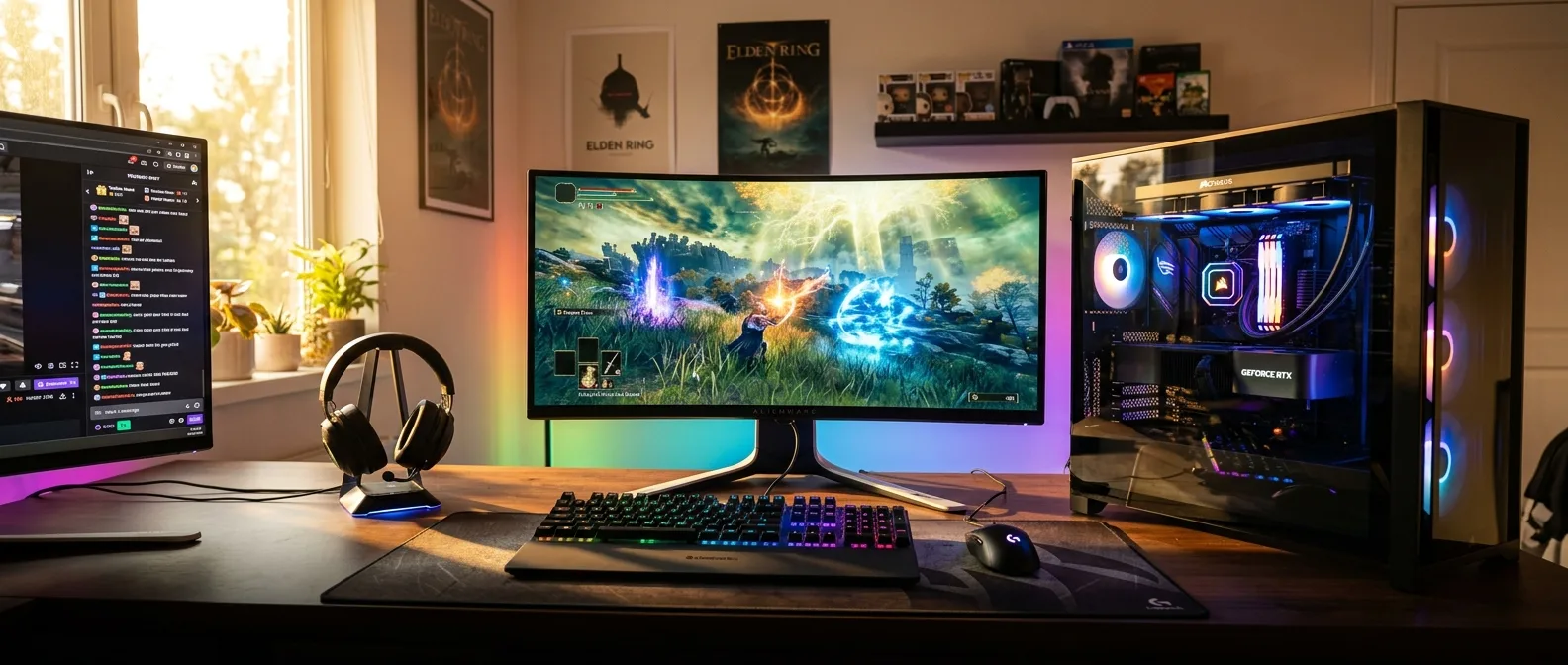
🔥 The Revolution Nobody Saw Coming
2025 brought something few dared predict. PC gaming didn't just recover from the post-2020 plateau that hammered the entire industry — it exploded with growth rates that make your head spin. Newzoo's data shows PC gaming market growth hit 3.9% from 2024, reaching 907.5 million users worldwide.
Consoles? Stuck at 629.5 million with a measly 2.3% growth rate. But the real shock comes when you look at the projections. The gap isn't just widening — it's becoming a chasm.
💰 Why PC Gamers Spend Differently
Right now, consoles still win on revenue — $42.8 billion versus $37.3 billion for PC in 2024. That changes dramatically over the next few years. The difference in how PC players spend money is key to understanding why this shift is inevitable.
PC gamers invest differently. They buy full games instead of microtransactions. They spend on premium DLC and expansions. They back early access titles before they're even finished. Steam shows the difference: 66% of users see it in languages other than English — global reach that no console can match.
The Model That Wins Everything
Mobile games use hybrid monetization (ads plus in-app purchases) to generate an average $9.69 per user over 90 days on iOS. PC players? They drop multiples of that in a single transaction. They'll buy a $60-70 game without blinking. Add a $20-30 season pass. Invest hundreds in hardware upgrades.
The mindset difference is massive. PC gamers see gaming as a hobby worth investing in. Console gamers want simplicity and accessibility. Mobile gamers play when they find time.
🌏 China Changes Everything
The biggest secret behind this explosive PC gaming growth? China. PC gamers there jumped 11.7% in a single year — growth rates no other sector has seen. But here's the catch: 84% of Chinese player spending goes to Chinese games.
This means western developers won't automatically see benefits from this explosion. But it creates a new ecosystem where PC gaming platforms like Steam become truly global — something consoles still struggle to achieve.
Why Generation Alpha Prefers PC
Data shows a striking shift of younger generations toward PC gaming. Gen Z and Gen Alpha see PC gaming not just as entertainment, but as part of their identity. Streaming, modding, competitive gaming — all more accessible on PC platforms.
⚡ Numbers Don't Lie
By 2028, Newzoo predicts the PC gaming base will exceed 1 billion players. That's not just a big number — it's a seismic shift. For the first time in history, more people will game on PC than any other platform.
Specific game data already confirms this trend. Minecraft has 15 million PC players, 8.2 million on PlayStation, and 5.5 million on Xbox. Arc Raiders attracted 4.5 million on PC, 2.9 million on PlayStation, 2.3 million on Xbox.
The Economic Reality
But these numbers have a dark side. The memory and storage crisis caused by AI investment threatens to disrupt the entire hardware market. PCs need RAM and SSDs more than consoles — and if prices skyrocket, these projections could crumble.
NVIDIA and AMD already warn of shortages in 2026. If graphics card prices double, how many can afford to build new gaming rigs?
🎮 Gaming Session vs Gaming Habit
How PC gamers play explains why they spend more. Fewer days per week, but much longer sessions. When you sit down for 3-4 hours, you invest differently in your gaming experience.
Mobile gaming relies on quick bursts — 10-15 minutes on the subway, at work, in line. Revenue comes from volume, not depth. On PC, every session is a time investment that justifies spending money.
Session Duration
PC gamers: 2-4 hours average
Mobile gamers: 10-20 minutes
Console gamers: 1-2 hours
Average Spend
PC: $50-100 per purchase
Console: $60-80 for AAA titles
Mobile: $1-10 in microtransactions
🚀 Next-Gen Platform Wars
Subscription services are changing the game — literally. Xbox Game Pass, PC Game Pass, even Netflix Games create new consumption models. But PC has an unbeatable advantage: freedom of choice.
Steam, Epic, GOG, Microsoft Store, Ubisoft Connect, Battle.net — no console offers this variety. PC gamers can shop wherever they want, exploit sales, support indie developers through multiple channels.
The Modding Ecosystem
Something often forgotten: modding. PC games live for years, even decades, thanks to community mods. Skyrim launched in 2011 and still has an active playerbase thanks to mods. The cost per hour of entertainment becomes laughable.
Consoles try to copy this, but hardware and software limitations make it nearly impossible. PC is an open platform — and that won't change.
🎯 What This Means for Developers
Big companies already get it. Capcom invested massively in PC ports over recent years and profits are measured in billions. Sony gradually brings PlayStation exclusives to PC. Even Nintendo is considering the possibility — even if they won't admit it publicly.
The message is clear: ignore PC gaming at your own peril. Projections show a $92 billion total market by 2027, and PC will take a bigger slice than ever.
"PC gaming growth isn't just a platform shift — it's a strategic challenge for console manufacturers."
Newzoo Industry Report 2025
⚠️ Risks We Don't See
Not everything is rosy. PC gaming relies on expensive hardware that's getting more expensive. Crypto recovery threatens to dry up the graphics card market again. New generations of kids grow up with tablets and smartphones — how likely are they to move to desktop PCs?
And there's something even more worrying: centralization. While PC offers freedom of choice, most players concentrate on a few platforms. Steam has near-monopoly in the West. This creates vulnerabilities that don't exist in consoles' closed ecosystems.
The Cloud Gaming Threat
Cloud gaming is still early, but growing. If latency drops to levels Starlink promises, if data caps disappear, if infrastructure becomes reliable — then everything above becomes irrelevant. Why buy a gaming PC when you can play AAA titles from your laptop?
Google failed with Stadia, but Microsoft, NVIDIA, and Amazon aren't giving up. PC gaming may be winning now, but next-generation technologies could make it obsolete.
The numbers show a PC gaming boom lasting through 2028 — and probably beyond. But numbers don't always tell the truth. Technology moves so fast that three-year projections look like fantasy. The only certainty? Nothing is certain in the gaming world. And maybe that's the most exciting part of all.