The Underwater Connection Revolution
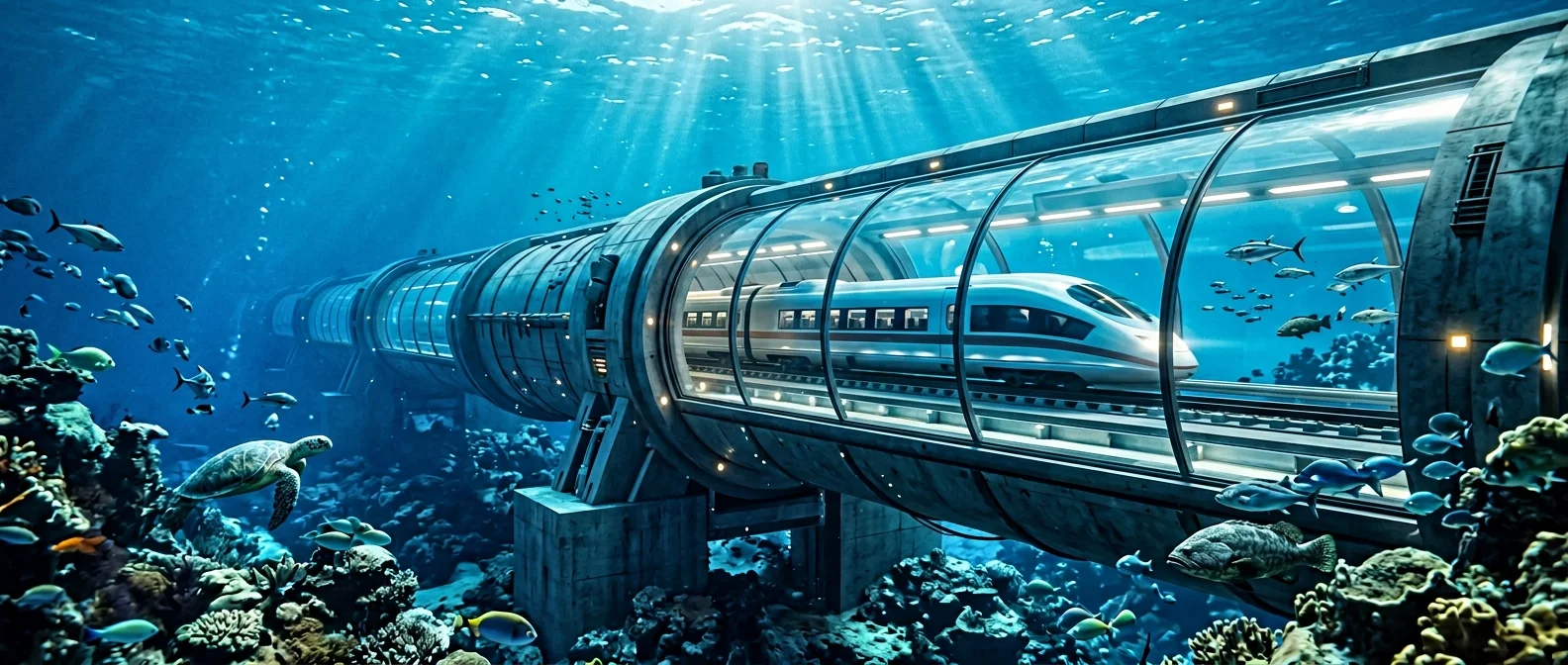
Board a train in Athens. Four hours later, step off in Rome. No flights, no ferries — just a straight shot beneath the Mediterranean waves. What sounds like science fiction is edging toward reality, thanks to technologies adapted from Antarctic ice research.
Recent discoveries from the British Antarctic Survey reveal how scientists use advanced gravitational mapping to chart hidden geological structures beneath kilometers of ice. The same airborne gravity measurement technology that spotted a massive granite formation 100 kilometers wide under the Pine Island Glacier opens new possibilities for underwater tunnel design.
Hidden Treasures Beneath the Sea
Just as pink granite rocks revealed a hidden geological structure in Antarctica, modern seafloor mapping technologies can pinpoint ideal routes for underwater tunnels across the Mediterranean.
📖 Read more: Underwater Tunnels: Roads on the Seabed
Athens-Rome Route: Engineering Challenges
Building an underwater tunnel between Athens and Rome would face challenges similar to those Antarctic researchers encounter. Data analysis from the British Antarctic Survey shows how dating rocks from the Jurassic period (175 million years ago) and gravitational measurements can reveal hidden geological structures.
In the Mediterranean, similar techniques could identify the most stable geological zones for construction. The region between southern Italy and western Greece presents relatively shallow waters in certain areas, with depths ranging from 1,500 to 4,000 meters.
📖 Read more: Flying Cars: When Will We Take Flight?
Future Construction Technologies
Antarctic research experience demonstrates how combining geology and geophysics can reveal hidden features under extreme conditions. Researchers used ultra-sensitive airborne gravity measurements from Twin Otter aircraft to locate the hidden granite mass.
For underwater tunnels, similar technologies would include advanced seafloor mapping systems, robotic excavation platforms, and new materials that withstand deep-water pressure. Automated tunnel boring machine (TBM) technology has evolved significantly over the past decade.
Lessons from Flight Evolution
Recent research from Tel Aviv University on Anchiornis dinosaurs offers fascinating parallels to transportation evolution. Just as certain dinosaurs developed feathers but lost flight capability, transportation technologies evolve in unpredictable ways.
Researchers discovered that Anchiornis had irregular feather-changing patterns, suggesting flight inability. This discovery shows that flight evolution in dinosaurs and modern birds followed more complex patterns than scientists expected.
Traditional vs Underwater Transportation
| Feature | Aviation | Underwater Tunnels |
|---|---|---|
| Weather conditions | Affected | Unaffected |
| Speed | 800+ km/h | 400-500 km/h |
| Environmental footprint | High | Lower |
| Capacity | 200-400 passengers | 1000+ passengers |
📖 Read more: Flying Taxis: Vertiports in 2030 Cities
Technical Details and Innovations
Underwater tunnel construction requires advanced techniques reminiscent of Antarctic research precision. Just as scientists used radioactive element decay to date granite rocks, engineers will employ sophisticated analysis techniques to ensure structural stability.
Modern drilling systems can operate at depths up to 7 kilometers — similar to the granite mass thickness discovered beneath Pine Island Glacier. This technological capability makes tunnel construction feasible even at great depths.
Robotic Systems
Autonomous drilling machines with AI guidance
Nanomaterials
Concrete reinforced with carbon nanotube technology
Water Pressure
Systems resistant to 400+ atmosphere pressure
Maintenance
Preventive inspections with underwater drones
📖 Read more: Robot Cruise Ships: Crewless by 2040
Environmental Impact and Sustainability
Antarctic research emphasizes the importance of understanding environmental systems before major interventions. Researchers note how geology beneath Pine Island Glacier affects current ice behavior and underwater melting patterns.
Similarly, underwater tunnels must be designed to avoid disrupting marine ecosystems. The Mediterranean hosts unique species and important migration routes for marine animals.
Emission Reduction
80% fewer CO2 emissions compared to aviation transport
Seabed Protection
Specialized tubes that protect the marine floor
Renewable Energy
Power supply from offshore wind farms
Challenges and Obstacles
Just as Antarctic discoveries required decades of research and combining different scientific disciplines, underwater tunnels face significant technical and economic challenges. Water pressure at 4,000-meter depths is 400 times greater than atmospheric pressure.
Also, seismic activity in the Mediterranean creates extra requirements for earthquake-resistant design. The region sits at tectonic plate convergence points, as geological studies inspired by Antarctic techniques show.
Critical Risk Factors
- Seismic activity in the region
- Extreme water pressures
- Marine ecosystem disruption
- Construction costs exceeding €200 billion
Timeline and Prospects
Progress in understanding hidden geological structures, like that achieved in Antarctica, shows technology evolving rapidly. Researchers managed to combine geological dating with gravity surveys to solve a decades-old mystery.
For underwater tunnels, estimates suggest technology will be ready by 2035, but actual construction will require another 15-20 years. The first section could connect shorter distances, like Corfu-Bari.
Projected Timeline
- 2028-2032: Complete geological surveys
- 2033-2037: Design and environmental studies
- 2038-2045: First section construction
- 2045-2055: Full route completion
The Future of European Transportation
Underwater tunnels represent a radical shift in how we perceive distances across Europe. Just as Antarctica's pink rocks revealed hidden knowledge treasures, future technologies will unveil new ways to connect European cities. The Athens-Rome route beneath the sea is no longer a dream, but a technological challenge waiting to be solved.
Sources: