📖 Read more: 15-Minute Cities: Everything Within Walking Distance
📖 Read more: EHang: The First Flying Taxi Already Flies in China
The Element That Changes Everything
Picture a nuclear reactor that can't explode. One that produces waste radioactive for hundreds of years, not thousands. That runs on fuel as common as lead. This isn't science fiction — it's the reality of thorium reactors being deployed today. Thorium, a mildly radioactive metal abundant in Earth's crust, offers a completely different approach to nuclear power. Unlike uranium in today's reactors, thorium can't sustain a chain reaction by itself. It needs constant neutron "feeding" to stay active.Why Thorium Got Forgotten
Thorium's nuclear history is bizarre. In the 1960s, the US had already built and operated experimental thorium reactors. The most successful, the Molten Salt Reactor Experiment at Oak Ridge, ran for four years without major problems. So why abandon it? Cold War politics. Uranium reactors produce plutonium, essential for nuclear weapons. Thorium reactors don't. For a country building nuclear arsenals, the choice was obvious.| Feature | Thorium | Uranium |
|---|---|---|
| Availability | Abundant worldwide | Limited |
| Safety | Self-regulating | Requires active control |
| Waste | 300 years | 10,000+ years |
| Military use | No plutonium production | Produces plutonium |
How Thorium Reactors Work
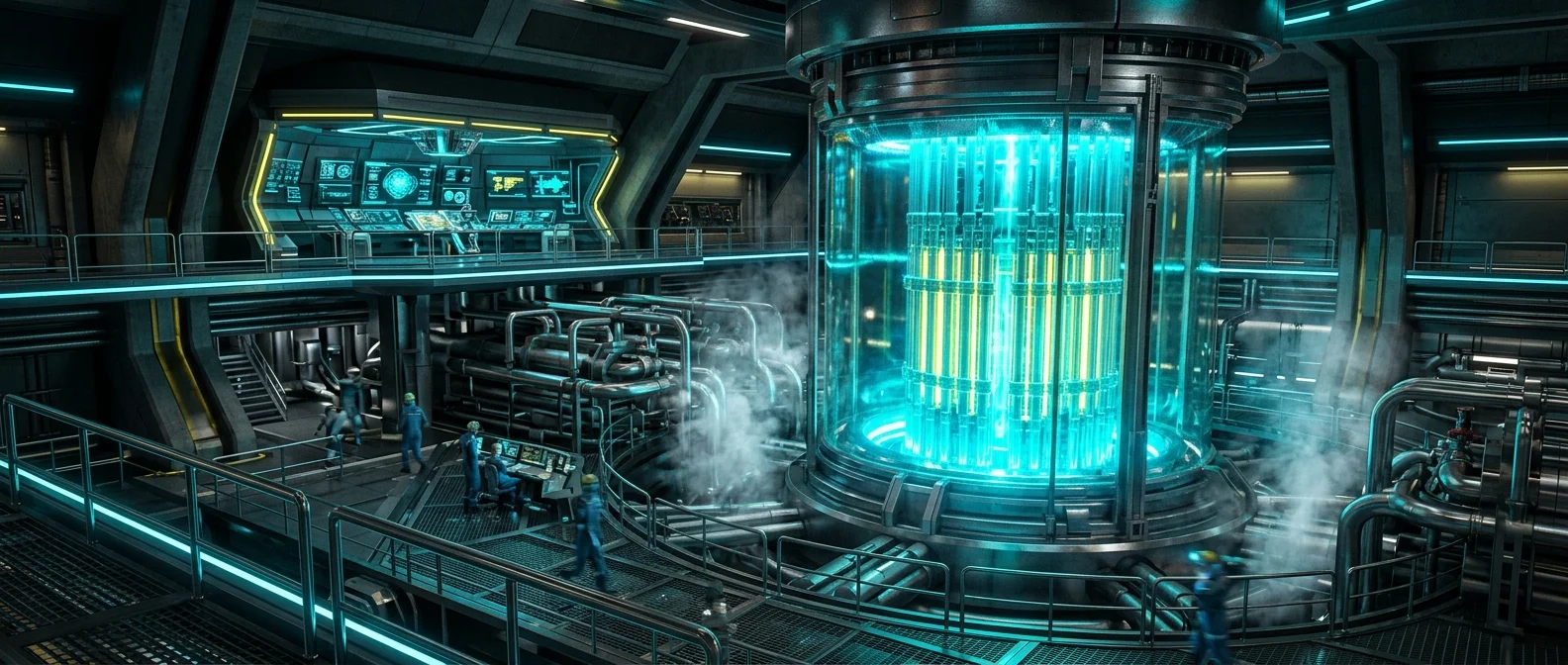
Modern thorium reactors use technology called "molten salt." Instead of solid fuel in metal rods, thorium dissolves in liquid salts circulating through the reactor at temperatures above 700°C. This approach offers multiple advantages. Molten salts function simultaneously as fuel, coolant, and heat transfer medium. If temperature rises too high, the salts expand and the reaction automatically slows.Passive Safety
Reactor stops automatically without human intervention if anything goes wrong
High Efficiency
Burns nearly all fuel, leaving minimal waste
Operational Flexibility
Can adjust power output quickly based on demand
Smaller Size
Requires less space than conventional reactors
📖 Read more: Drone Delivery: How Amazon & Google Are Changing Distribution
Which Countries Lead the Race
China has seized leadership in thorium reactor development. In 2021, it started operating the first experimental molten salt reactor and plans commercial units by 2030. India, holding the world's largest thorium reserves, has invested decades in the technology. Its program envisions a three-phase transition culminating in complete thorium dependence.🇨🇳 China
First operational reactor, targeting commercial production by 2030
🇮🇳 India
Largest thorium reserves, three-phase development program
🇺🇸 USA
Private companies developing small thorium reactors
🇳🇴 Norway
Pioneer in molten salt research with Thor Energy
📖 Read more: Maglev 600km/h: The Flying Trains of China
The Challenges That Remain
Despite its advantages, thorium faces significant hurdles. Molten salt technology is complex and requires materials that withstand extremely corrosive high-temperature environments. Development costs are enormous. Decades of research and testing are needed before thorium reactors become commercially viable. Regulatory authorities must develop entirely new safety standards.The Time Problem
While thorium reactors promise to revolutionize nuclear energy, they still need 10-15 years to become commercially available. Climate change isn't waiting.
📖 Read more: Medicine in 2225: How Humans Will Be Treated in 200 Years
The Future of Clean Energy
Thorium reactors aren't a magic solution, but they can play a critical role in the clean energy transition. Combined with renewables, they can provide stable, reliable power without carbon emissions. Most exciting: they can "burn" existing nuclear waste. Thorium reactors can use plutonium and uranium from old reactors as fuel, turning a problem into a solution.Small Reactors
50-300 MW units that can power small cities
Industrial Heat
High temperatures for hydrogen and chemical production
Shipping
Fuel for large vessels without CO2 emissions
Space Missions
Compact reactors for Moon and Mars bases
The Risks and Concerns
We can't ignore the dangers. While thorium reactors are much safer than conventional ones, they remain nuclear facilities. Molten salts are extremely corrosive and can cause leaks if not managed properly. There's also proliferation concern. Though thorium doesn't produce plutonium, the reactors generate uranium-233, which theoretically could be weaponized.Advantages
- Inherent safety - cannot explode
- Abundant fuel worldwide
- Minimal long-term waste
- High fuel efficiency
- Can burn existing waste
Disadvantages
- Complex technology
- High development costs
- Needs new regulatory standards
- Corrosive materials
- Public resistance to nuclear
The Next Decade
The next ten years will be critical for thorium's future. China plans its first commercial reactor by 2030, while India pushes its own program. In the West, private companies race to develop smaller, more flexible reactors. Success depends on three factors: technological progress, political support, and public acceptance. While challenges are massive, the benefits could be enormous.Thorium as a Bridge to the Future
Thorium reactors won't solve the climate crisis alone, but they can be a crucial piece of the solution. They offer a path to clean, safe nuclear energy that can complement renewables and ensure stable power supply for a carbon-free world.
Sources: