What Are Implantable Health Chips?
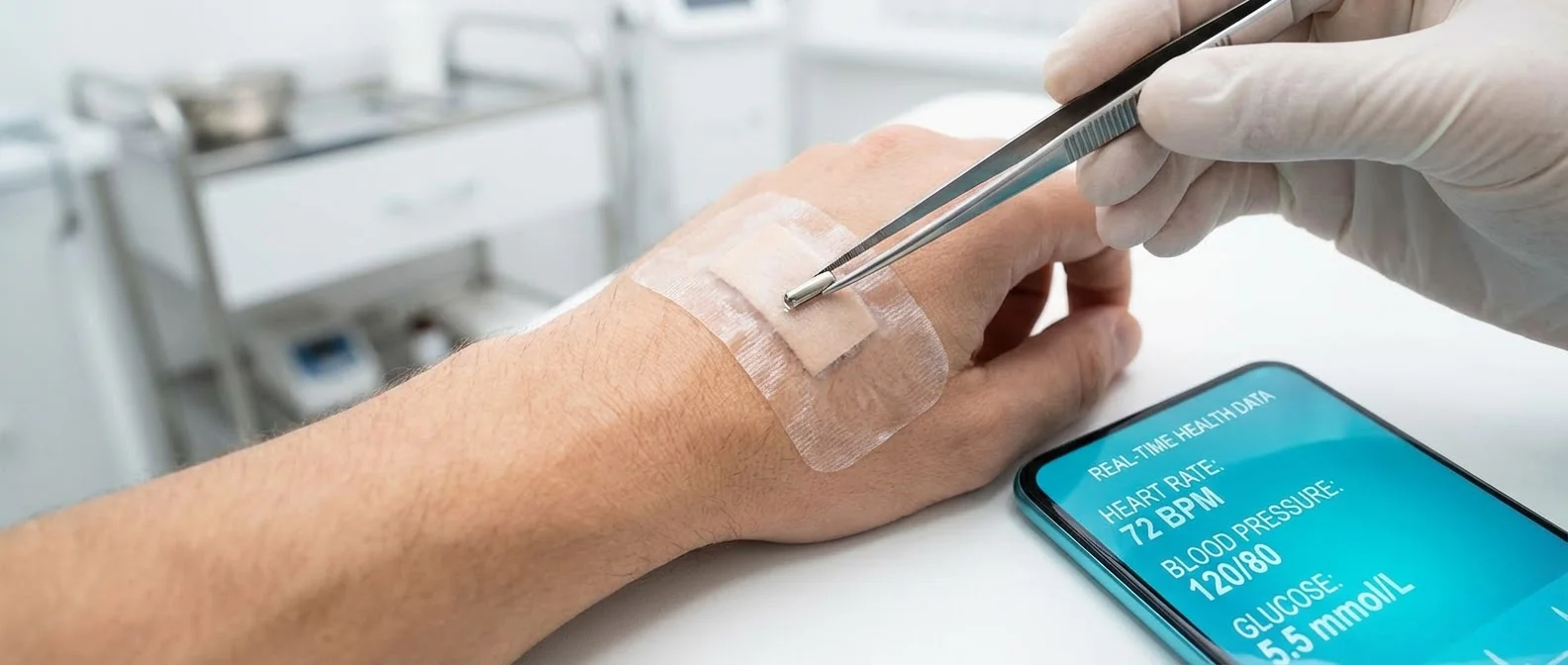
An implantable microchip is an electronic device placed subcutaneously, usually via injection. Most are based on RFID (Radio-Frequency Identification) or NFC (Near Field Communication) technology — the same protocols used by contactless payment cards.
The chip is encased in bioglass, a material compatible with the human body, and placed between the thumb and index finger or in the arm. It needs no battery — it's powered wirelessly when scanned by a nearby device.
Historical Evolution
Types of Implantable Health Chips
🏥 Medical Identification
Implants storing medical history, allergies, medications — critical for emergency patients. A single scan provides access to the complete health record.
💉 Biosensors
Continuous Glucose Monitors (CGM) measuring glucose in real time — already used by millions of diabetics. Future sensors will measure hemoglobin, uric acid, inflammation markers.
❤️ Cardiac Implants
Pacemakers and implantable cardioverter-defibrillators (ICDs) have been saving lives for decades. The new generation is wireless, smaller than a coin, and sends data to doctors via smartphone.
🔑 Digital Identity
NFC implants replacing keys, access cards, transit passes. At Epicenter in Stockholm, employees open doors, print documents, and pay for lunch with a hand scan.
🇸🇪 Sweden: Pioneer in Implants
Sweden has the highest adoption of implantable chips worldwide. Thousands of Swedes have NFC chips in their hands, using them for payments, SJ train tickets, gym access, and even COVID vaccination certificates. Biohacker Hannes Sjöblad regularly hosts “implant parties” where interested individuals get their chips implanted.
How Health Monitoring Works
"In a not-too-distant future, we won't go to the doctor — the doctor will be inside us."
Future Applications
Cancer detection: Research teams are developing biosensors that detect cancer biomarkers in the blood — circulating tumor DNA (ctDNA) or proteins — at early stages, long before symptoms appear.
Drug delivery control: Implants that release medication in a controlled manner via an external device. Microchips Biotech (funded by the Bill Gates Foundation) developed a 16-year controlled-release hormone implant.
Brain implants: Elon Musk's Neuralink implanted chips in a pig (2020) and a monkey (2021, video games) before beginning human trials. Goal: addressing paralysis, blindness, and neurological diseases.
Digital health legacy: Every cell could carry a digital medical record via DNA storage (combined with CRISPR) — a health card that's never lost.
Concerns and Risks
🔒 Privacy
The American Medical Association warned (2007) there's no guarantee implant data can be adequately protected. RFID chip cloning has been proven feasible.
⚠️ Infection & Rejection
Risk of infection during or after implantation, especially with amateur techniques. Bioglass reduces but doesn't eliminate the risk of body rejection.
🧲 MRI Incompatibility
Some “chipped” patients report being turned away from MRIs due to metallic implants. Complete studies for all implant types don't exist yet.
🏛️ Ethics & Autonomy
Fears of mandatory implantation. Multiple US states (Wisconsin, California, Georgia, etc.) have passed laws prohibiting forced chip implantation in employees.
Global Impact and Industry Growth
The movement isn't limited to Scandinavia. Companies worldwide are racing to develop next-generation health monitoring implants. The convergence of nanotechnology, biosensors, and AI is creating devices that were inconceivable just a decade ago. Research labs at MIT, Stanford, and Imperial College London are developing implants that can detect Alzheimer's biomarkers, monitor post-surgical recovery, and even deliver targeted drug therapy.
DARPA funds real-time health monitoring implants for soldiers — biosensors that detect chemical and biological threats before symptoms appear.
📊 Market & Future
The global market for implantable medical devices is expected to exceed $150 billion by 2030. Implantable biosensors are the fastest-growing segment, with a CAGR above 15%. Miniaturization, battery improvements (or elimination via wireless power), and advances in biocompatible materials will make implants as common as smartphones.
The Big Question: Do We Want the “Doctor Inside Us”?
Implantable health chips represent a future where prevention replaces treatment. Instead of visiting the doctor when we're sick, our bodies will alert us proactively. Instead of losing medical records, we'll carry them with us — literally under our skin.
The technology exists. Biocompatibility is improving. The question is no longer “if” but “when” — and crucially, whether we'll ensure this technology remains in service of the patient and not in control of them.