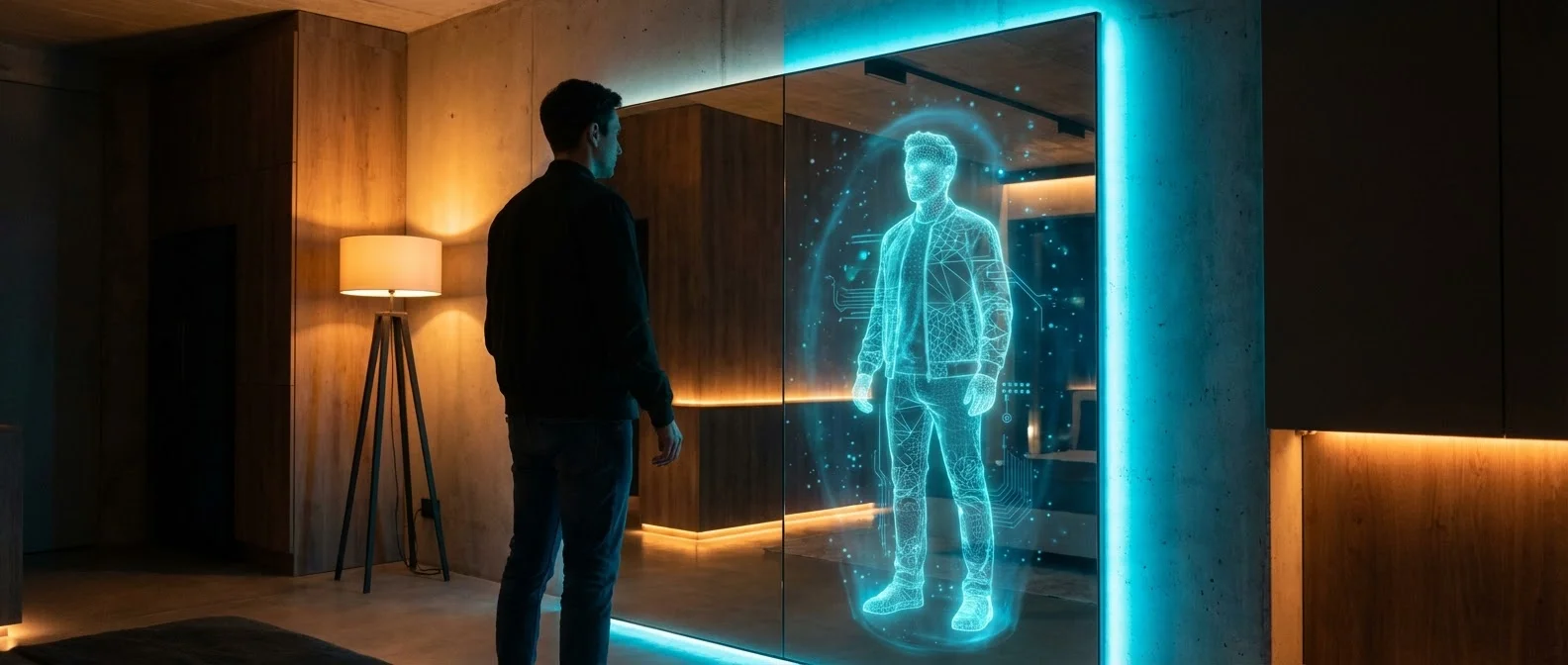
Imagine an exact digital copy of a building, a city, an airport — or even your own body. That is a digital twin: a virtual model that mirrors physical reality in real time. NASA coined the concept in the 1960s to monitor spacecraft from Earth. Now it's reshaping factories, hospitals, urban planning, and power grids.
📖 Read more: Mars Colony: When Will We Live on the Red Planet?
🪩 What Is a Digital Twin?
A digital twin is a digital model of a real physical object, system, or process. It consists of three core parts: the physical object, its digital representation, and the communication link between them — called the “digital thread.”
Unlike a simple 3D simulation, a true digital twin is continuously updated with real-time data from IoT sensors on the physical object. The data flow can be bidirectional: data flows from physical to digital — but control commands can also flow in reverse.
📜 Historical Evolution
🏭 Applications by Sector
🏗️ Industry & Engineering
From design to maintenance: digital twins simulate production lines, detect wear through vibration and temperature analysis, and reduce downtime via predictive maintenance.
🏥 Healthcare & Medicine
Patient digital twins are created from CT/MRI scans, enabling surgical planning, personalized treatment, and real-time monitoring via wearables. The goal: the “virtual patient.”
🏙️ Cities & Buildings
Geographic digital twins model entire cities in 3D/4D. Used for urban planning, BIM (Building Information Modeling), and post-earthquake damage assessment.
🚗 Automotive Industry
Digital twins analyze driving patterns, reduce accidents, and simulate entire traffic systems — vehicles, pedestrians, infrastructure — in real time.
⚡ Renewable Energy
Wind farms, solar panels, microgrids: digital twins reduce energy consumption by up to 30% through load optimization. A UK pilot reduced renewable curtailment by 56%.
🏛️ Cultural Heritage
LiDAR 3D scanning of monuments creates digital copies for preservation, research, and virtual tourism — before natural disasters or decay destroy them.
📊 Types of Digital Twins
| Type | Acronym | Description | Example |
|---|---|---|---|
| Prototype | DTP | Designs and analyses before physical construction | Virtual production line |
| Instance | DTI | Twin of each individual manufactured object | Specific aircraft engine |
| Aggregate | DTA | Aggregated data from multiple DTIs for knowledge mining | Data from all wind turbines in a park |
🏥 Focus: Digital Twins in Healthcare
Healthcare is perhaps the most exciting application area. Already today, surgeons create patient digital twins from CT and MRI data, enabling virtual planning of complex procedures before entering the operating room.
The technology's next leap is more radical. Researchers envision the "virtual patient" — a complete digital copy of the human body, continuously updated through wearables, genomic data, and electronic health records. This twin could:
• Predict diseases before symptoms appear
• Test medications virtually before administering them to the patient
• Personalize treatments based on a unique biological profile
• Compare data from millions of patients to discover patterns
🌐 Global Impact
Digital twin technology holds transformative potential across the globe. In heritage-rich countries, digital twins can “immortalize” monuments before they suffer damage — and virtually reconstruct ancient buildings. In tourism, virtual tours of archaeological site twins attract visitors worldwide. In the maritime industry, ship digital twins can optimize fuel usage and maintenance for global shipping fleets.
🔮 What Lies Ahead?
Digital twin technology is evolving rapidly, fueled by AI, IoT, and cloud computing. Siemens and General Electric have already invested billions. The UK's “national digital twin” initiative aims to model entire infrastructure networks — roads, bridges, buildings.
By the 2030s, experts predict that every major industrial asset will have a digital twin. Even more ambitiously, “city digital twins” will enable simulation of traffic, energy demand, flooding, and pandemics before they happen. The question is not whether they'll be used — but how quickly they'll become an inseparable part of our lives.