Every morning, 537 million people on the planet wake up thinking the same thing: how much insulin do I need today? How many carbs are in this breakfast? For those living with type 1 diabetes, every meal, every snack, every walk demands calculations. That's about to change.
📖 Read more: Autonomous Ships: Crewless Maritime Transportation
The Problem the Bionic Pancreas Solves
In type 1 diabetes, the immune system destroys the beta cells in the pancreas that produce insulin. Without insulin, glucose accumulates in the blood and damages kidneys, eyes, nerves, and heart. Traditional management means 4-10 finger pricks per day, carb counting at every meal, and manual dose adjustments.
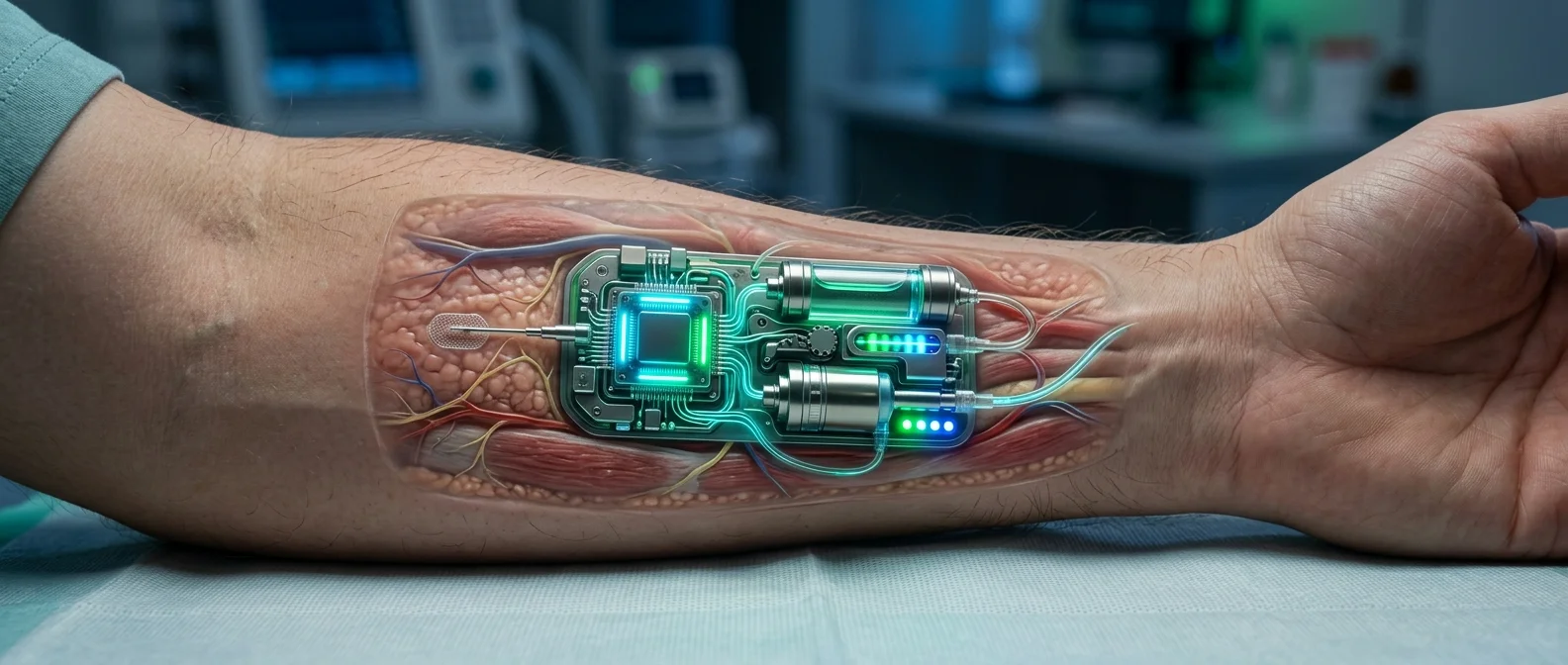
The bionic pancreas is a closed-loop system: a continuous glucose monitor (CGM) reads blood sugar levels every 5 minutes, an AI algorithm calculates the precise dose, and an insulin pump delivers it automatically. The person barely has to do anything.
iLet — The First Truly Bionic Pancreas
Beta Bionics created the iLet Bionic Pancreas — the first system that needs only one number: your weight. No carb ratios, no correction factors, no basal rates. The iLet's AI learns the body's needs and adjusts insulin delivery automatically.
Behind the iLet is Ed Damiano, a biomedical engineering professor at Boston University whose son was diagnosed with type 1 diabetes at 11 months old. That personal drive led to 15+ years of research and ultimately FDA approval in May 2023. The iLet is approved for adults and children ages 6 and up, compatible with Dexcom and FreeStyle Libre sensors.
Why “Bionic”?
The iLet isn't an implant — it's an external device the size of a dice that attaches to the skin with a patch. It's called “bionic” because it mimics the function of the natural pancreas — measuring, calculating, and delivering, with no human intervention.
📖 Read more: Autonomous Trucks: Highways Without Drivers
The Competitors
Other companies have joined the race:
- Omnipod 5 (Insulet): A tubeless pod that sticks to the skin and communicates with the Dexcom G7 for automatic adjustment. Popular for being discreet and waterproof.
- Medtronic 780G: The MiniMed 780G uses the Guardian 4 sensor and delivers automatic correction doses every 5 minutes. It has the largest installed user base worldwide.
- Tandem Mobi (Control-IQ): The smallest pump on the market, with Bluetooth and smartphone control. The Control-IQ algorithm predicts glucose trajectory 30 minutes ahead.
- Tidepool Loop: An open-source algorithm that received FDA clearance — the first time the FDA approved open-source software for a medical device.
What Changes in Daily Life
For someone who doesn't live with diabetes, it's hard to grasp the mental burden of constant management. Every meal becomes a math exercise. Every night carries the fear of hypoglycemia during sleep. Parents of children with T1D wake up 2-3 times a night for checks. A closed-loop system doesn't eliminate the disease, but it eliminates the anxiety.
The key metric is Time in Range (TIR): the percentage of the 24-hour day that glucose stays between 70-180 mg/dL. Target is 70%+. With modern closed-loop systems, most users achieve 75-85% TIR — a number that 10 years ago was considered impossible without constant attention.
📖 Read more: Bionic Eyes: How We'll See in the Future
The Next Step: Cell Therapy
Closed-loop systems are the present. The future may be even more radical. Vertex Pharmaceuticals developed VX-880: implantable beta cells derived from stem cells. In clinical trials, some patients stopped taking exogenous insulin entirely — their bodies began producing it again.
The catch? Patients need immunosuppressant drugs to prevent rejection. The next generation encapsulates cells in membranes that let insulin out but keep immune cells away.
Access and Cost
In the U.S., closed-loop systems are covered by many insurers. In Europe, availability varies: Germany and France offer broad coverage, while in other countries patients pay significant amounts out of pocket. A CGM costs roughly €100-150/month, an insulin pump €3,000-6,000. For millions of people in low-income countries, these remain unaffordable.
Hope lies in competition. CGM prices are falling, Abbott offers the most affordable sensors with FreeStyle Libre, and new Chinese players are pushing prices down. The forecast? Within the next decade, closed-loop will be the standard for every type 1 diabetic in developed countries.
For Ed Damiano, the iLet was always personal. For millions of families, it's the promise that one day their child won't need to think about insulin every morning. That day is approaching.