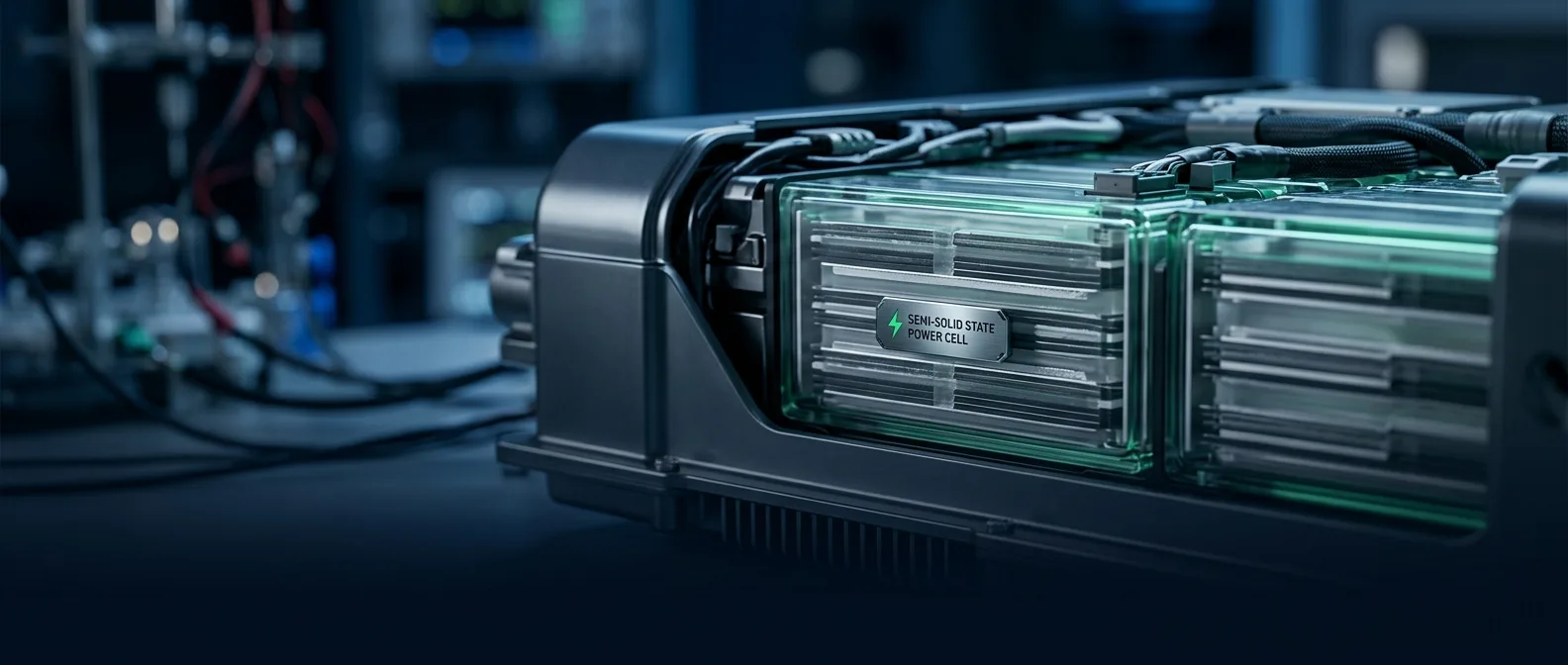
Sixty percent less liquid electrolyte than a standard lithium-ion battery. That's the headline spec of SolidCore technology that MG is bringing to Europe with the refreshed MG4 Urban. The first genuinely affordable EV with semi-solid-state battery tech will hit European dealerships by the end of 2026, changing how advanced battery technology reaches consumers.
The result looks simple on paper. But MG Motor is attempting to reverse the usual innovation flow in the auto industry — instead of introducing new tech first in expensive premium models, they're going straight to the budget segment. If they pull it off, the ripple effects will hit every corner of the European EV market.📖 Read more: 1,000 km EV Range: How Close Are We?
🔋 SolidCore: What Changes with the New Battery
The SolidCore technology developed with Chinese partner QingTao packs just 5% liquid electrolyte, compared to 20% in traditional lithium-ion batteries. It's not yet the holy grail of 0% liquid solid-state batteries — those still need a few more years. But it's enough to bring many of the benefits of next-gen battery tech to the affordable end of the market.SolidCore technology's main advantages focus on improved safety and low-temperature performance. In nail penetration and triple extrusion tests, the battery showed no thermal runaway. Plus, charging and discharging consistency in cold weather is significantly improved.
Charging speed gets a boost too. MG claims the semi-solid-state battery charges 15% faster than the LFP (lithium iron phosphate) versions of the MG4 Urban. Current LFP batteries need 28-30 minutes to jump from 10% to 80% on a DC fast charger, with peak input power of 82-87 kW depending on battery size.From China to Europe
In the Chinese market, the MG4 Urban with SolidCore battery starts at roughly $14,500 (about €13,400) and offers 530 kilometers of range according to the Chinese CLTC cycle. European prices will inevitably be higher — and WLTP range likely lower than CLTC figures.⚡ Strategy Against Convention
Li Zheng, MG's head battery engineer, explained to Automotive News Europe why the company chose to introduce the technology first in an affordable model: "For our new technologies, the main challenge is the supply chain. If we choose to develop it first in a top model, we cannot afford the volume of materials economically, and we cannot ensure quality." The logic makes sense. Mass production means lower material costs and better quality control. But it's also a risk — if something goes wrong, the consequences will be multiplied compared to a niche premium model.5% liquid electrolyte in SolidCore
15% faster charging than LFP
£23,495 starting price for LFP version in UK
📖 Read more: BYD Dolphin: Affordable Electric Hatchback Under $30,000
🚗 What Changes in the MG4 Urban
The MG4 Urban differs noticeably from the regular MG4, both in design and price. The refreshed 2026 version brings additional upgrades, including new LED front and rear lights, redesigned 18-inch aluminum wheels, and a modified rear spoiler. Inside, the old instrument cluster has been replaced with a 10.25-inch color display divided into five indication sections. The center of the dashboard features a high-resolution 12.8-inch touchscreen, while physical controls for audio and climate remain.New Versions and Dropping the Base Model
MG will discontinue the base version with 49 kWh battery. The refreshed MG4 EV will be available with 64 kWh and 77 kWh batteries. The Long Range version delivers 190 horsepower with maximum WLTP range of 452 kilometers, while the Extended Range with the larger battery reaches 245 horsepower and 545 kilometers of range. The flagship XPower retains dual motors (one on each axle) with combined output of 435 horsepower and 600 Nm of torque. It uses the 64 kWh battery and offers 405 kilometers of range.💰 Pricing and Competition
Pricing for the semi-solid-state version hasn't been announced yet, but expect it to be slightly higher than current LFP versions starting at £23,495 (roughly €27,500) in the UK. The premium for advanced battery technology must remain reasonable to maintain the model's competitiveness.Timing is critical. The European EV market continues developing rapidly, unlike the American market showing signs of slowdown. Chinese manufacturers want to capture market share before European companies respond with their own advanced solutions.If MG manages to keep prices close to current levels, it will force European manufacturers to reconsider their own strategy for advanced battery technologies.
Market analysis
📖 Read more: Silicon Anode Batteries: A New Era of EV Range
🔬 The Technology in Detail
Full solid-state batteries remain the ultimate goal for electric propulsion, but mass production is still several years away. Semi-solid-state technology represents a transitional solution that retains many benefits without the technical difficulties of full solid-state. The main advantage lies in safety. Penetration and deformation tests conducted by MG show that the SolidCore battery doesn't exhibit thermal runaway — the phenomenon where the battery self-destructs from overheating and can cause fires.Production Challenges
Manufacturing semi-solid-state batteries remains complex and expensive. MG's choice to introduce it in a mass-market model instead of premium versions reflects the need for large production volumes that will make the technology economically viable.Safety
No thermal runaway in destructive testing
Cold Weather
Consistent performance in harsh conditions
Faster Charging
15% reduction in charging time vs LFP