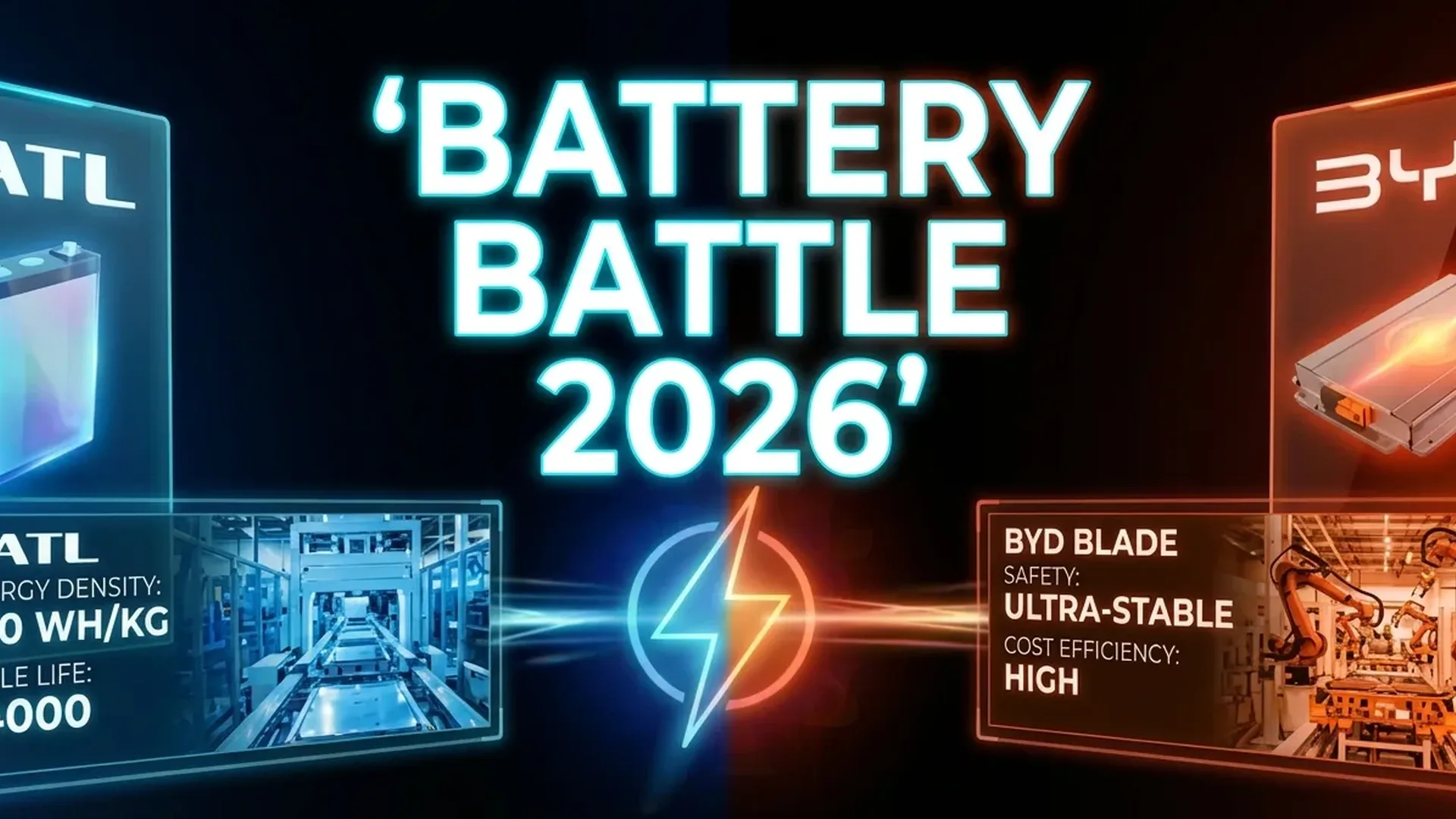
If you're shopping for an electric vehicle, you've surely come across the abbreviations LFP and NMC in battery specifications. These are the two dominant lithium battery technologies used in EVs today — and each one has clear advantages and disadvantages. Choosing between them isn't just a technical matter: it affects the range, lifespan, safety, and price of your car.
In this guide, we'll take a deep dive into both technologies, compare them across every critical parameter, and help you decide which one fits your needs. Let's get started!
What Is an LFP Battery?
LFP (Lithium Iron Phosphate) is a type of lithium-ion battery that uses iron phosphate as the cathode material. Chemical formula: LiFePO₄. It was commercially developed in the early 2000s and was initially used in electric buses and energy storage systems.
In recent years, LFP has gained enormous ground in electric vehicles thanks to its low cost, exceptional durability, and safety. BYD's Blade Battery technology has proven that LFP batteries can compete with NMC even in range, while Tesla uses them in its Standard Range Model 3 and Model Y.
🔑 Key LFP Features
- Energy density: 90-160 Wh/kg — lower, meaning a heavier battery
- Charge cycles: 3,000-5,000+ — exceptional longevity
- Thermal stability: Decomposes at ~270°C — much safer
- Cost: ~$65-80/kWh — significantly cheaper
- Cobalt-free: No dependency on rare metals
What Is an NMC Battery?
NMC (Nickel Manganese Cobalt) is the “classic” lithium-ion battery technology that dominates premium EVs. It uses a combination of nickel, manganese, and cobalt in the cathode, in various ratios (e.g., NMC 622, NMC 811).
NMC batteries offer higher energy density, which means more range in a smaller and lighter pack. This is why manufacturers like BMW, Mercedes, Hyundai, and Tesla (in Long Range models) prefer them.
🔑 Key NMC Features
- Energy density: 200-270 Wh/kg — higher, lighter pack
- Charge cycles: 1,000-2,000 — fewer compared to LFP
- Thermal stability: Decomposes at ~210°C — thermal runaway risk exists
- Cost: ~$100-130/kWh — more expensive
- Contains cobalt: Ethical/environmental mining concerns
Detailed LFP vs NMC Comparison
Let's put both technologies side by side across every important parameter:
Which Cars Use Each Technology?
The battery choice largely depends on each manufacturer's philosophy:
🔋 Cars with LFP Battery
- Tesla Model 3 Standard Range — LFP 60 kWh, manufactured by CATL
- Tesla Model Y Standard Range — LFP, ideal for daily use
- BYD Seal — Blade Battery LFP, 82 kWh, 570 km range
- BYD Dolphin — LFP 44/60 kWh, excellent value
- MG4 — LFP in base versions
- Rivian R1S/R1T — LFP Standard Range
⚡ Cars with NMC Battery
- Tesla Model 3/Y Long Range — NMC 811, greater range
- BMW iX — NMC, 105 kWh, 630 km
- Hyundai Ioniq 5/6 — NMC (SK Innovation / CATL)
- Mercedes EQS — NMC 108 kWh, premium category
- Kia EV6/EV9 — NMC, 800V architecture
- Porsche Taycan — NMC, designed for performance
Advantages & Disadvantages
✅ LFP Advantages
- 🔋 Exceptional longevity — the battery outlasts the car
- 🔥 Very safe — minimal risk of thermal decomposition
- 💰 Lower purchase & replacement cost
- 🔌 You can charge to 100% without degradation
- 🌍 More environmentally friendly — cobalt-free
- 📉 Less degradation after years of use
❌ LFP Disadvantages
- ⚖️ Heavier — requires a larger pack for the same range
- 📏 Lower energy density
- ❄️ Worse performance in very cold weather
- 📊 More difficult accurate SoC (State of Charge) reading
- 🚗 Less range for the same pack size
✅ NMC Advantages
- ⚡ High energy density — greater range
- 🪶 Lighter battery pack
- ❄️ Better performance in cold weather
- 🏎️ Ideal for performance vehicles
- ⚡ Faster charge acceptance (in some cases)
❌ NMC Disadvantages
- 💸 Higher purchase cost
- 🔥 Thermal runaway risk (rare but real)
- 📉 Faster degradation — avoid charging to 100%
- ⛏️ Uses cobalt — ethical/environmental concerns
- 🔄 Fewer cycle life
Which Battery Is Right for You?
The “right” answer depends entirely on your needs:
🏙️ Choose LFP if:
- You mostly do urban & daily driving
- You want maximum battery longevity
- You're looking for a lower purchase price
- You mainly charge at home and want to go to 100%
- Safety is your top priority
- You want low long-term battery replacement costs
🛣️ Choose NMC if:
- You frequently drive long distances or take road trips
- You want maximum range
- You need good performance in cold climates
- You want a lighter car for dynamic driving
- You don't mind charging only to 80%
⚠️ Important Note
If you buy a car with an LFP battery, manufacturers recommend charging to 100% once a week for BMS calibration. This helps maintain accurate battery percentage readings. With NMC batteries, on the other hand, avoid charging to 100% unless you're about to start a trip immediately.
The Future: LMFP & Solid-State
Technology doesn't stand still. We're already seeing new developments that could shift the balance:
- LMFP (Lithium Manganese Iron Phosphate): An evolution of LFP with 15-20% higher energy density. CATL and BYD are actively developing it.
- Solid-State Batteries: The “holy grail” — 2x energy density, zero risk of thermal decomposition. Toyota & Samsung SDI are targeting 2027-2028.
- Sodium-Ion: Even cheaper than LFP, ideal for budget EVs. BYD is already using them in the Seagull.
In the long run, the trend appears to be moving toward LFP/LMFP for mass-market models and NMC/Solid-State for premium ones. The market shows that LFP is gaining market share rapidly — from 20% in 2022 to 45%+ in 2026 globally.
⚡ Conclusion
There is no “winning” technology — only the right choice for your needs. If safety, longevity, and price are priorities, LFP is an excellent choice. If you want maximum range and a lightweight pack, NMC has you covered. Both are proven, reliable technologies. The future brings even better solutions — so whatever you choose today, your EV will serve you flawlessly.
📖 Also Read
- → Solid State Batteries: The Revolution in Electric Vehicles
- → Sodium-Ion Batteries: The New Era in EVs
- → EV Battery Recycling: How It's Done & Why It Matters
- → EV Range in Cold Weather: How Many Kilometers Do You Lose?
- → More Articles on EVs & Cars