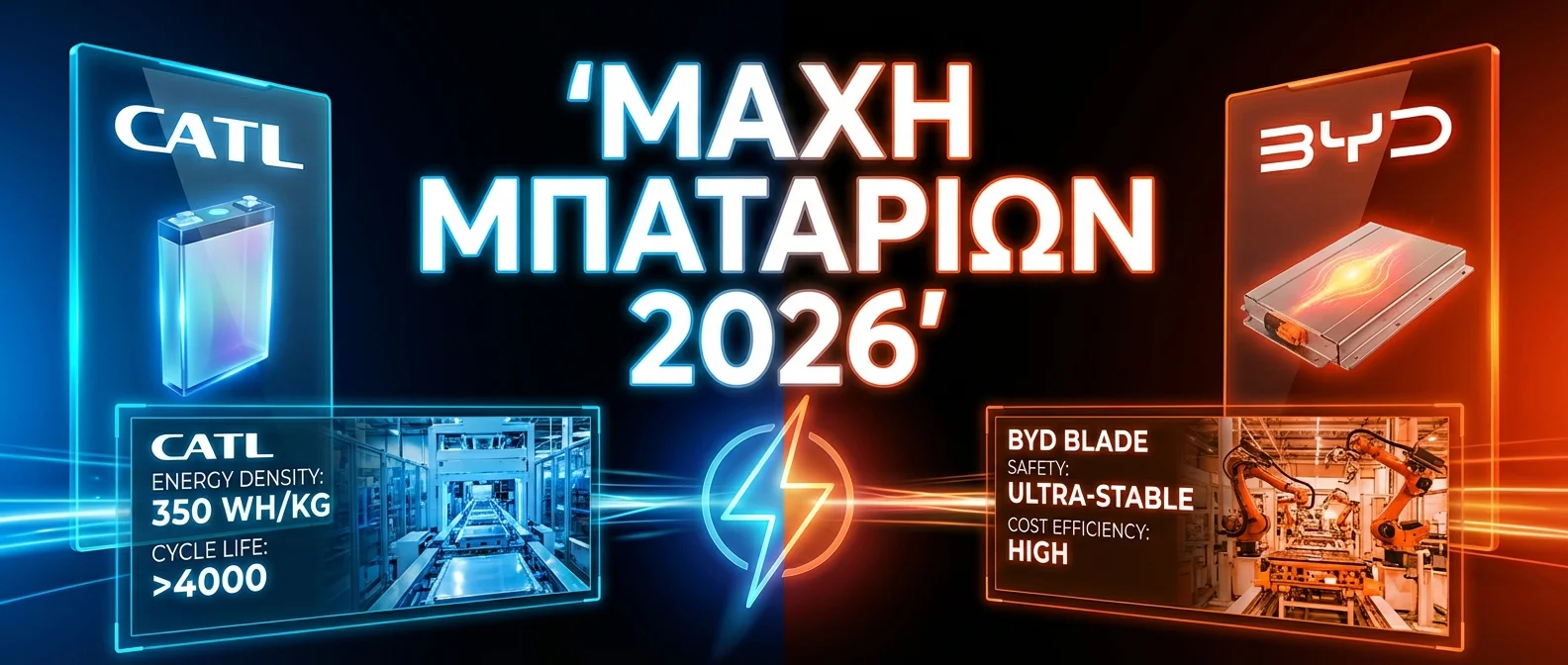
Your next EV will run on one of two battery chemistries: LFP or NMC. Tesla uses both. BYD swears by LFP. BMW sticks with NMC. The choice isn't just technical jargon — it determines how far you'll drive, how long your battery lasts, what you'll pay upfront, and whether you can charge to 100% without worry.
Here's what the numbers tell us: LFP batteries survive 3,000-8,000 charge cycles while NMC barely reaches 2,000. But NMC packs 70% more energy per kilogram. One chemistry prioritizes longevity and cost. The other chases range and performance. We'll break down every critical difference so you can pick the right battery tech for your driving needs.
LFP Battery Technology: The Longevity Champion
LFP (Lithium Iron Phosphate) uses iron phosphate as its cathode material. Chemical formula: LiFePO₄. Developed commercially in the early 2000s, LFP initially powered electric buses and grid storage before automakers discovered its potential for passenger cars.
The chemistry has exploded in popularity thanks to rock-bottom costs, exceptional durability, and inherent safety. BYD's Blade Battery proved LFP could compete with NMC on range while Tesla adopted it for Standard Range Model 3 and Model Y variants. The result? LFP battery market share jumped from 20% in 2022 to over 45% globally by 2026.
🔑 LFP Battery Fundamentals
- Energy density: 90-160 Wh/kg — lower density means heavier packs
- Charge cycles: 3,000-5,000+ — exceptional longevity
- Thermal stability: Decomposes at ~270°C — much safer
- Cost: ~$65-80/kWh — significantly cheaper
- Cobalt-free: No dependence on rare metals
NMC Battery Technology: The Range King
NMC (Nickel Manganese Cobalt) represents the "classic" lithium-ion chemistry dominating premium EVs. It combines nickel, manganese, and cobalt in the cathode with various ratios (like NMC 622 or NMC 811 with higher nickel content).
NMC batteries deliver superior energy density, cramming more range into smaller, lighter packages. That's why BMW, Mercedes, Hyundai, and Tesla's Long Range models rely on this chemistry. When you need maximum range in minimum space, NMC delivers.
🔑 NMC Battery Fundamentals
- Energy density: 200-270 Wh/kg — higher density, lighter packs
- Charge cycles: 1,000-2,000 — fewer than LFP
- Thermal stability: Decomposes at ~210°C — thermal runaway risk exists
- Cost: ~$100-130/kWh — more expensive
- Contains cobalt: Ethical/environmental mining concerns
Head-to-Head: LFP vs NMC Battery Comparison
Let's put both chemistries side-by-side across every critical metric:
Which EVs Use LFP vs NMC Batteries?
Battery choice reflects each automaker's philosophy and target market:
🔋 LFP Battery Electric Vehicles
- Tesla Model 3 Standard Range — LFP 60 kWh, CATL-manufactured
- Tesla Model Y Standard Range — LFP, perfect for daily driving
- BYD Seal — Blade Battery LFP, 82 kWh, 570 km range
- BYD Dolphin — LFP 44/60 kWh, exceptional value
- MG4 — LFP in base trims
- Rivian R1S/R1T — LFP Standard Range variants
⚡ NMC Battery Electric Vehicles
- Tesla Model 3/Y Long Range — NMC 811, extended range
- BMW iX — NMC, 105 kWh, 630 km
- Hyundai Ioniq 5/6 — NMC (SK Innovation / CATL)
- Mercedes EQS — NMC 108 kWh, premium segment
- Kia EV6/EV9 — NMC, 800V architecture
- Porsche Taycan — NMC, engineered for performance
LFP vs NMC: Pros and Cons Breakdown
✅ LFP Battery Advantages
- 🔋 Outstanding longevity — battery outlasts the car
- 🔥 Extremely safe — minimal thermal runaway risk
- 💰 Lower purchase & replacement costs
- 🔌 Charge to 100% without degradation
- 🌍 Environmentally friendlier — no cobalt
- 📉 Less degradation after years of use
❌ LFP Battery Disadvantages
- ⚖️ Heavier — need bigger pack for same range
- 📏 Lower energy density
- ❄️ Worse performance in extreme cold
- 📊 Harder to accurately gauge State of Charge
- 🚗 Less range in same-size pack
✅ NMC Battery Advantages
- ⚡ High energy density — maximum range
- 🪶 Lighter battery pack
- ❄️ Better cold weather performance
- 🏎️ Ideal for performance vehicles
- ⚡ Faster charge acceptance (in some cases)
❌ NMC Battery Disadvantages
- 💸 Higher purchase cost
- 🔥 Thermal runaway risk (rare but real)
- 📉 Faster degradation — avoid 100% charging
- ⛏️ Cobalt use — ethical/environmental concerns
- 🔄 Fewer cycle life
Which Battery Chemistry Should You Choose?
The "right" answer depends entirely on your driving patterns and priorities:
🏙️ Choose LFP Battery If:
- You drive mostly city & daily commutes
- You want maximum battery longevity
- You prioritize low purchase cost
- You charge primarily at home and want 100% capacity
- Safety is your top concern
- You want low long-term battery replacement costs
🛣️ Choose NMC Battery If:
- You frequently drive long distances or road trips
- You want maximum range
- You need good cold climate performance
- You want lighter weight for dynamic driving
- You don't mind charging to 80%
⚠️ Important Note
If you buy an LFP battery vehicle, manufacturers recommend charging to 100% once weekly for BMS calibration. This helps maintain accurate battery percentage readings. With NMC batteries, avoid 100% charging except before immediate long trips.
The Future: LMFP & Solid-State Technologies
Battery technology keeps evolving. Several developments could reshape the LFP vs NMC landscape:
- LMFP (Lithium Manganese Iron Phosphate): LFP evolution with 15-20% higher energy density. CATL and BYD are actively developing this chemistry.
- Solid-State Batteries: The holy grail — 2x energy density, zero thermal runaway risk. Toyota & Samsung SDI target 2027-2028 production.
- Sodium-Ion: Even cheaper than LFP, perfect for budget EVs. BYD already uses them in the Seagull model.
Long-term trends point toward LFP/LMFP for mass-market models and NMC/Solid-State for premium vehicles. Market data shows LFP gaining share rapidly — from 20% in 2022 to 45%+ globally in 2026.
⚡ Bottom Line
There's no universal "winner" — only the right choice for your specific needs. If safety, longevity, and cost matter most, LFP delivers exceptional value. If you prioritize maximum range and lightweight packaging, NMC has you covered. Both are proven, reliable technologies. The future brings even better solutions — so whatever you choose today, your EV will serve you well.