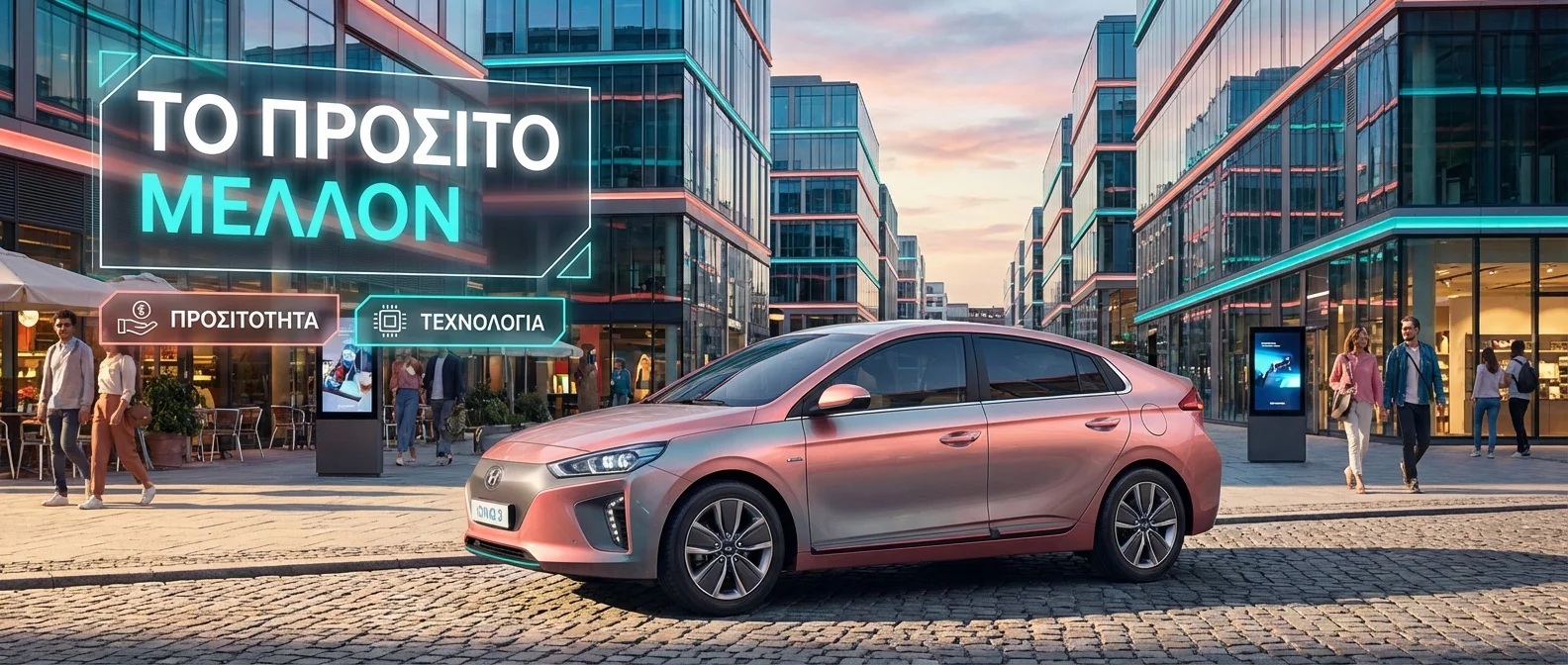
What Is the Hyundai Ioniq 3?
The Hyundai Ioniq 3 is an electric subcompact hatchback designed to complete the wildly successful Ioniq lineup. First revealed as the Concept THREE at September 2025's Munich Motor Show, it showcased striking design language following Hyundai's "Art of Steel" philosophy.
📖 Read more: EV in Snow: Maximum Range Tips
According to Hyundai Europe CEO Xavier Martinet, the Ioniq 3 will start production in Q3 2026 at Hyundai's Turkey facility (İzmit). This means lower logistics costs for European markets and avoidance of punitive tariffs. Already, nearly 4/5 of Hyundai's European sales come from cars built in Czech Republic and Turkey.
Worth noting: in brand recognition surveys, Ioniq is now the second most recognizable EV brand after Tesla — an impressive achievement for Hyundai.
Art of Steel Design Meets Electric Future
The Concept THREE revealed the Ioniq 3's design direction. Key features include:
- Ducktail spoiler at the rear for improved aerodynamics
- Raked visor-shaped glasshouse — a striking sloped windshield
- Narrow wrap-around lights giving a futuristic character
- Rear diffuser for aerodynamic efficiency
- Art of Steel design language — the same philosophy introduced with the new Nexo
Despite being subcompact, Hyundai emphasizes premium feel. At 4,288mm long, 1,968mm wide with a 2,722mm wheelbase, it offers interior space larger than external dimensions suggest.
📖 Read more: 10 EV Owner Mistakes & How to Avoid Them
Ioniq 3 Powertrain & Battery Specs
The Ioniq 3 uses the E-GMP (Electric Global Modular Platform) in 400V architecture. This choice over the more expensive 800V (used by Ioniq 5, 6, and 9) keeps costs lower, though charging is slightly slower.
| Specification | Standard Range | Long Range |
|---|---|---|
| Battery | 58.3 kWh | 81.4 kWh |
| WLTP Range | ~418 km (260 miles) | ~587 km (365 miles) |
| Motor | 201 hp / 209 lb-ft | 201 hp / 209 lb-ft |
| Drive | FWD | FWD |
| 0-100 km/h | < 8 seconds | < 8 seconds |
| Architecture | 400V E-GMP | 400V E-GMP |
The motor and batteries are expected to be shared with sibling Kia EV3, with the front electric motor delivering 201 horsepower and 209 lb-ft of torque. Drive is exclusively front-wheel (FWD).
💡 Why 400V instead of 800V? The 400V architecture significantly reduces manufacturing costs, while daily-use performance (AC charging at home) remains virtually identical. The main difference shows only at ultra-fast DC stations.
Hyundai Ioniq 3 Technology & Connected Features
Hyundai is betting big on the Ioniq 3's technology stack. Key highlights:
Apple CarPlay Ultra
Full CarPlay Ultra support — the next-generation Apple CarPlay that takes over the entire dashboard.
📖 Read more: Top 10 Electric Cars Under €40,000 in 2026
Pleos OS
New Pleos operating system, developed in partnership with major tech companies. Software-defined vehicle with OTA updates.
EV Sound Design
New synthetic EV sound effects that drivers can customize to their preference.
On-Demand Features
Ability to purchase additional features via app, even on used cars — re-spec at will.
The Ioniq 3 will be a "software-defined vehicle" — meaning many features can be upgraded or changed via OTA updates without service visits. This gives used car buyers the ability to "re-spec" the car according to their own needs.
How Does the Ioniq 3 Stack Against Competition?
| Ioniq 3 | Kia EV3 | Renault 5 E-Tech | VW ID.2 | |
|---|---|---|---|---|
| Type | Hatchback | Crossover SUV | Hatchback | Hatchback |
| Range (max) | 587 km | 600 km | 410 km | ~450 km (est.) |
| Battery (max) | 81.4 kWh | 81.4 kWh | 52 kWh | ~56 kWh (est.) |
| Price from | ~€30,000 | ~€36,000 | ~€25,000 | ~€25,000 (est.) |
| Platform | E-GMP 400V | E-GMP 400V | AmpR Small | MEB+ |
The Ioniq 3 sits between the smaller Inster and larger Kona EV. It shares platform and powertrain with sibling Kia EV3, but in hatchback form instead of crossover, meaning better aerodynamics and potentially greater range.
📖 Read more: EV Range in Cold: How Many Kilometers Do You Lose?
The Strategy Behind the Hyundai Ioniq 3
Hyundai isn't just making another small EV — it's strategically building the Ioniq series as the second most recognizable EV brand after Tesla. Xavier Martinet explained to Top Gear that the company wants "the same market share across all powertrain types."
The Turkey positioning is crucial: Hyundai can avoid import tariffs hitting Chinese EVs while keeping manufacturing costs low. It's, in Martinet's words, a "local player" in Europe.
📊 Interesting data: Hyundai's average UK selling price is now 50% higher than five years ago, thanks to the Ioniq series. The Ioniq 3 aims to bring back more budget-conscious buyers too.
Hyundai is also planning range-extender EVs — electric cars with small gasoline engines as generators that supplement the battery. Combined with ICE, hybrid, PHEV and BEV, the powertrain range becomes the broadest in the market.
📖 Read more: BYD Dolphin: Electric Hatchback Under €30,000
Ioniq 3 Technical Specifications & Dimensions
| Category | Subcompact Hatchback |
| Platform | E-GMP (400V) |
| Length | 4,288 mm |
| Width | 1,968 mm |
| Height | 1,465 mm |
| Wheelbase | 2,722 mm |
| Body | 5-door hatchback |
| Drive | Front-wheel drive (FWD) |
| Related model | Kia EV2 |
| Manufacturing | HAOS, İzmit, Turkey |
Ioniq 3 in Greece: What to Expect
Hyundai has strong presence in the Greek market, and the Ioniq 3 is expected to arrive in Greece a few months after European launch — likely late 2026 or early 2027.
With estimated starting price around €30,000 and possible Kinoumai Ilektriko subsidies (if the program continues), final pricing could drop below €25,000 — making it one of the most affordable EVs with decent range.
⚠️ Note: The Ioniq 3 hasn't launched yet. Specs are based on official Hyundai Europe statements and expected platform sharing with Kia EV3. Final Greek pricing will be announced later.
Hyundai Ioniq 3 Pros & Cons
✅ Pros
- ✓ Up to 587 km WLTP range
- ✓ Estimated ~€30,000 pricing
- ✓ European manufacturing (no tariffs)
- ✓ Premium tech (CarPlay Ultra, Pleos OS)
- ✓ Striking Art of Steel design
- ✓ Proven E-GMP platform
❌ Cons
- ✗ 400V instead of 800V (slower DC charging)
- ✗ FWD only (no AWD option)
- ✗ Not launched yet
- ✗ On-demand features = potential extra costs
- ✗ Subcompact category — limited space