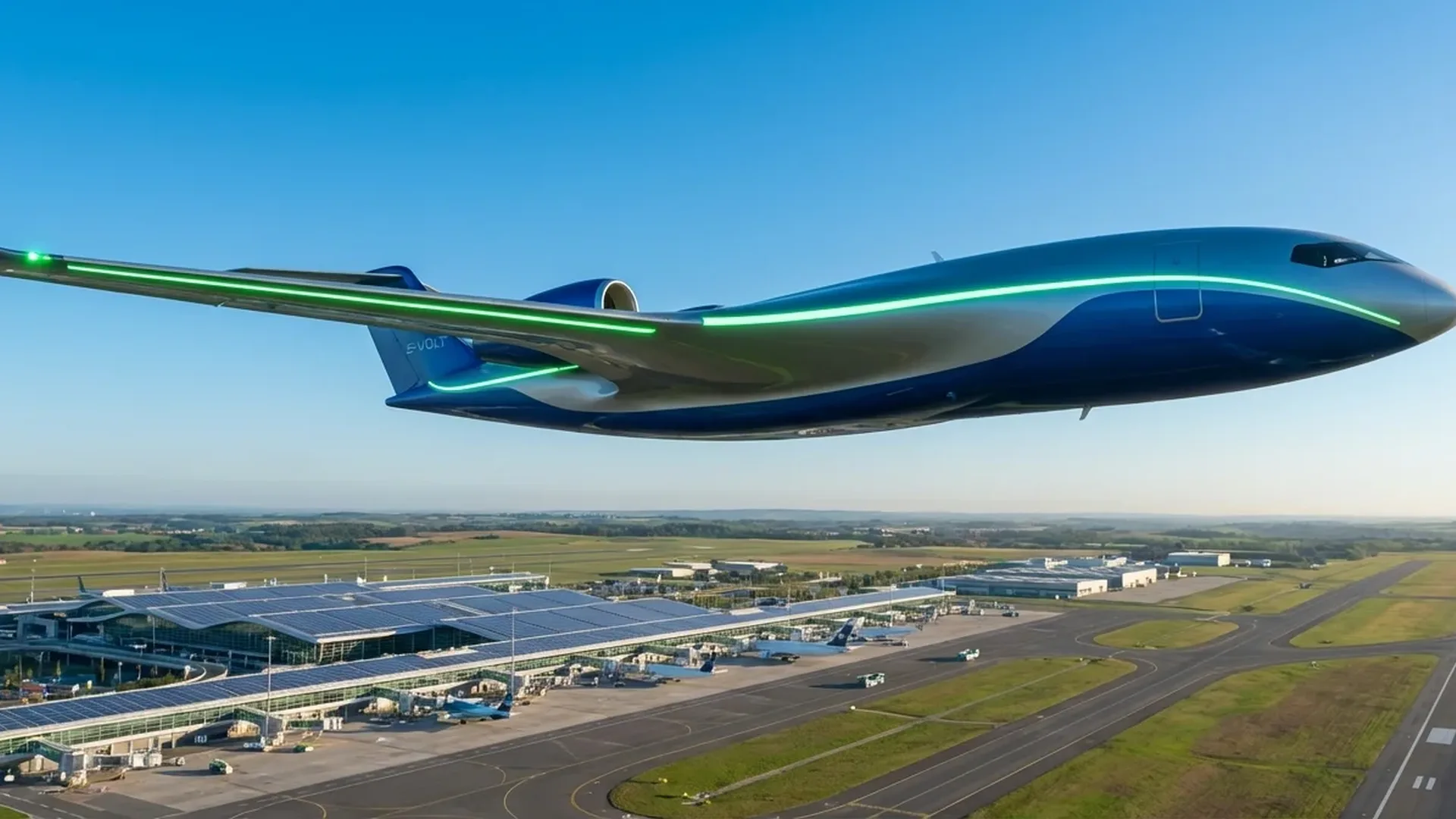
Aviation accounts for 2.4% of global CO₂ emissions — a figure that rises to 3.5% when NOx and contrails are factored in. This makes electric aircraft not a futuristic fantasy, but an urgent necessity. And progress is no longer measured in decades — it's measured in months.
📖 Read more: Autonomous Driving: SAE Levels 2 to 5 Explained
From eVTOL air taxis preparing to fly you from home to the airport, to electric trainer aircraft already operating across Europe, the world of aviation is changing at a pace few anticipated. By 2023, over 700 sustainable aircraft designs were under development worldwide.
Brief History: From First Flight to 2026
Electric aviation isn't as new as you might think. Gaston Tissandier flew the first electric airship in 1883. Nearly a century later, in 1973, the Militky MB-E1 became the first manned heavier-than-air electric aircraft, flying for 9 minutes from Linz, Austria, on nickel-cadmium batteries.
From there, progress accelerated:
The Big Obstacle: Batteries vs Jet Fuel
Let's be direct: the biggest challenge for electric aviation is energy density. Today's lithium-ion batteries offer 250-300 Wh/kg, while aviation fuel (Jet-A) provides 12,500 Wh/kg — a 1:50 ratio.
Li-ion Battery
- Energy: 250-300 Wh/kg
- Motor efficiency: ~90%
- Emissions: 0 g CO₂
- Noise: Minimal
- Energy cost: ~$0.10/kWh
Jet Fuel
- Energy: 12,500 Wh/kg
- Engine efficiency: ~50%
- Emissions: High CO₂ + NOx
- Noise: Very high
- Energy cost: ~$2.00/liter
However, there's a crucial point: electric motors are nearly twice as efficient (~90%) compared to jet engines (~50%). This means we need less energy per kilometer in practice. The real ratio drops to about 1:25, low enough for short-range flights.
What's needed for each aircraft category:
- Small 2-4 seat: 250-300 Wh/kg — ✓ Achievable today
- 19-seat regional: 500 Wh/kg — ⚠ Expected 2028-2030
- 100+ seat single-aisle: 2,000 Wh/kg — ✗ Requires technological breakthrough
eVTOL: Tomorrow's Flying Taxis (or Today's)
The eVTOL (Electric Vertical Take-Off and Landing) category is stealing the show. These aircraft take off vertically like helicopters and fly horizontally like planes, all on electric power. Here's how the leading companies compare:
| Company | Aircraft | Seats | Range | Speed | Status |
|---|---|---|---|---|---|
| Joby Aviation | S4 | 4+1 pilot | 150 mi | 200 mph | FAA eIPP 2025 |
| BETA Technologies | Alia CX300 | 4+1 pilot | ~155 mi | 170 mph | JFK flight Jun 2025 |
| Archer Aviation | Midnight | 4+1 pilot | ~60 mi | 150 mph | FAA certification in progress |
| Lilium | Lilium Jet | 6 | ~186 mi | 186 mph | Bankruptcy + acquisition |
| Volocopter | VoloCity | 2 | ~22 mi | 68 mph | Bankruptcy + restructuring |
Joby Aviation: The Front-Runner
Joby Aviation, founded in 2009, is currently the most advanced eVTOL manufacturer. Its records and achievements speak for themselves:
Joby has secured over $2 billion in funding, with Toyota as its lead investor, and in August 2025 acquired Blade Air Mobility for $125 million. The goal: to operate as an Uber-like air taxi service, 100 times quieter than a helicopter.
BETA Technologies: Historic Flight to JFK
On June 3, 2025, BETA Technologies' Alia CX300 made the first electric passenger flight in North America, landing at JFK after a 45-minute flight from East Hampton (72 nautical miles). Kyle Clark, the company's founder, integrated the aircraft into the most tightly controlled airspace (Class B) in the US, flying alongside commercial jets. BETA raised $1 billion in funding from Qatar Investment Authority, Fidelity, and Amazon.
Conventional Electric Aircraft
Beyond eVTOLs, there's massive progress in fixed-wing electric aircraft:
Pipistrel Velis Electro
The first fully type-certified electric aircraft (EASA, June 2020). 57 kW motor, 92 kn cruise speed, 50-minute endurance. Used for pilot training. 110 units delivered worldwide.
Harbour Air eBeaver
Electric DHC-2 Beaver seaplane with MagniX 560 kW motor. First flight December 2019 in Vancouver. 30-minute flights, electricity cost $0.10/kWh vs $2.00/liter for fuel.
Diamond eDA40
Electric 2-3 seat trainer. First flight July 2023. 90-minute endurance, 40% lower operating costs than piston engines. Targeting EASA/FAA Part 23 certification.
MagniX eCaravan
Electric Cessna 208B 9-seater with 750 hp (560 kW) motor. May 2020 flight — the largest all-electric aircraft to have flown. Certification in progress.
Regional Carriers: 19 Seats, Zero Emissions
The most exciting category for island nations and short-haul routes is 19-seat electric regional aircraft. These could fundamentally change connectivity for archipelagos and remote communities:
| Company | Aircraft | Seats | Range | Certification Target |
|---|---|---|---|---|
| Heart Aerospace | ES-19 | 19 | 250 mi | 2026 |
| Aura Aero | ERA | 19 | ~250 mi | 2026 |
| Wright Electric | Wright 1 | 100-186 | ~335 mi | 2030+ |
Sweden's Heart Aerospace is the most realistic candidate. With a 250-mile range, the ES-19 can operate from runways as short as 2,600 feet — ideal for small island airports. The company already has 147 “expressions of interest” from at least 8 airlines, worth approximately $1.3 billion.
What It Means for Island Nations
Countries with island archipelagos — from Greece's 227 inhabited islands to Indonesia, the Philippines, and the Caribbean — may be the ideal candidates in the world for electric aviation. Consider:
Heart Aerospace initially targets Scandinavian airlines (island-hopping routes), but the island model is even more promising: high tourist demand + short distances + battery-friendly climate (temperatures rarely drop below freezing).
A 19-seat electric aircraft on a typical 110-mile island route would save:
- ~70% fuel costs (electricity vs kerosene)
- Zero local emissions and ~80% less total emissions (if powered by renewables)
- 60% less noise — critical for islands with airports near residential areas
Alternative Technologies & Future
Beyond batteries, electric aviation is exploring other energy sources:
Hydrogen (Fuel Cell)
3x+ range over batteries. Joby achieved 523 miles on H₂. ZeroAvia is developing fuel-cell systems for small aircraft. Only emission: water.
Hybrid Electric
Electric takeoff/landing (quiet), conventional engine in cruise. Over 30 projects, realistic from 2032. Joby's S4-T hybrid flew in November 2025.
Solid-State Batteries
Lithium-sulfur (LSB) and lithium-air (LAB) batteries promise 500-1,000+ Wh/kg. This would unlock regional flights. Estimated timeline: 2028-2032.
Realistic Timeline: When Will We Fly Electric?
- Pilot air taxi programs in major US cities
- Electric trainers in flight schools
- First 19-seat aircraft certified (Heart)
- Electric seaplanes on scheduled routes
- Air taxis in 50+ cities worldwide
- Regional electric flights (island-hopping)
- Hybrid 50-100 seat aircraft
- Solid-state batteries in aircraft
- Autonomous air taxis without pilots
- Full-electric 100+ seat aircraft
- Hydrogen-powered medium-haul flights
- Complete decarbonization of short-haul aviation
Challenges & Risks
It's not all smooth flying. The industry faces serious challenges:
Conclusion
Electric planes won't replace the Boeing 787 tomorrow. But that doesn't mean the revolution hasn't already begun. Today, 110 Pipistrel Velis Electro aircraft are already flying in training schools. BETA Technologies flew into JFK. Joby is preparing for commercial operations.
For island nations worldwide, the opportunity is enormous: short distances, abundant solar energy, small airports ideal for STOL aircraft. Countries that move smartly can become pioneers in electric island aviation — turning a geographical challenge into a sustainable mobility advantage.
The next decade will determine who leads. Electric wings are already here — they just need bigger batteries and bolder decisions.