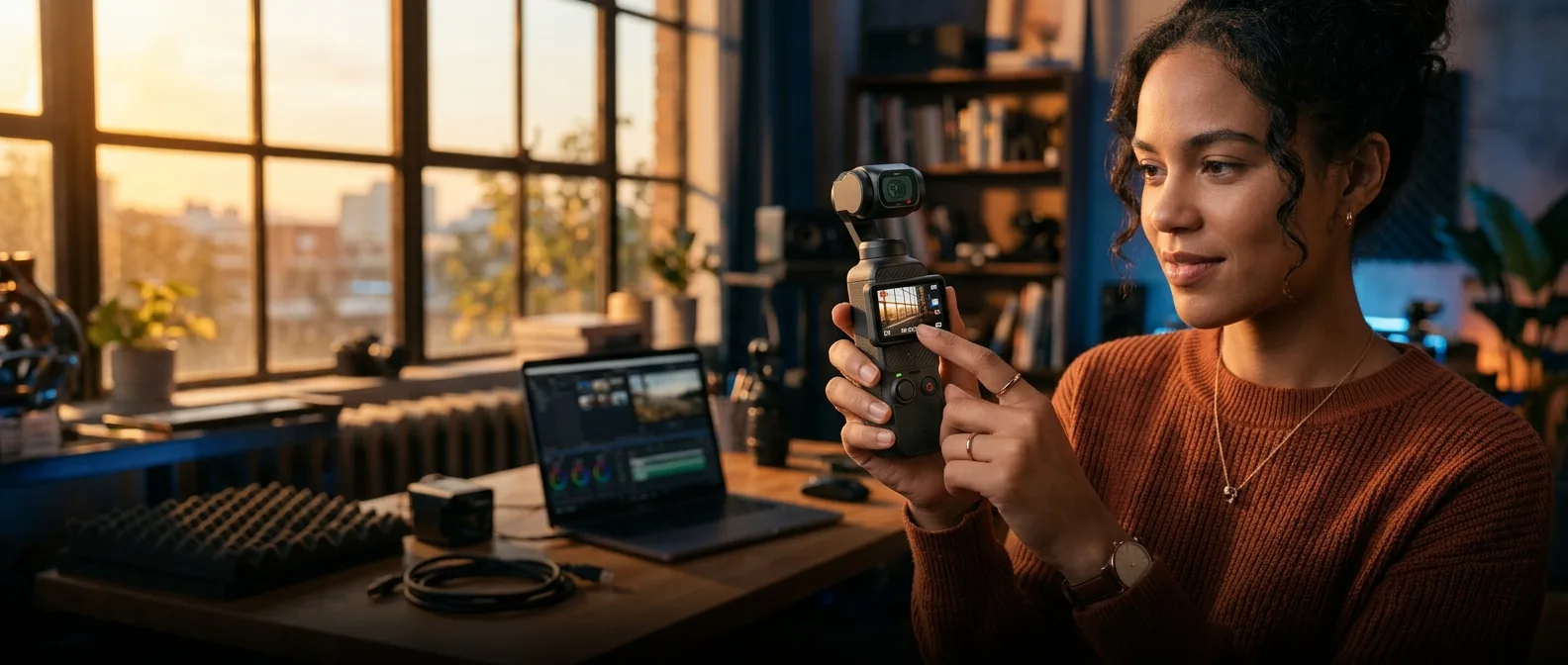
Two leaked prototypes. Dual cameras. Optical zoom that actually works. According to Igor Bogdanov's latest leak, the DJI Osmo Pocket 4 isn't just an upgrade — it's a complete rethink of what a handheld gimbal can be. But before you start planning your purchase, there's a December 23rd deadline hanging over everything like a storm cloud.
DJI owns the handheld gimbal market. Three generations of Pocket cameras have redefined how solo creators shoot content, turning smartphone-quality footage into cinematic gold. Now, with leaked prototypes surfacing from Barcelona, we're seeing a fourth generation that could reset the entire category.
Why mess with success? The Pocket 3 dominated with its 1-inch sensor and 4K/60fps recording. But creators kept asking for one thing: real optical zoom. Digital zoom looked terrible, and "zooming with your feet" got old fast. DJI listened. The Pocket 4 Pro delivers optical telephoto that rivals dedicated cameras.
📖 Read more: DJI Mavic 4 Pro: Everything We Know 2026
🔬 Dual Sensor Setup: DJI's Biggest Gamble Yet
The leaked Barcelona photos reveal two distinct prototypes. The "Standard" keeps the single-camera approach but upgrades to a 50MP sensor. The "Pro" changes everything with a dual-lens system that borrows heavily from the Air 3S drone architecture.
According to photorabz's YouTube confirmation, the Pocket 4 Pro packs a larger 1/1.1-inch sensor for telephoto shots and a 1/1.3-inch sensor for ultra-wide angles. This isn't just spec bumping — it's solving the zoom problem that's plagued every previous Pocket camera.
The change isn't just technical — it's strategic. Digital zoom was the Pocket 3's biggest weakness. Creators either accepted quality loss or physically moved closer to their subjects. With optical telephoto, that compromise disappears. You get clean 4x zoom without the pixelated mess.
Engineering Challenges & Trade-offs
Adding dual sensors creates new problems. The gimbal must stabilize more weight, demanding stronger motors and draining battery faster. Yet leaked specs promise 20% longer battery life than the Pocket 3.
How does DJI pull this off? Probably new chipset architecture and smarter power management. The FCC filing shows a larger battery, but not dramatically — the real gains likely come from software optimization and more efficient processing.
⚡ Standard vs Pro: Two Different Philosophies
DJI is pulling an Apple move: one "basic" model and one "pro" for power users. But the differences run deeper than expected.
Pocket 4 Standard
Single 1-inch sensor, 6K recording, improved D-Log M, dual buttons below the screen. Targets travel vloggers and solo creators who need compact form factor above all.
Pocket 4 Pro
Dual-lens with optical zoom, heavier gimbal head, single button layout. Aimed at professional videographers who want cinematic capabilities without big rigs.
The Standard preserves the Pocket identity — ultra-portable, grab-and-go camera for daily use. The Pro targets different users: those who want to compete with small mirrorless cameras and high-end action cams.
This split isn't accidental. The market has matured and creators have different needs. Some want simplicity, others want flexibility. DJI is trying to serve both without complicating their lineup.
Pricing Strategy & Market Positioning
Rumors suggest prices starting around €640 for the Standard and reaching €735 for the Pro. Compared to the Pocket 3's €520 launch price, that's a significant jump.
But the comparison isn't fair. The Pocket 4 Pro with dual cameras and optical zoom plays in a different league. Stack it against comparable products — Sony RX100 series, Canon PowerShot G series — and DJI's pricing looks competitive.
📖 Read more: DJI Air 4: Leaked Specs, Release Date & Air 3S Comparison
📊 Ecosystem & Accessories: The Real breakthrough
The cameras grab headlines, but DJI's real bet is the ecosystem around them. Leaks mention a remote control grip for the Pro model, specifically for telephoto control. Wireless microphones that connect directly to the camera. Modular mounts for drone integration.
When specs plateau, usability becomes the battleground. DJI borrowed Apple's playbook: sell the ecosystem, not just the device.
Interesting fact: The delayed launch that photorabz mentions isn't due to hardware problems. DJI is waiting for accessories to reach mass production readiness. A hint at how important they consider the complete package.
The new accessories aren't just add-ons — they're core features. The wireless mic system enables true one-person operation, something vloggers have requested for years. The remote grip for telephoto lens transforms the Pocket 4 Pro into a mini broadcast camera.
Software Integration & AI Features
Hardware upgrades are impressive, but software is where DJI can really differentiate. Rumors include enhanced ActiveTrack with AI object recognition, improved low-light performance through computational photography, and 10-bit D-Log M for professional color grading.
The 10-bit D-Log M is particularly significant. Until now, DJI's color science in handheld cameras has been... problematic. With proper log recording, colorists get much more flexibility in post-production.
🌍 The Ban Problem and Its Consequences
All these exciting features come with a massive asterisk: the US ban taking effect December 23, 2026. DJI managed to get FCC approval for the Pocket 4, but only for devices registered before the deadline.
This means if DJI wants to sell in America after January, they need all certifications completed by December. One reason the announcement was rushed, despite accessories not being ready.
For creators outside the US, the ban doesn't directly affect availability. But DJI loses 25% of its sales — a hit that will impact R&D budgets and future products. Expect more focus on European markets and new partnerships with EU brands.
Alternative Markets & Strategic Pivots
DJI isn't sitting idle. Reports mention increased investments in Europe and South America, plus new partnerships for B2B markets. The introduction of the Power 1000 Mini battery pack and other non-drone products is part of this strategy.
For consumers, this could mean better prices in Europe (less competition for stock) and more attention to EU-specific features like GDPR compliance and European service centers.
🎯 Frequently Asked Questions
When will the DJI Pocket 4 be available globally?
According to leaks, launch is scheduled for January 2026. European availability is expected within the same month, likely starting with the Standard model.
Will it be compatible with Pocket 3 accessories?
Leaked images show a different form factor, so probably not for physical mounts. However, wireless accessories (mic, remote) are expected to be backward compatible.
Should I wait for the Pro or get the Standard?
Depends on your use case. For casual vlogging and travel content, the Standard is sufficient. For professional work or if you need optical zoom, the Pro is worth the wait and extra cost.
The DJI Osmo Pocket 4 represents a new philosophy for DJI: instead of focusing solely on portability, they're building a complete ecosystem for content creators. The Standard/Pro approach shows a company that's listened to users and is trying to serve different needs.
Of course, success will be judged in practice. Balancing features with usability is tricky — especially when adding dual cameras to a device that must fit in your pocket. But if anyone can pull it off, it's DJI. Even with a big question mark hanging over their future market strategy.