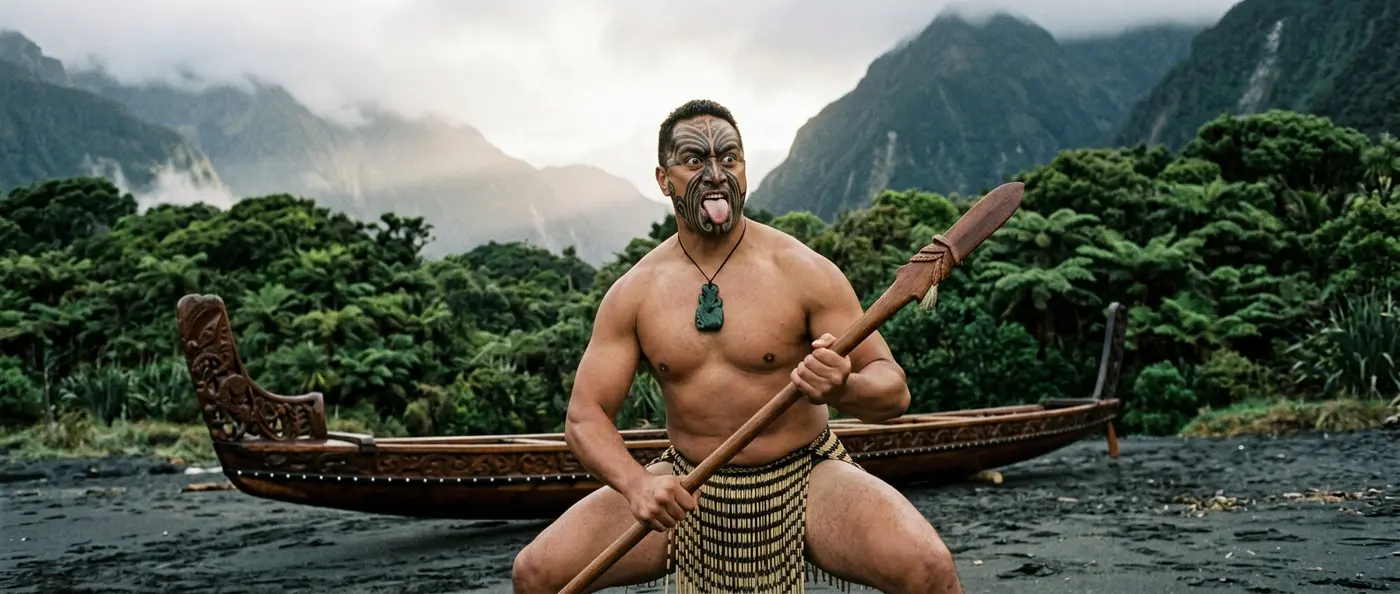
Picture this: 3,000 miles of open ocean. No GPS. No compass. Just stars, currents, and the flight patterns of seabirds to guide you. Around 1250-1300 CE, Polynesian navigators pulled off one of history's most audacious voyages, reaching New Zealand's shores in double-hulled canoes called waka. They weren't just explorers seeking new land — they were completing a Pacific odyssey that would create one of the region's most distinctive warrior cultures: the Māori.
📖 Read more: 3,000-Year-Old Bronze Spearhead Mold Found in Czech Backyard
🌊 The Great Polynesian Migration
The Māori arrival in New Zealand completed the Pacific's greatest seafaring expansion. Archaeological evidence traces their ancestors back through the Polynesian islands, where master navigators had spent centuries perfecting the art of ocean travel. These weren't desperate refugees fleeing disaster. They were skilled maritime engineers executing a calculated expansion across the Pacific.
Their waka weren't simple boats. These double-hulled vessels stretched up to 100 feet long, engineered to carry entire communities plus livestock, crops, and tools for establishing new settlements. Polynesian navigators read the ocean like a book — wave patterns bouncing off distant islands, the color of water indicating depth, even the behavior of specific bird species that flew predictable distances from land.
When they reached what they named Aotearoa (the land of the long white cloud), they faced a completely different world. Gone were the tropical fruits and warm lagoons of their homeland. New Zealand's cooler climate and unfamiliar ecosystem forced rapid adaptation. Within generations, they'd developed new survival techniques, transforming from tropical islanders into something entirely new.
🗿 The Pounamu Culture
Nothing defined Māori civilization like their relationship with pounamu — the jade found exclusively on New Zealand's South Island west coast. This wasn't just another pretty stone. Pounamu became sacred, the foundation of their entire material culture.
Unlike steel, pounamu doesn't rust or decay. It gets harder with age. Perfect for tools, weapons, and ornaments that could last centuries. By 1500 CE, it had become the Pacific's most valuable trade commodity, exchanged for resources and used as diplomatic gifts between tribal chiefs.
Finding pounamu was ritualistic. Te Rua Mason, a modern keeper of this tradition, explains it like finding love — if it's meant to happen, the stone will find you. The Māori believed each piece had its own personality and history. They didn't mine pounamu; they gathered it from riverbeds and beaches where geological forces had naturally exposed it.
The stone's spiritual significance went beyond its practical uses. Pounamu connected the living to their ancestors. Heirloom pieces passed down through generations carried the mana (spiritual power) of previous owners. Losing a family's pounamu was like losing their connection to the spirit world.
⚔️ Warriors and Military Organization
The Māori developed one of the Pacific's most sophisticated warrior cultures. Every iwi (tribe) maintained trained fighters who learned combat from childhood. This wasn't casual violence — it was organized, ritualized warfare with strict codes of honor.
Their weapons were works of art. The taiaha (spear-like weapon) combined a sharp point with a flat striking surface. The mere, a short club carved from pounamu or whalebone, could crush skulls with surgical precision. The patu served as both weapon and ceremonial object. Each warrior's weapons were custom-made, reflecting their status and fighting style.
Training went beyond physical combat. Warriors learned the haka, the ritual war dance that combined fierce facial expressions, rhythmic chanting, and aggressive movements. The haka served multiple purposes: intimidating enemies, boosting morale, and displaying unity. Different hakas existed for different occasions — some for war, others for welcoming guests or honoring the dead.
Pa (fortified villages) showcased their military engineering skills. Built on hilltops and ridges, these settlements featured multiple defensive lines: outer palisades, fighting platforms, hidden trenches, and escape routes. Archaeological evidence shows some pa could withstand months-long sieges.
Traditional Weapons
The taiaha, mere, and patu combined functionality with symbolic meaning, crafted from wood, bone, and pounamu with exceptional artistry.
Fortified Pa
Strategically positioned villages with advanced defensive systems including ditches, ramparts, and multiple defense lines.
Haka
Ritual war dance combining movements, voices, and facial expressions to demonstrate strength and unity.
🌿 Daily Life and Social Organization
Māori society revolved around iwi (tribes) and hapu (sub-tribes). Each group maintained its own hierarchy, with rangatira (chiefs) leading and tohunga (priests and wise men) providing spiritual guidance. But this wasn't rigid feudalism — leadership was earned through deeds, not just birthright.
The whānau (extended family) formed the basic social unit. Hospitality and communal meals were central to their culture. The hangi — food cooked in underground earth ovens — brought entire communities together. These weren't just meals; they were social rituals that reinforced bonds and shared identity.
Their relationship with nature ran deeper than mere survival. The Whirinaki forest was considered the mother of the earth and pātaka kai (food storehouse). The Māori knew every plant and its properties — whauwhaupaku for skin conditions, makomako that women called the "fountain of youth."
📖 Read more: 7 Wonders of the Ancient World: What Remains Today?
Knowledge was power, carefully guarded and passed down through oral tradition. Master craftsmen kept their techniques secret, teaching only chosen apprentices. This created a society where expertise was valued and specialized knowledge commanded respect.
💎 The Tapu System
Tapu (sacred/forbidden) was a complex system of rules governing daily life. Certain places, objects, or people were tapu and required special treatment. This system maintained social order and respect for the environment, creating a framework where spiritual and practical concerns intertwined.
🎨 Art and Cultural Expression
Māori art is instantly recognizable for its intricate patterns and deep symbolism. Moko, traditional facial tattoos, weren't just decoration — each design told the wearer's story, their ancestry, and their achievements. Master tattoo artists held positions of immense respect, their skills considered sacred.
Wood carving reached extraordinary levels of sophistication. Wharenui (meeting houses) were decorated with elaborate carvings depicting ancestors and mythological figures. Every carving had its own story and meaning. The spirals, curves, and interlocking patterns weren't random — they represented genealogies, spiritual concepts, and tribal histories.
Oral tradition preserved history and knowledge. Whakapapa (genealogies) were memorized and passed down through generations, maintaining connections to ancestors. Waiata (songs) and karakia (prayers) accompanied every significant moment of life. These weren't just entertainment — they were living libraries of cultural knowledge.
The integration of art into daily life was total. Weapons were carved with protective symbols. Clothing featured patterns that identified tribal affiliations. Even cooking implements carried decorative elements that reflected their makers' artistic vision.
🔬 Modern Archaeological Discoveries
Recent archaeological research continues revealing new aspects of Māori civilization. Excavations at ancient pa sites have uncovered sophisticated food storage systems and tools showing advanced technological capabilities. Far from primitive settlements, these were engineered communities with complex infrastructure.
Studies of ancient pounamu trails reveal extensive trade networks crisscrossing the South Island. These paths, used for centuries, connected coastal areas with mountain regions and facilitated the exchange of valuable goods. The logistics of moving heavy jade blocks across difficult terrain required remarkable organizational skills.
Conservation efforts now combine ancient knowledge with modern methods. Programs like Himi Nuku's work saving longfin eels (tuna) show how traditional wisdom adapts to contemporary challenges. The manual transport of eels past dam barriers exemplifies this fusion of old and new approaches to environmental stewardship.
Genetic studies have confirmed the Polynesian origins of the Māori while revealing the speed of their adaptation to New Zealand's unique environment. Within a few generations, they'd developed new hunting techniques, modified their diet, and created technologies specifically suited to their new homeland.
🏺 Comparison with Other Polynesian Cultures
🌅 Legacy and Modern Revival
Today, Māori culture experiences a remarkable renaissance. Te reo Māori is taught in schools, and traditional arts flourish. Interest in pounamu foraging has surged, with guides like Te Rua Mason sharing ancient knowledge with new generations.
Modern Māori continue living by ancestral values. The concept of whānau remains central, with families gathering for hangi and sharing traditional foods. Places like Kohutapu Lodge offer cultural experiences that connect visitors with authentic Māori culture, not tourist-friendly approximations.
Environmental conservation remains a priority. Forests are still considered sacred, and sustainable harvesting follows traditional rules. Every forest entry begins with karakia and mihi, greeting and asking permission from nature. This isn't quaint tradition — it's practical environmental management based on centuries of experience.
The Māori prove that ancient cultures can stay alive and relevant. From legendary Pacific warriors to modern tradition keepers, their story demonstrates the power of cultural continuity. In the descendants of the great Pacific navigators, the ancestral spirit lives on — in language, art, relationship with the land, and an unshakeable sense of identity that defines them as a people.