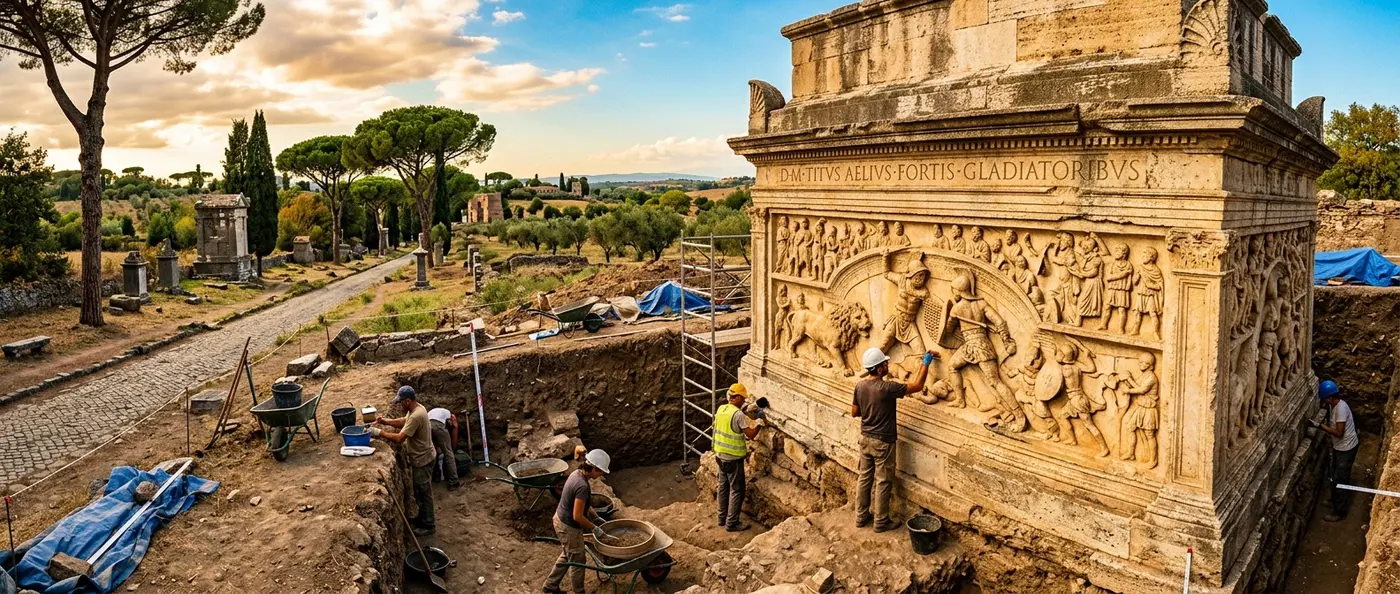
A pickaxe struck stone. Then marble. Then something that made archaeologists stop breathing. On March 14, 2026, excavators working along the ancient Via Appia uncovered a monumental Roman tomb covered in gladiator battle scenes so detailed they look ready to spring to life. This isn't just another roadside grave — it's rewriting what we know about gladiators in Roman society.
🏛️ The Queen of Roads Reveals Her Secrets
The Via Appia earned its nickname "Regina Viarum" — Queen of Roads — for good reason. Built in 312 BC, this engineering marvel connected Rome to the southern ports of Italy across 350 miles of precisely laid stone. Rich Romans lined this highway with tombs, turning their final journey into a permanent billboard for eternity.
But this tomb stands apart. Every surface crawls with intricate reliefs showing gladiators locked in combat. The craftsmanship preserves individual links in chain mail, the tension in a fighter's muscles, even the crowd's faces carved into background details. Archaeologists date the construction between the 1st and 2nd centuries AD, when gladiatorial games reached their bloody peak.
Location mattered in ancient Rome. The Via Appia carried thousands of travelers daily — merchants, soldiers, pilgrims, politicians. Anyone who built here wanted to be seen. This tomb's owner didn't just want remembrance. They wanted spectacle, even in death.
⚔️ Blood, Sand, and Social Climbing
Gladiatorial combat started as Etruscan funeral ritual — warriors died to escort the deceased into the afterlife. Romans absorbed this practice around the 2nd century BC and transformed it into mass entertainment. What began as sacred ceremony became political theater.
The Colosseum, completed around 70 AD, could pack 50,000 screaming spectators into its 180-meter length. Free admission meant every citizen could attend. Smart politicians used games to buy loyalty. Feed the people bread and circuses, and they'll love you forever.
Most gladiators came from slavery or prison. But not all. Free men volunteered — sometimes veterans seeking glory, sometimes desperate citizens chasing fame and fortune. A few women entered the arena too, though this scandalized traditional Romans who believed warfare belonged to men.
Success in the arena meant more than survival. Star gladiators became celebrities. They endorsed products, attracted wealthy patrons, even served as bodyguards to politicians. Some bought their freedom. Others retired rich.
🗿 Carved Stories in Stone
The tomb's exterior walls read like a gladiatorial encyclopedia. Each relief shows different fighter types locked in combat. Here's a heavily armored murmillo facing a nimble retiarius with his net and trident. There's a thraex with his curved sword dancing around a secutor's rectangular shield.
You can identify specific armor types, weapon configurations, even fighting stances. These aren't generic battle scenes — they're documentary evidence carved in marble. Someone who knew gladiatorial combat intimately commissioned this work.
The tomb's size and complexity scream wealth. Building something this elaborate cost serious money. The gladiator theme suggests the owner either fought in the arena himself or sponsored games. Maybe both. Roman society was fluid — a successful gladiator could become a wealthy patron, funding the very games where he once bled.
Gladiator Types
The reliefs showcase multiple fighter categories, from heavily armored warriors to agile net-fighters, each with distinct weapons and tactics.
Construction
Built using opus caementicium — Roman concrete that's outlasted empires. The same material that keeps the Pantheon standing today.
Social Status
The tomb's cost suggests high social standing — possibly a former gladiator who won freedom and wealth through arena success.
🏺 What the Stones Tell Us
Interior inscriptions provide tantalizing clues about the tomb's owner, though the name remains partially destroyed. What survives connects them to the arena world. This person lived and breathed gladiatorial culture.
The discovery comes during a renaissance in gladiator studies. Modern archaeology is revealing these fighters as complex figures, not simple slaves dying for entertainment. Successful gladiators could earn public recognition, lucrative contracts, even political influence.
This tomb challenges the Hollywood image of gladiators as disposable cannon fodder. Someone here achieved enough status and wealth to commission a monument rivaling those of senators and merchants. The arena wasn't just about death — it was about social mobility in a rigid society.
💡 Did You Know?
Gladiatorial games lasted over 400 years. Emperor Constantine banned them in 325 AD, but fights continued in various forms for another century. The last recorded gladiatorial combat took place in 435 AD.
📜 From Ritual to Spectacle
Gladiatorial games evolved from sacred ritual into political weapon. Roman leaders used public entertainment to display power and win popular support. A typical day at the Colosseum started with morning animal hunts (venationes), followed by public executions, then gladiator fights as the main event.
The death toll remains debated, but it wasn't small. Beneath the arena floor lay gladiator schools, animal cages, and storage areas connected by tunnels, secret passages, and trap doors. The logistics of death had become an industry.
As Christianity gained influence, opposition to the games grew. Church leaders condemned the bloodshed as barbaric. But even after official bans, gladiatorial combat's appeal endured — echoing through literature, art, and popular culture to this day.
🔬 Future Research and Preservation
Archaeologists plan extensive study over the coming months. 3D scanning and spectroscopy will analyze construction materials and techniques. Every detail matters when reconstructing ancient building methods.
Conservation work begins immediately. The tomb's location along the still-popular Via Appia tourist route requires careful planning. How do you balance public access with monument protection? The answer will shape how future discoveries are managed.
This find will attract researchers worldwide. The detailed gladiator depictions offer unique opportunities to study equipment, fighting techniques, and game organization. Each new detail adds to our understanding of this iconic Roman institution.
🏛️ Comparison with Other Via Appia Monuments
🌍 Rewriting Roman History
This tomb adds crucial pieces to our understanding of Roman society and gladiators' place within it. The relationship between spectacle, politics, and social mobility was more complex than often portrayed. Gladiators weren't just victims of a brutal system — they were part of an intricate social web.
The Via Appia keeps revealing its secrets. Each discovery adds another piece to the Roman puzzle. This gladiator tomb reminds us that even after two millennia, ancient Rome has lessons to teach about human civilization, social organization, and cultural values.
Next month's excavations will focus on the tomb's interior chambers, where archaeologists hope to find the owner's remains and personal effects.