🏺 The Shock Discovery
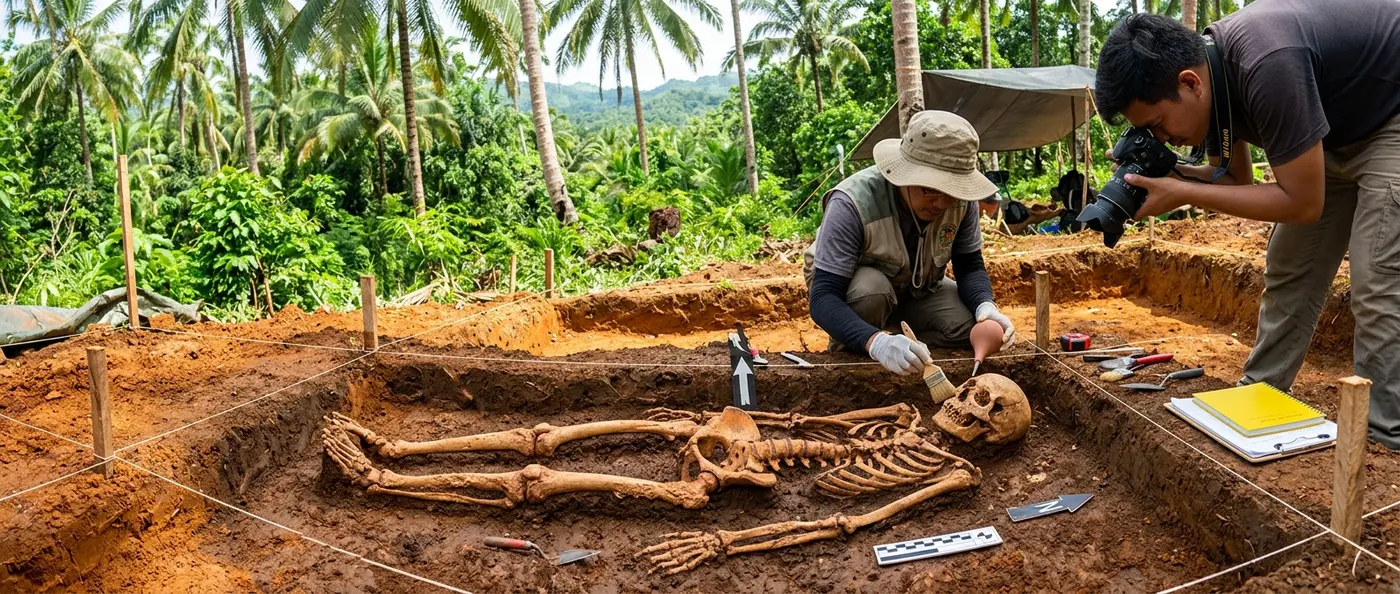
Scurvy belongs on 18th-century ships, not in ancient tropical islands. Then researchers pulled these bones from northern Philippines soil. The skeletal remains date to around 100 CE, centuries before European explorers ever set foot in the archipelago.
The team was studying burial practices when they noticed something wrong with the bones. Unusual lesions. Abnormal growth patterns. Analysis confirmed clear signs of advanced scurvy in a land where citrus fruits grow year-round.
Without vitamin C, the human body can't produce collagen. Bones weaken. Blood vessels rupture. Teeth fall out. These ancient Filipinos suffered through all of it, and their skeletons tell the story in brutal detail.
💀 Reading the Bone Evidence
Scurvy leaves fingerprints on human skeletons. The disease attacks the connection points where muscles attach to bone, creating distinctive lesions that persist for millennia. These Filipino bones showed textbook cases of the damage.
The researchers found hemorrhaging beneath the periosteum — the thin membrane covering bones. They discovered abnormal bone formation where muscles once pulled against weakened attachment sites. Most telling were the changes in the children's skeletons, where scurvy had disrupted normal growth patterns.
One skeleton showed particularly severe damage. The individual had lived with advanced scurvy for months, maybe years. Their bones revealed a story of chronic malnutrition in a place where fresh fruit should have been abundant.
The evidence was so clear that multiple analysis methods confirmed the same diagnosis. Microscopic examination revealed the cellular-level changes. Radiographic imaging showed the internal bone damage. Chemical analysis detected the nutritional deficiencies that caused it all.
🌾 The Diet Paradox
How do you get scurvy in the tropics? The Philippines sit in one of the world's most biodiverse regions. Mangoes, guavas, citrus fruits — vitamin C sources everywhere you look. Yet these people were dying from vitamin C deficiency.
The researchers propose several theories. Maybe these individuals belonged to a social class with restricted food access. Perhaps they lived through environmental disasters that wiped out local food sources. Or they might have depended on a rice-heavy diet that lacked essential nutrients.
Trade routes offer another explanation. Communities that relied on preserved foods for survival — dried fish, salted meats, stored grains — would have consumed almost no vitamin C. The very trade networks that brought wealth might have brought malnutrition.
Limited Crops
Heavy reliance on rice cultivation, which provides calories but virtually no vitamin C, could have created nutritional gaps in the ancient diet.
Trade Dependencies
Coastal communities dependent on maritime trade may have survived on preserved foods with minimal vitamin content during certain seasons.
Climate Disasters
Droughts or severe storms could have destroyed local fruit trees and vegetable crops, forcing communities to rely on stored foods.
🔬 Forensic Archaeology Methods
Diagnosing ancient diseases requires detective work. The team combined macroscopic examination with microscopic analysis and radiographic imaging to build their case. Each method revealed different aspects of the same tragic story.
Under the microscope, the bone structure showed classic signs of collagen deficiency. X-rays revealed the extent of internal damage that wasn't visible on the surface. Chemical analysis detected trace elements that confirmed the nutritional deficiencies.
The evidence appeared across age groups and both sexes. This wasn't a disease that targeted specific demographics — it hit the entire community. Children showed the most severe damage, as their growing bodies demanded more vitamin C than adults.
The preservation quality was exceptional. Tropical climates usually destroy organic materials quickly, but these bones survived intact. The soil chemistry preserved this ancient health crisis in precise detail.
💡 Did You Know?
Scurvy can develop in just 1-3 months of complete vitamin C deficiency. Early symptoms include fatigue, weakness, and joint pain, while advanced cases cause bleeding gums, tooth loss, and internal hemorrhaging that can be fatal.
🗺️ Global Scurvy Patterns
Ancient scurvy has been found before, but not in tropical settings. Similar evidence has emerged from Europe, Africa, and South America. Each case reveals different cultural and environmental factors that led to vitamin C deficiency.
Ancient Egyptian mummies show scurvy signs, particularly among upper classes whose processed diets lacked fresh foods. Northern European sites reveal seasonal scurvy during harsh winters when fresh produce disappeared. South American cases often coincide with periods of social upheaval and food scarcity.
The Philippines case stands out because of the tropical setting. While other regions faced obvious challenges — harsh winters, desert environments, social collapse — this community lived in apparent abundance yet still suffered nutritional deficiency.
🌍 Scurvy Across Civilizations
🔱 Social Consequences
Scurvy doesn't just kill individuals — it devastates communities. The disease causes severe weakness and reduced work capacity, crippling a society's productivity. When it strikes children and pregnant women, it threatens the community's future.
These ancient Filipinos would have watched their neighbors grow weak and die without understanding why. The disease likely increased infant mortality and caused developmental problems in surviving children. Over time, this would have created a demographic crisis.
The researchers suspect the scurvy outbreak coincided with social or economic upheaval. During times of crisis, access to diverse, nutritious foods becomes difficult, especially for lower social classes. The disease pattern suggests systematic inequality in food distribution.
Communities might have interpreted the widespread illness as divine punishment or supernatural curse. Without understanding the connection between diet and health, they would have turned to religious rituals and spiritual remedies rather than nutritional solutions.
📜 Historical Context
No written records from ancient Philippines describe symptoms that match scurvy, but oral traditions from various regions mention periods of "weakness" and "sickness" that affected entire communities. These stories might preserve memories of ancient nutritional crises.
Comparing with other cultures, scurvy was often misinterpreted as divine punishment. Ancient Chinese texts describe a "weakness disease" that was likely scurvy. European medieval sources blame similar symptoms on bad air or moral failings.
The lack of understanding about nutrition meant ancient peoples couldn't effectively combat the disease. Instead of seeking dietary solutions, they relied on religious practices and traditional remedies that did nothing to address the underlying vitamin deficiency.
This knowledge gap persisted for centuries. Even during the Age of Exploration, when scurvy killed more sailors than storms and battles combined, the connection to diet remained poorly understood. The ancient Filipinos faced the same deadly ignorance two millennia earlier.
🏺 Archaeological Significance
This discovery transforms our understanding of life in prehistoric Southeast Asia. It shows that even in regions with abundant natural resources, ancient populations faced serious nutritional challenges. The assumption that tropical abundance equals nutritional security proves false.
The find highlights bioarchaeology's power to reveal aspects of ancient life that traditional archaeology misses. Bones tell stories about health, diet, and living conditions that artifacts and structures cannot. They provide direct evidence of individual suffering and community-wide crises.
The research opens new questions about trade relationships and dietary practices in ancient Southeast Asia. How did commerce affect nutrition? Were there periods of isolation that restricted access to diverse foods? Did social hierarchies create nutritional inequalities?
Genetic Analysis
Future research using ancient DNA analysis could reveal genetic factors that influenced scurvy susceptibility in these populations.
Isotope Analysis
Stable isotope analysis could provide detailed information about the specific diets of these ancient populations and seasonal variations.
💡 Modern Lessons
Ancient scurvy in the Philippines carries modern relevance. It reminds us that access to nutritious, balanced diets shouldn't be taken for granted, even in resource-rich environments. Distribution matters more than abundance.
Scurvy still appears today in populations with limited access to fresh fruits and vegetables. Refugees, homeless individuals, and people living in extreme poverty remain vulnerable. The ancient disease persists in modern times.
The Philippines case also teaches us about dietary diversity's importance. Relying on limited food sources, even abundant ones, can create serious nutritional deficiencies. A varied diet provides protection against such problems.
Finally, the discovery underscores the value of interdisciplinary research. Collaboration between archaeologists, anthropologists, medical experts, and other specialists is essential for fully understanding the past and the lessons it offers.