For millions of people worldwide living with blindness, the idea of restoring vision has always sounded like science fiction. Until now. Elon Musk's Neuralink has just received FDA approval for Blindsight - a device that promises to give sight to people who have completely lost the ability to see.
👁️ Historic moment: Blindsight is the first brain implant that can create visual perception in people who have lost their eyes or have a damaged optic nerve.
📖 Read more: GPU vs TPU: Which Chip Wins in AI 2026?
What is Neuralink Blindsight?
Blindsight is a brain implant that completely bypasses the eyes and the optic nerve, sending visual information directly to the brain's visual cortex. In other words, it allows blind people to “see” without using their eyes.
How Does It Differ from Other Solutions?
There are already some “bionic eyes” on the market, such as the Argus II. However, these devices require a functioning optic nerve to work. Blindsight is different:
- Bypasses the optic nerve - Works even when the eyes or optic nerve are damaged
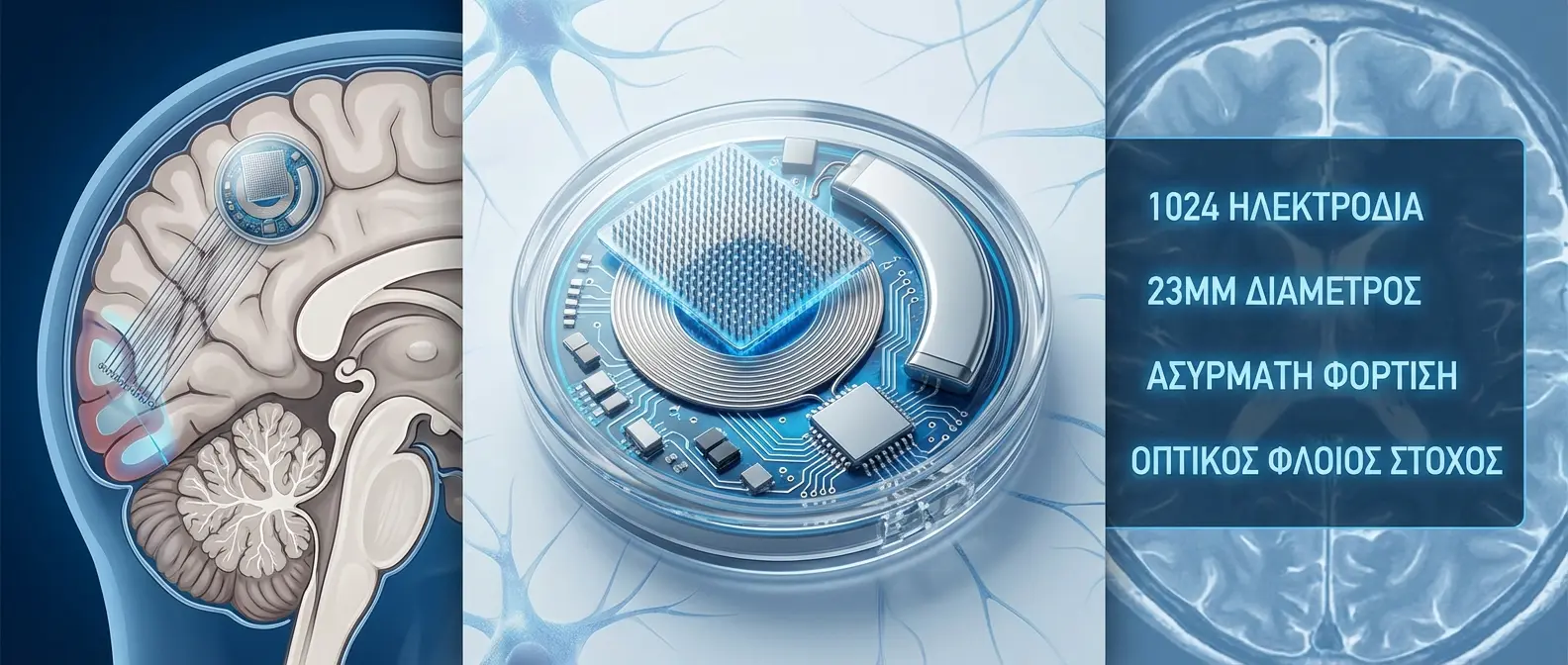
- Higher resolution - 1024 electrodes compared to the Argus II's 60
- Wireless communication - No cables through the skull required
- Rechargeable - Wireless charging without surgical intervention
How Does Blindsight Work?
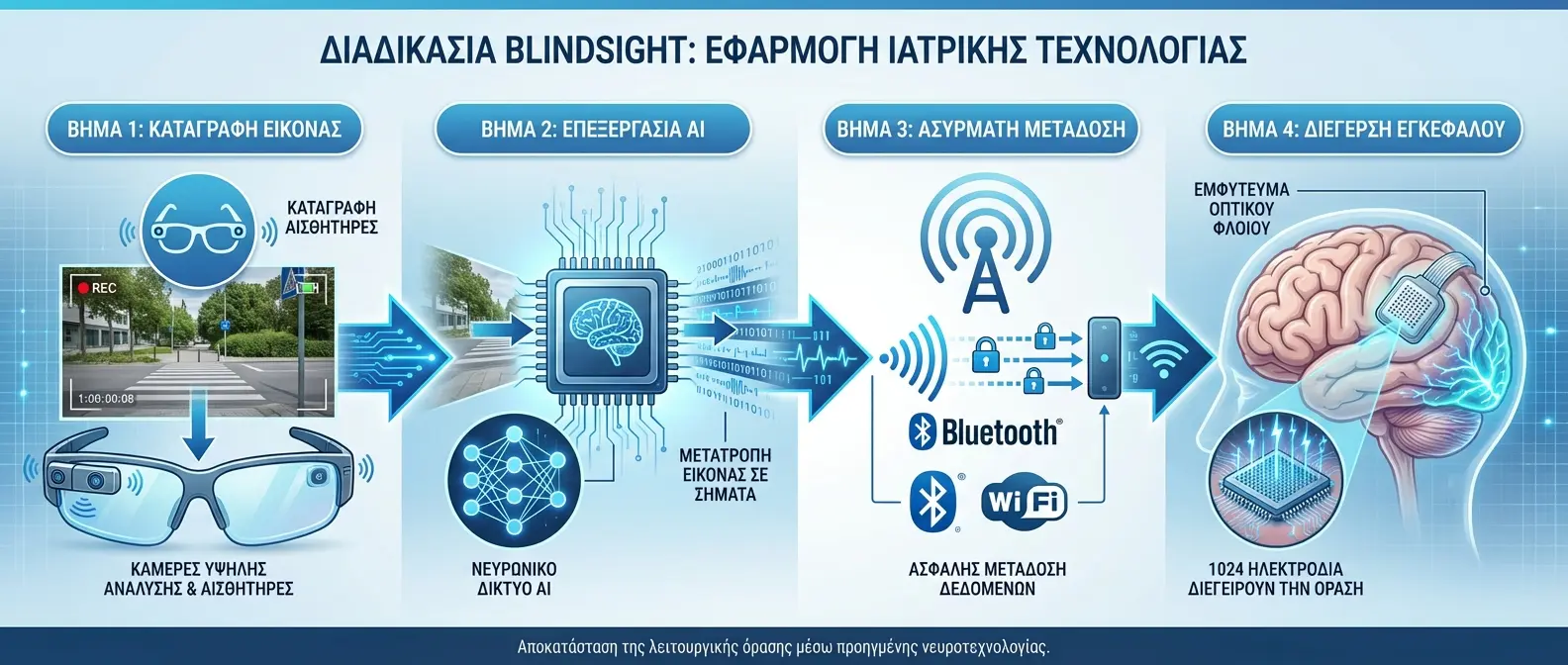
The technology behind Blindsight is impressively complex, but the basic idea is simple: if the brain doesn't receive signals from the eyes, we can send it artificial signals that it will interpret as images.
External Camera
Special glasses with high-resolution cameras capture the world around you
Brain Implant
1024 microscopic electrodes stimulate the visual cortex
What Do Patients “See”?
It's important to understand that the vision provided by Blindsight is not the same as natural vision. In the current version, patients "see":
- Phosphenes - Points of light forming patterns
- Low resolution - Approximately like a 32x32 pixel screen initially
- Black and white image - Initially without color
- Improvement over time - The brain adapts and perception improves
🎯 Future goal: Elon Musk stated that the goal is for the resolution to surpass natural human vision, including infrared and ultraviolet viewing.
📖 Read more: Grok AI Scandal: California Demands Shutdown Over Deepfakes
The Surgical Procedure
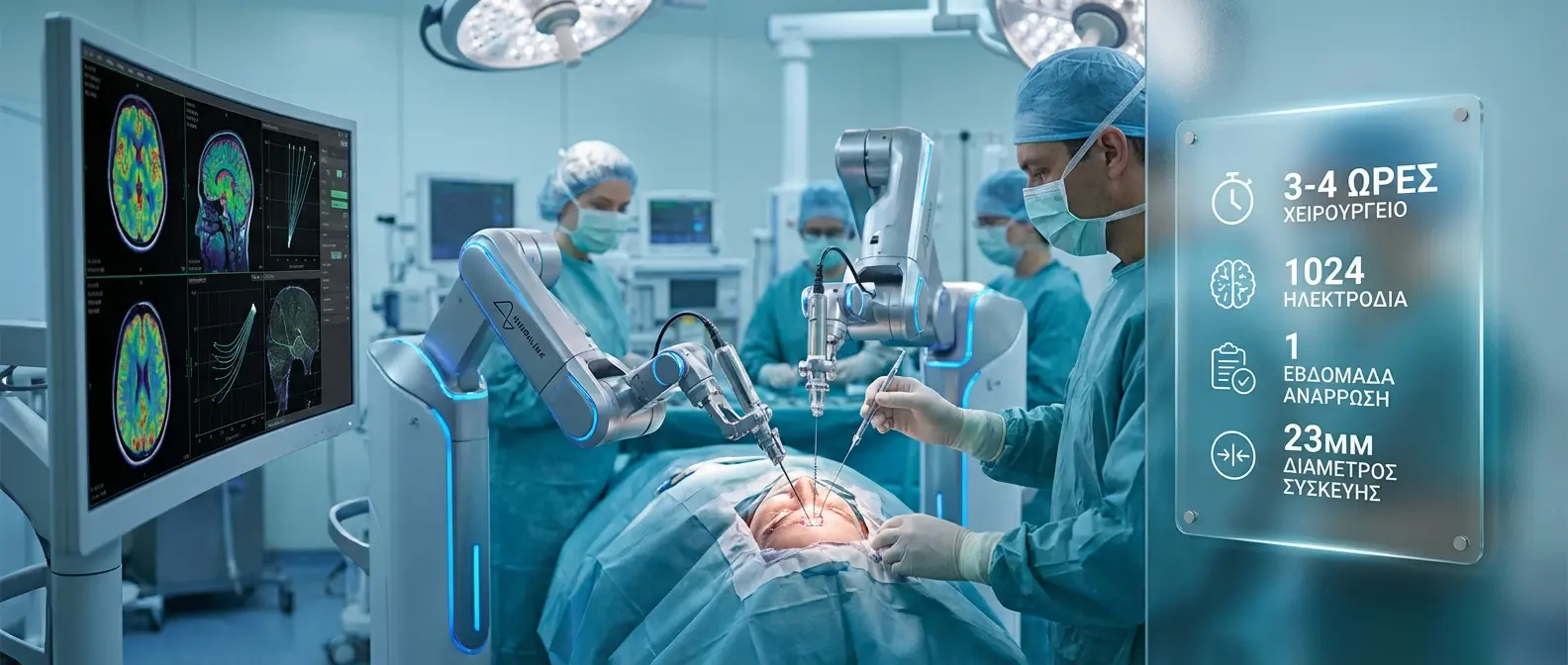
The Blindsight implantation is a complex neurosurgical procedure that lasts approximately 3-4 hours. Neuralink's robot is used to place the microscopic electrodes with micrometer precision.
The First Patients
Blindsight is in Phase 1 clinical trials with 10 volunteers who have total blindness. The results so far are encouraging:
Patient #001 Testimony
"The first time I 'saw' after 15 years was overwhelming. It was just points of light at first, but within weeks I could recognize faces and objects. I can now walk without a cane in familiar spaces."
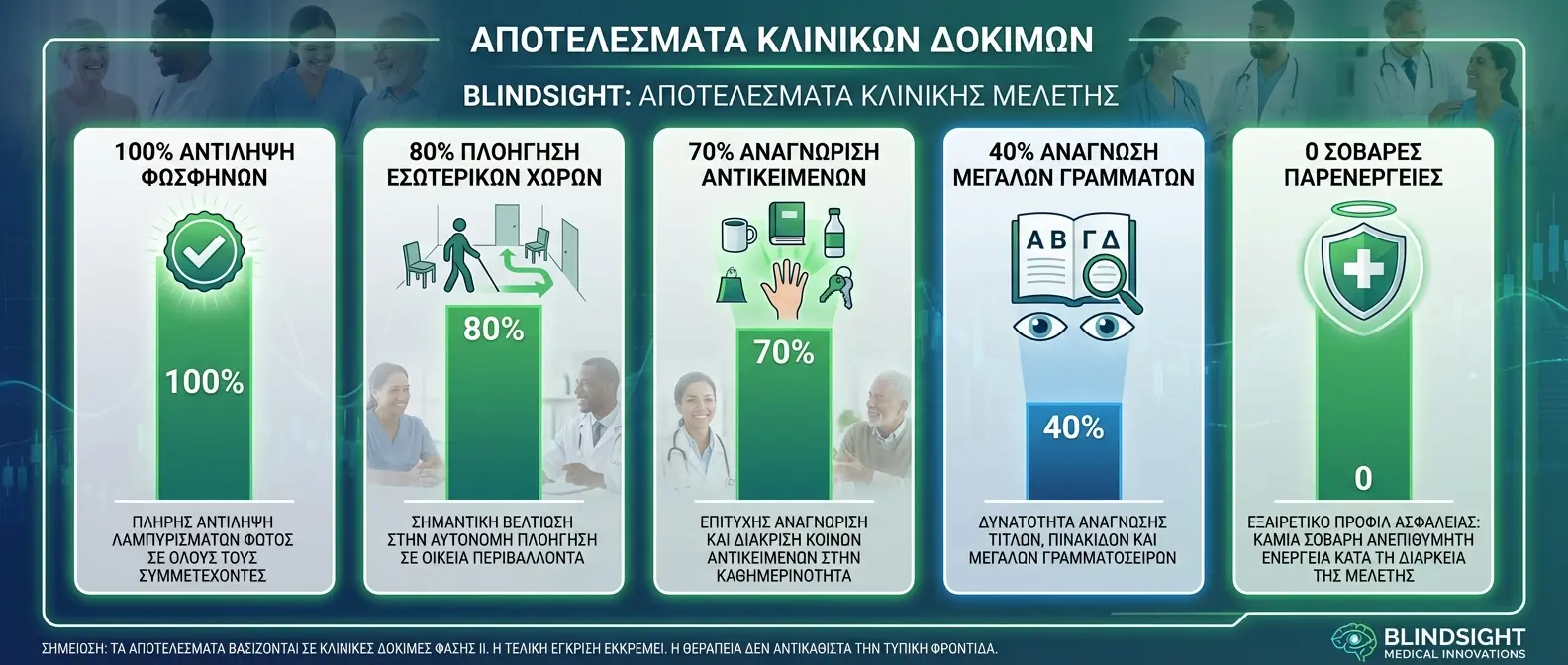
Clinical Trial Results
- 100% of patients perceive phosphenes
- 80% can navigate indoor spaces
- 70% recognize large objects
- 40% can read large letters
- 0 serious side effects so far
📖 Read more: Quantum AI: When Quantum Computers Meet AI
Cost and Availability
One of the most important questions is how much this technology will cost. Neuralink has provided the first estimates:
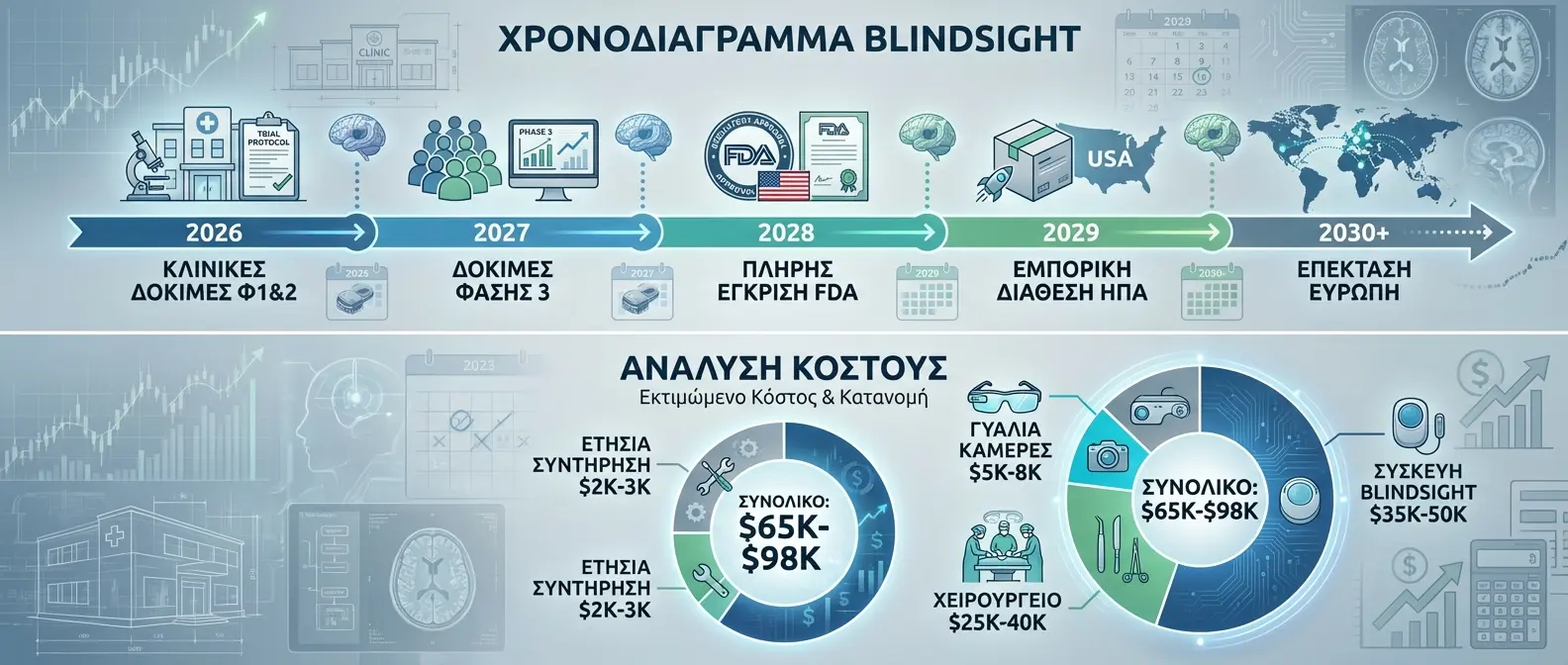
| Component | Estimated Cost |
|---|---|
| Blindsight Device | $35,000 - $50,000 |
| Surgical Procedure | $25,000 - $40,000 |
| Camera Glasses | $5,000 - $8,000 |
| Annual Maintenance | $2,000 - $3,000 |
| Total Initial Cost | $65,000 - $98,000 |
⚠️ Note: These are estimates. The final cost will depend on insurance coverage and each country's healthcare system. Neuralink has stated that it will work with insurance companies.
When Will It Be Available?
Based on the current timeline:
- 2026: Continuation of Phase 1 & 2 clinical trials
- 2027: Phase 3 trials with more patients
- 2028: Expected full FDA approval
- 2029: Commercial availability in the USA
- 2030+: Expansion to Europe and other countries
Who Can Benefit?
Blindsight is not suitable for all blind individuals. The ideal candidates are:
- People with damaged eyes or optic nerve - Where other solutions don't work
- Blindness after age 7 - The visual cortex must have developed
- Healthy visual cortex - The implant requires functional brain tissue
- Good overall health - To withstand the surgical procedure
Competition and Alternatives
Neuralink is not the only company working in this field:
- Second Sight (Argus II) - Retinal implant, requires a functioning optic nerve
- Orion (Cortigent) - Similar to Blindsight, in clinical trials
- Pixium Vision (PRIMA) - Subretinal implant
- Gene therapy - For specific hereditary forms of blindness
📖 Read more: The World in 2126: AI Will Change Everything
Ethical Issues and Concerns
Like any revolutionary technology, Blindsight raises questions:
- Access inequality - Will everyone be able to afford it?
- Data privacy - Who has access to the “visual” information?
- Long-term effects - What happens after 20-30 years?
- Technology dependency - What happens if the device stops working?
The Future of Vision Restoration
Blindsight is only the beginning. Neuralink and other companies are already working on:
- Higher resolution - Target of 10,000+ electrodes
- Color vision - Stimulating different regions for color
- Superhuman vision - Infrared, ultraviolet, zoom
- Augmented reality - Information overlay on the visual field
🚀 Musk's statement: "Blindsight will provide vision better than human vision. You'll be able to see in infrared, zoom in, have night vision. Biology is just the starting point."
Conclusion
Neuralink Blindsight represents a true revolution in the way we approach blindness. For the first time in history, we have a technology that can give sight to people who have completely lost the ability to see.
Yes, the technology is still in its early stages. Yes, the cost is high. But for millions of people living in darkness, Blindsight represents something they never had before: hope.
As one of the first patients said: "It's not perfect. It's not like seeing before. But I can see my daughter's face. And that is enough."