The unthinkable has happened. Apple, the company that always prided itself on its independence, signed a deal with Google to have Gemini power Siri. OpenAI, which initially seemed like the obvious choice, chose not to become Apple's “custom model provider.” What does this mean for the future of AI in smartphones?
📖 Read more: How Google's Gemini Surpassed ChatGPT
🍎 What Exactly Happened?
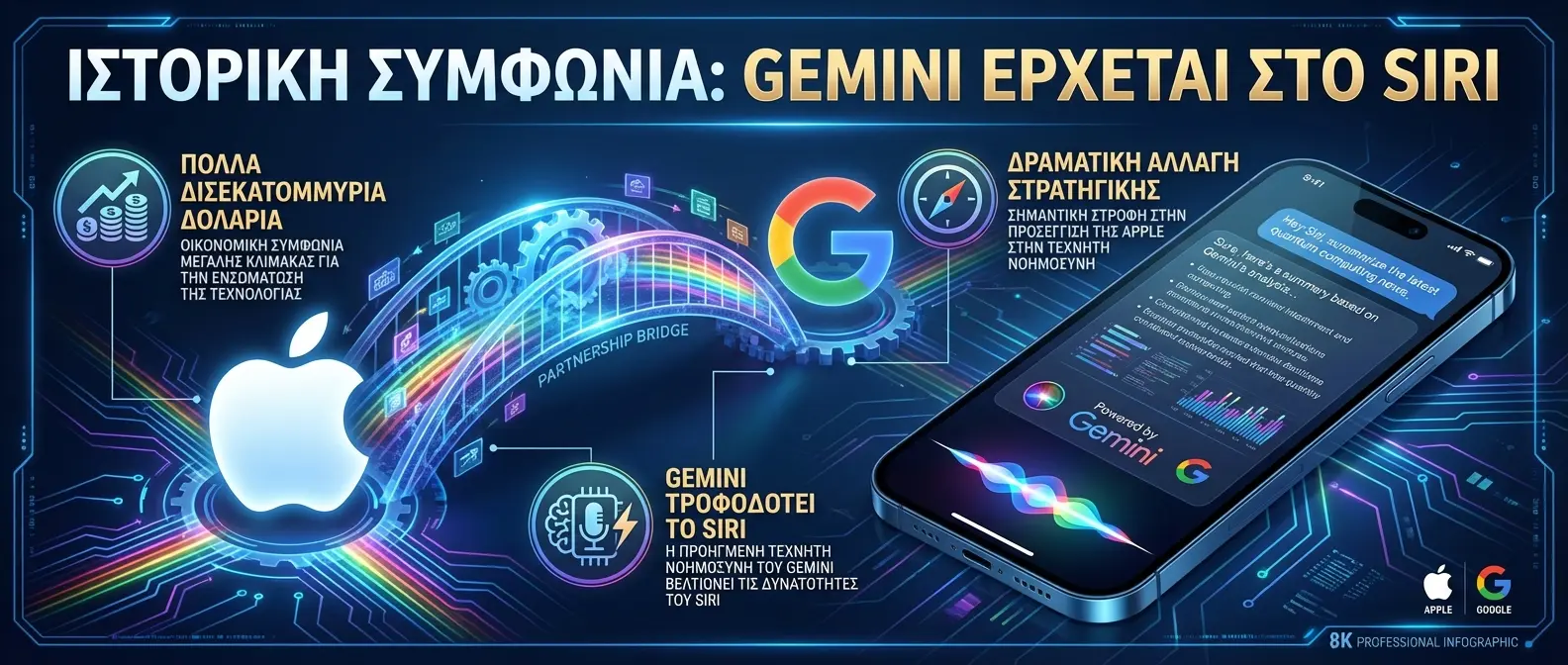
The news dropped like a bombshell in the tech world: Apple and Google officially announced a partnership to integrate Google Gemini into Siri. The deal, according to the Financial Times, is worth billions of dollars and marks a dramatic shift in strategy for Apple.
For years, Apple had been trying to develop its own AI technology. “Apple Intelligence,” unveiled in 2024, was supposed to be the company's big leap into the world of generative artificial intelligence. However, the reviews were devastating — Siri remained behind the competition, while Google and OpenAI were advancing at breakneck speed.
What is Gemini? Google Gemini is Google's most advanced AI model, capable of understanding and generating text, images, code, and much more. It is considered by many analysts to be the most capable AI model in the world right now.
🚫 Why Did OpenAI Refuse?
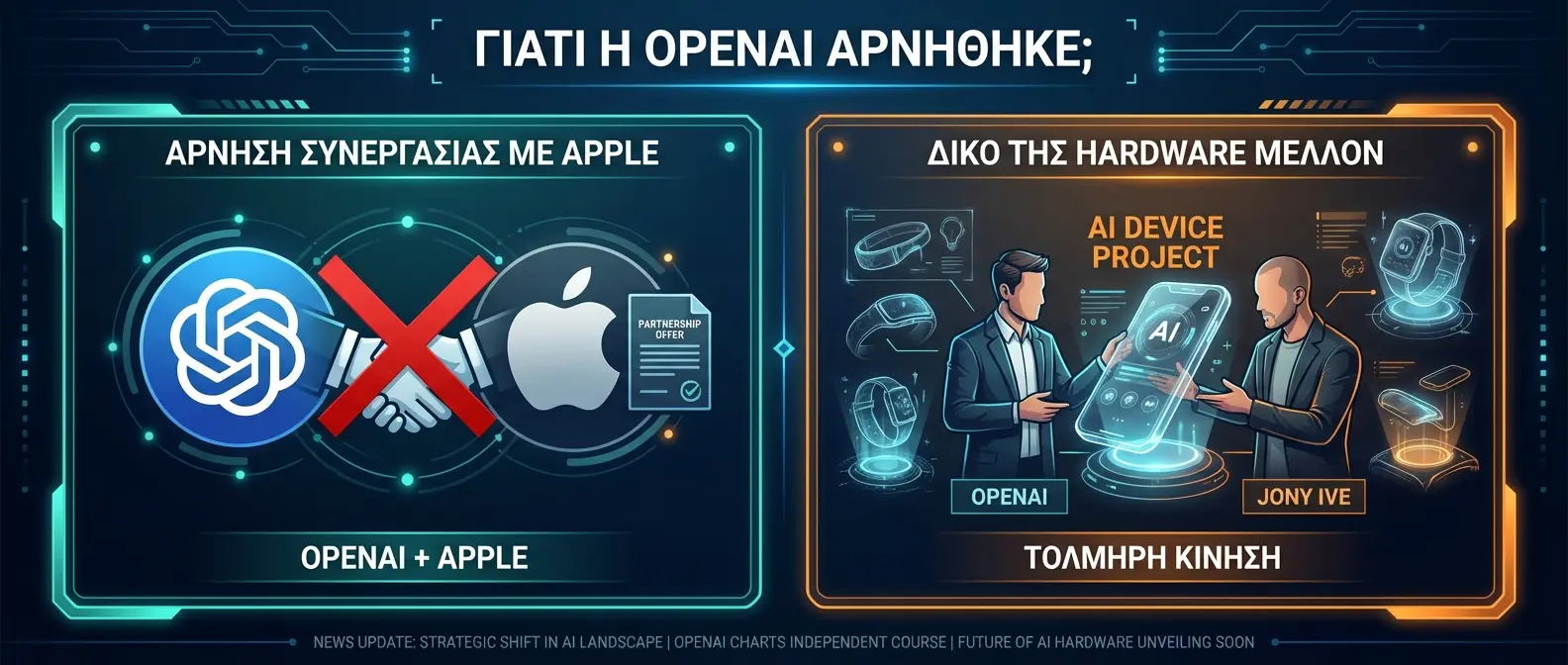
The big surprise isn't just the Apple-Google deal, but also OpenAI's rejection. According to sources who spoke to the Financial Times, OpenAI made a "deliberate decision not to become Apple's custom model provider".
But why? OpenAI, under Sam Altman's leadership, appears to have other plans. The company is focused on developing its own hardware in collaboration with former Apple designer Jony Ive. The project, codenamed “AI device,” aims to create an entirely new category of devices that will run exclusively on ChatGPT.
"OpenAI chose to invest in its own hardware future rather than become an AI supplier for Apple. It's a bold move that reveals the company's ambitions."
— Financial Times, January 2026📊 The State of the AI Race
To grasp the magnitude of this shift, we need to look at where the major AI players stand today. Three years after ChatGPT's launch, the landscape has changed dramatically.
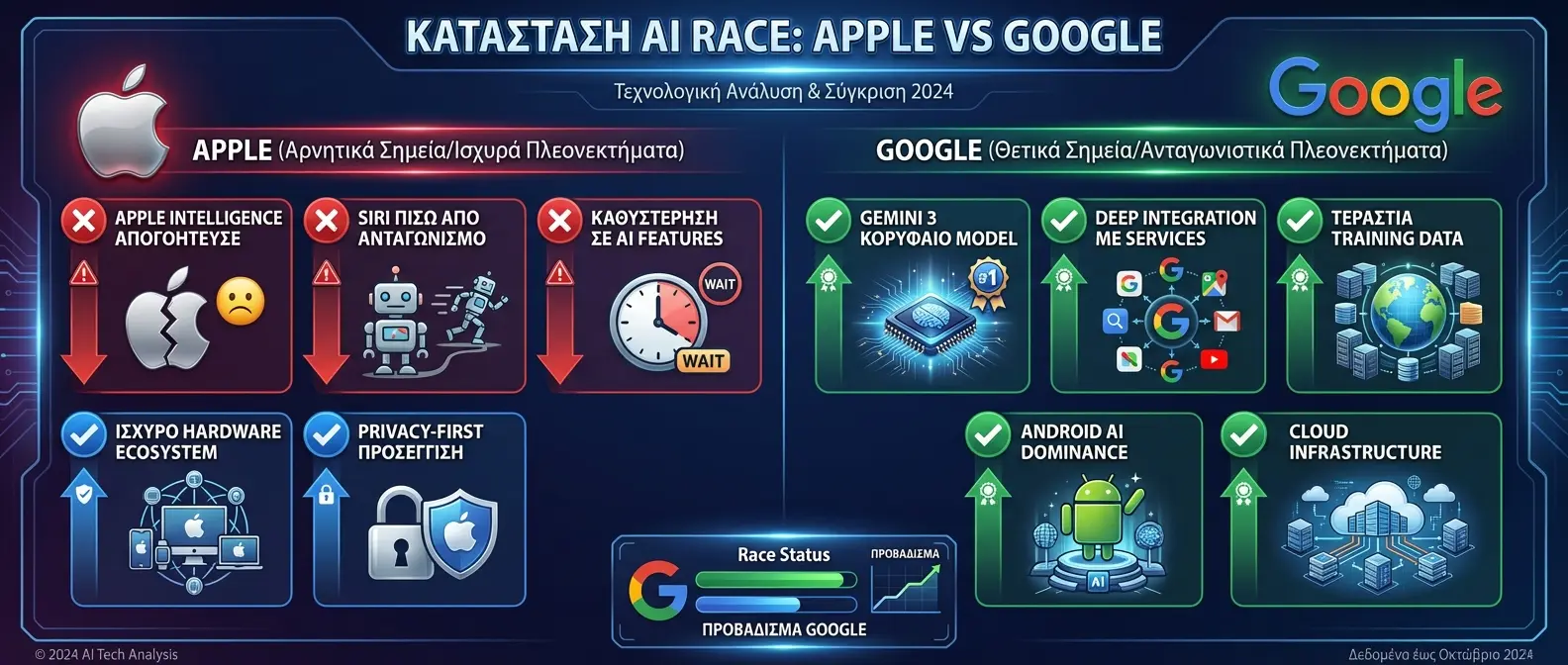
Apple
- Apple Intelligence disappointed
- Siri behind the competition
- Delayed AI features
- Strong hardware ecosystem
- Privacy-first approach
- Gemini 3 top-tier model
- Deep integration with services
- Massive training data
- Android AI dominance
- Cloud infrastructure
📖 Read more: TSMC: 'AI Demand Is Endless' After Record Profits
⏰ The Timeline of Change
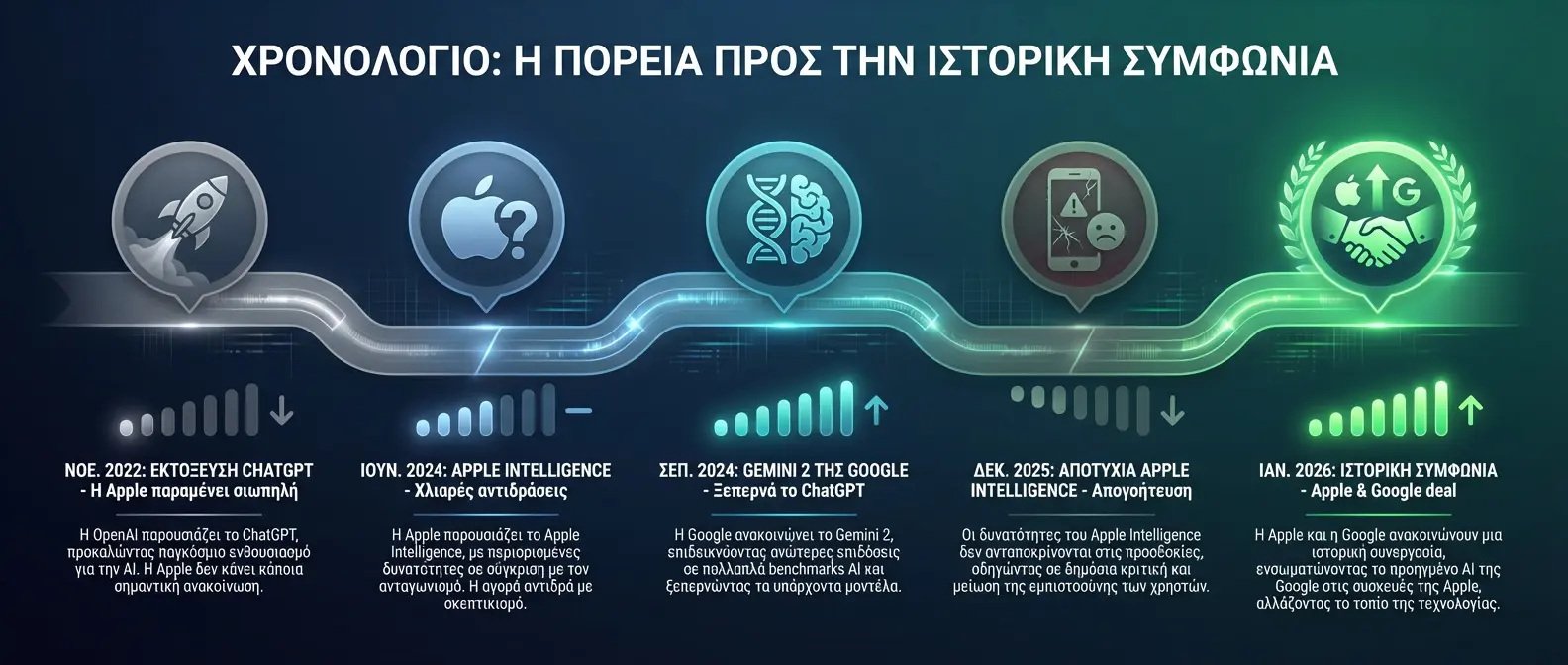
The path that led to this historic deal wasn't sudden. It was the result of a series of events that exposed Apple's inability to compete in the AI space.
The Launch of ChatGPT
OpenAI changes the world. Apple remains silent.
Apple Intelligence Announcement
Apple unveils its own AI, but initial reactions are lukewarm.
Google's Gemini 2
Google surpasses ChatGPT in benchmarks. Dominance begins.
Apple Intelligence Fails
Critics and users are disappointed. Siri remains behind.
The Historic Deal
Apple and Google sign a deal to bring Gemini to Siri.
💡 What Does This Mean for iPhone Users?
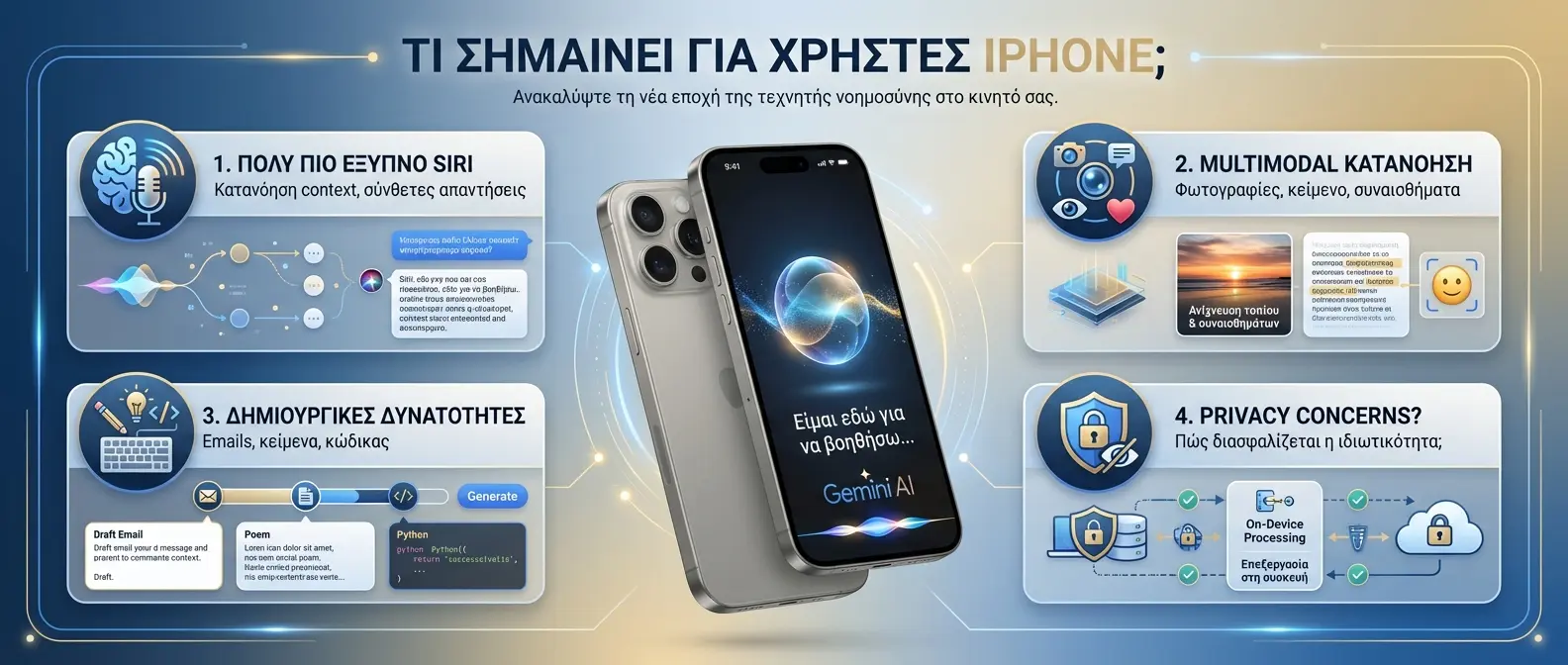
The question on millions of iPhone users' minds is simple: what changes for me? The answer is multifaceted and, for the most part, positive. Siri, which for years was the weakest link in iOS, is about to undergo a radical transformation.
A Much Smarter Siri
Gemini will give Siri capabilities it never had — context understanding, complex answers, real conversations.
Multimodal Understanding
Show Siri a photo and it will understand what it sees — from objects to text and emotions.
Creative Capabilities
Write emails, create content, get help with code — all through natural speech with Siri.
Privacy Concerns
The big question: how will privacy be ensured when data passes through Google?
🔮 The Future of the AI Race
This deal changes the rules of the game. Google, which just a few years ago seemed to be losing to OpenAI, now sits at the top. Not only does it have the best AI model, but it will now also power iPhones — a market of millions of users that was previously “locked” away from Google.
For Apple, this move is a strategic retreat. The company is essentially admitting that it cannot compete in AI on its own. However, that doesn't necessarily mean it lost the war — it may have simply changed tactics.
Google Wins
Google gains access to millions of iPhone users and billions in revenue.
Apple Adapts
Apple maintains iPhone competitiveness without massive investments in AI R&D.
Users Win
Users gain access to the top AI model through their favorite ecosystem.
What About OpenAI?
OpenAI, despite “losing” this deal, doesn't seem worried. The company is investing in an entirely different future — one where it won't simply be an AI supplier for other companies, but will have its own devices, its own users, its own ecosystem.
With Jony Ive by its side and billions in funding, OpenAI is betting that the future isn't smartphones — it's something entirely new. And it might be right.
🎯 The Takeaway
The Apple-Google deal over Gemini and Siri is one of the most significant developments in the history of artificial intelligence. It shows that even the world's largest companies can't do everything on their own.
For iPhone users, this is good news — they'll gain access to the best AI on the market. For technology as a whole, it shows that the AI war is more complex than ever.
The one certainty? This is only the beginning. The coming years promise even bigger upheavals in the world of AI.