📖 Read more: OpenAI's Autonomous AI Researcher Targets September 2026
The History of Waymo: From Google X to a Decade of Autonomy
Waymo's story begins in January 2009, when Sebastian Thrun — former director of Stanford's AI Lab — and Anthony Levandowski launched the Google Self-Driving Car Project at Google X lab. The foundation was their experience from the 2005 and 2007 DARPA Grand Challenges, where Stanford's autonomous vehicles Stanley and Junior won the competition.
Google invested $1.1 billion in the program between 2009 and 2015. By late 2015, the self-driving cars had covered over 1 million miles on public roads. A pivotal milestone came in fall 2015 in Austin, Texas, when a blind passenger took the first fully autonomous ride on a public road — with no steering wheel, pedals, or safety driver.
In December 2016, the project was renamed Waymo (from “a new way forward in mobility”) and spun off from Google as an independent company under Alphabet Inc. In December 2018, Waymo One launched robotaxi service in Phoenix, becoming the world's first commercial autonomous transportation service.
🏆 Waymo Milestones
- 2009: Google Self-Driving Car Project launched
- 2015: First fully autonomous ride with blind passenger
- 2016: Renamed to Waymo, independence from Google
- 2018: Waymo One commercial service in Phoenix
- 2020: First driverless service open to the public
- 2024: Expansion to San Francisco, Los Angeles
- 2026: $16 billion funding, $126 billion valuation
How Waymo's Technology Works
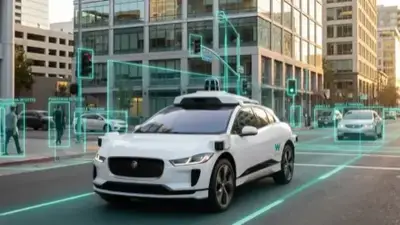
Waymo's technology relies on a complex sensor suite that includes lidar, cameras, and radar. The lidar (Light Detection and Ranging) detects objects up to 300 meters away, while short-range lidar images objects near the vehicle. Radar is used to detect moving objects behind other vehicles.
Waymo's deep-learning architecture VectorNet predicts vehicle trajectories in complex traffic scenarios using graph neural networks. Meanwhile, the simulation platform Carcraft — named after World of Warcraft — runs 25,000 virtual cars through digital representations of cities like Austin, Mountain View, and Phoenix.
Sensors & Hardware
Waymo initially used a $75,000 Velodyne lidar system. By 2017, building its own lidar reduced costs by 90%. Today, the fleet primarily consists of Jaguar I-Pace vehicles, with plans for Hyundai Ioniq 5 and Zeekr Ojai models in the future. Customizing each vehicle adds approximately $100,000 to costs.
Waymo vs Tesla: The Great Comparison
Comparing Waymo and Tesla reveals two radically different philosophies in autonomous driving. Waymo uses lidar + cameras + radar in a combined sensor system and operates at Level 4 (SAE Level 4) — meaning fully autonomous in specific geographic areas without a driver. Tesla, on the other hand, relies exclusively on cameras (vision-only approach) and operates at Level 2+ — meaning the driver must remain attentive at all times.
Waymo Advantages
Waymo offers fully autonomous operation without a driver. A study with Swiss Re showed that over 25 million miles of autonomous driving, Waymo had only 2 bodily injury claims (Waymo at fault), versus an estimated 26 for human drivers in the same areas — a 90% reduction. For property damage, the reduction was similar: 9 versus an estimated 78.
Tesla Advantages
Tesla has millions of vehicles on the road collecting data, creating a massive training dataset. Per-vehicle cost is significantly lower without lidar. However, Tesla FSD (Supervised) always requires driver attention, and Elon Musk's promises of full autonomy have been repeatedly delayed.
📖 Read more: Midjourney vs DALL-E: Best AI Images 2026
Expansion to 20+ Cities Worldwide
By February 2026, Waymo operates commercially in 6 US cities: Phoenix (since 2020), San Francisco Bay Area (2024), Los Angeles (November 2024), Atlanta (June 2025 via Uber), Austin (March 2025 via Uber), and Miami (January 2026). The target for the end of 2026 is 1 million rides per week.
The company is laying the groundwork for expansion to over 20 cities. In the US, testing is already underway in Denver, Seattle, Nashville, Dallas, Houston, San Antonio, Washington D.C., Boston, Philadelphia, Pittsburgh, Baltimore, St. Louis, Las Vegas, Minneapolis, and more. Internationally, Waymo started testing in Tokyo (2026) and plans to launch in London by September 2026.
🌍 International Expansion 2026
- USA: 6 active cities + 15+ testing
- Japan: Testing underway in Tokyo
- United Kingdom: London, expected September 2026
- Australia: Talks with Transport for NSW
- Canada: Lobbying in B.C., Ontario, Toronto
Safety & Controversial Incidents
Safety is simultaneously Waymo's greatest advantage and biggest challenge. The Swiss Re study (2024) demonstrated impressively lower accident rates compared to human drivers. However, experts note that 25 million miles represents less than 1% of the 3 trillion miles driven annually by American drivers.
As of January 2026, the NHTSA has logged 1,613 accidents involving Waymo vehicles (cumulative since July 2021). Of these, approximately 30 involved injuries. Notable incidents include:
- January 2025: First fatal crash — a stopped Waymo was rear-ended by a speeding driver, killing a passenger in another car
- January 2026: Waymo hit a child near an elementary school in Santa Monica — NHTSA opened an investigation
- October 2025: NHTSA investigation into illegal passing of school buses in Austin and Atlanta
- December 2025: Waymo cars became inoperable during a power outage in San Francisco, blocking roads
📖 Read more: AI Data Centers: Why They're Being Built Everywhere in 2026
The Competition: Cruise, Baidu & New Players
Waymo isn't alone in the space. Cruise (a GM subsidiary) was the main competitor in the US, but suspended operations after an October 2023 accident where a robotaxi dragged a pedestrian. The New York Times described them as “far behind” Waymo.
In China, Baidu Apollo operates commercially in multiple cities, while Pony.ai recently gained an operating license. Waymo itself warned the US Senate in February 2026 that without reducing bureaucracy, American companies would lose the trillion-dollar market to Chinese competitors.
Aurora Innovation focuses on autonomous trucks, while startups like Zoox (Amazon) develop specialized autonomous vehicles. Each player chooses a different strategy — from robotaxis to freight and delivery.
Ethical Issues & Social Impact
Autonomous driving raises serious ethical questions. The classic “trolley problem” — who should a self-driving car “choose” to hit in an unavoidable accident — remains open. Waymo employs remote assistance workers in the US and the Philippines for when robotaxis encounter problems, but they don't drive — they only provide guidance.
The social impact is significant: taxi and rideshare drivers see their jobs threatened. In Boston, Minneapolis, and San Diego, city council members have opposed Waymo's expansion, citing worker impacts. Vandalism against Waymo vehicles — from traffic cones to arson — reflects public concern.
The Future: Where Is Autonomous Driving Heading?
In February 2026, Waymo secured $16 billion in funding — $13 billion from Alphabet — valuing the company at $126 billion. This massive investment targets rapid expansion into new markets, including Europe and Asia.
Waymo aims for 1 million rides per week by end of 2026. Its 6th-generation technology, based on Zeekr electric vehicles, is expected to reduce operating costs. Meanwhile, integration with public transit — like the pilot partnership with Chandler Flex in Arizona — points to a new transportation model.
Autonomous driving stands at a critical turning point. With improved technology, growing acceptance, and massive investment, the question is no longer whether it will dominate — but when. And the Waymo vs Tesla battle will determine which model prevails: controlled zone autonomy or mass deployment through a shared fleet.